
To store batteries safely in your apartment, keep them in a cool, dry, well-ventilated area away from heat sources and direct sunlight. Use protective containers or cover terminals to prevent short circuits, and regularly check for damage like swelling or leaks. Dispose of damaged batteries properly following local guidelines. With careful handling and proper storage steps, you can prevent fires and hazards — continue to explore for more essential safety tips.

Get bike and ride gear delivered free with Prime
- Fast, free delivery on millions of items
- Prime Video, Amazon Music and more included
- Member-only deals all year
Key Takeaways
- Store batteries in a cool, dry, well-ventilated area away from heat sources and direct sunlight.
- Use protective cases or cover terminals with non-conductive tape to prevent short circuits.
- Regularly inspect batteries for swelling, leaks, or damage; dispose of damaged ones properly.
- Keep batteries separate from metal objects like keys to avoid accidental contact and sparks.
- Keep a fire extinguisher nearby and familiarize yourself with its use in case of battery-related fires.
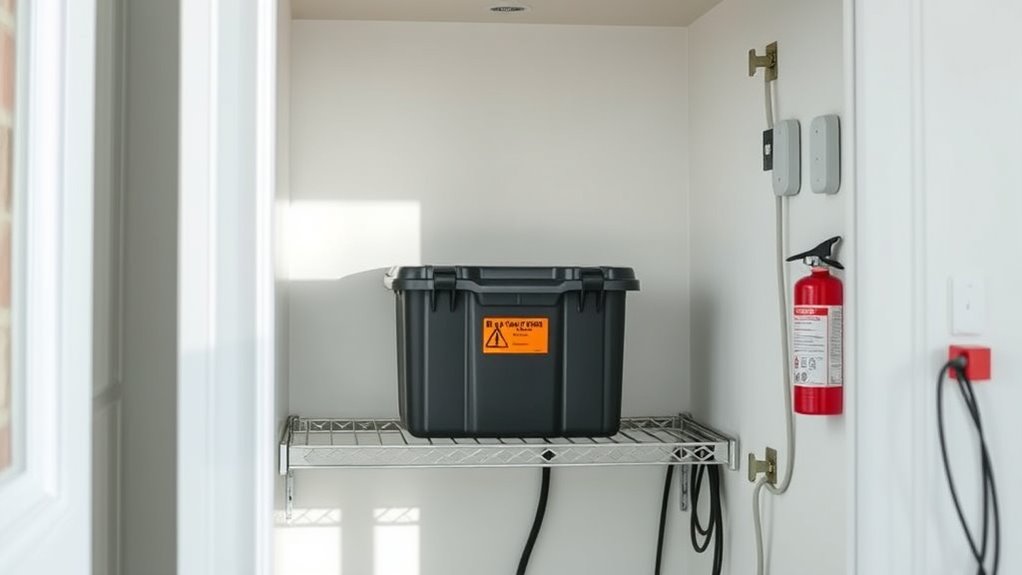
Storing a battery safely in an apartment is essential to prevent accidents and damage. Batteries, whether they’re lithium-ion, nickel-metal hydride, or lead-acid, each have specific requirements and risks. Understanding these differences is key to maintaining fire safety and avoiding potential hazards. Lithium-ion batteries, common in phones and laptops, are especially prone to overheating or catching fire if damaged or improperly stored. Other types, like nickel-metal hydride or lead-acid, also pose risks but behave differently under stress. Knowing your battery type helps you handle and store it correctly, reducing fire safety concerns.
First, always store batteries in a cool, dry place away from direct sunlight, heat sources, or flammable materials. High temperatures can cause internal damage, swelling, or even thermal runaway, which is a leading cause of battery fires. Keep batteries in a well-ventilated spot where they won’t be exposed to moisture or humidity, both of which can degrade their condition and lead to leaks or corrosion. Precautions like these are crucial in an apartment setting, where space may be limited, but safety should never be compromised.
Use proper storage containers specifically designed for batteries whenever possible. Avoid keeping batteries loose in drawers or boxes where they can come into contact with metal objects, keys, or other conductive materials. Short circuits often happen when a metal object bridges the terminals, which can cause sparks, fires, or even explosions. To prevent this, place each battery in its own protective case or cover the terminals with non-conductive tape if you don’t have a dedicated container. This simple step substantially reduces fire safety risks.
Additionally, be mindful of the battery’s condition. If you notice any swelling, leaks, discoloration, or corrosion, it’s best to dispose of the battery properly rather than store it. Damaged batteries are more likely to overheat or catch fire, especially in an apartment setting where emergency access may be limited. Always follow local disposal regulations for batteries, and never throw them in regular trash. Proper disposal helps prevent fires and environmental harm.
Lastly, keep a fire extinguisher nearby and know how to use it. In case of a battery fire, especially with lithium-ion types, you’ll want a Class D or ABC extinguisher that’s suitable for electrical fires. Being prepared and following these safety practices ensures your apartment remains a safe environment, even when storing batteries. Proper storage practices also include battery maintenance to extend their lifespan and reduce risks. By understanding the specific needs of different battery types and prioritizing fire safety, you can store your batteries securely without panic or unnecessary worry.
battery storage containers for apartment
As an affiliate, we earn on qualifying purchases.
As an affiliate, we earn on qualifying purchases.
Frequently Asked Questions
Can I Store Multiple Batteries Together Safely?
Yes, you can store multiple batteries together safely if you guarantee proper battery insulation and fire safety. Keep batteries separated with non-conductive materials like plastic or cardboard to prevent short circuits. Store them in a cool, dry place away from heat sources. Regularly check for damage, leaks, or corrosion. Proper insulation and fire safety measures help prevent accidents, making your battery storage safer and reducing the risk of fires.
What Is the Best Temperature for Battery Storage?
A stitch in time saves nine, and keeping your batteries at the right temperature is key. For ideal storage, aim for a cool, dry environment around 15-25°C (59-77°F). Battery chemistry varies, so check specific guidelines. Too hot or cold can damage the cells, reduce lifespan, or cause safety issues. Maintain a consistent, moderate temperature to protect your batteries and keep them functioning safely longer.
How Often Should I Check Stored Batteries?
You should check your stored batteries at least once every three to six months. Regular checks guarantee they stay in good condition and help you spot any signs of damage or leakage early. If you notice any issues, responsibly dispose of the batteries to prevent hazards. Staying vigilant with battery maintenance is key to emergency preparedness and safe storage, minimizing risks associated with battery disposal and potential accidents in your apartment.
Are There Specific Storage Containers Recommended?
Did you know that proper storage containers can reduce fire risks by up to 80%? For battery safety, use non-conductive, fire-resistant storage containers like plastic bins with secure lids. Avoid metal or glass containers, which can cause short circuits. Make sure the containers are ventilated and clearly labeled. This way, you minimize hazards and keep your batteries safe, organized, and easy to access when needed.
What Should I Do if a Battery Leaks or Gets Damaged?
If a battery leaks or gets damaged, you should wear gloves and eye protection to avoid exposure. Carefully place it in a non-metallic, leak-proof container and dispose of it following local battery disposal regulations. Keep emergency preparedness supplies nearby, like baking soda to neutralize leaks, and guarantee proper ventilation. Never attempt to repair or reuse a damaged battery, and contact local authorities if needed for safe disposal instructions.
non-conductive tape for battery terminals
As an affiliate, we earn on qualifying purchases.
As an affiliate, we earn on qualifying purchases.
Conclusion
Remember, safety first when storing your batteries. Keep them in a cool, dry place away from flammable materials, and always check for damage before use. Use proper containers and avoid overcharging. As the saying goes, “A stitch in time saves nine”—taking these precautions now can save you from bigger problems later. Stay vigilant, follow these tips, and you’ll keep your apartment safe and battery-ready at all times.
fire extinguisher for electrical fires
As an affiliate, we earn on qualifying purchases.
As an affiliate, we earn on qualifying purchases.
battery leak and damage detector
As an affiliate, we earn on qualifying purchases.
As an affiliate, we earn on qualifying purchases.
Halloween Picks
halloween
As an affiliate, we earn on qualifying purchases.