TL;DR

Get bike and ride gear delivered free — and shop member deals
- Fast, free delivery on millions of items
- Access to Prime Big Deal Days deals on October 6–7
- Prime Video, Amazon Music and more included
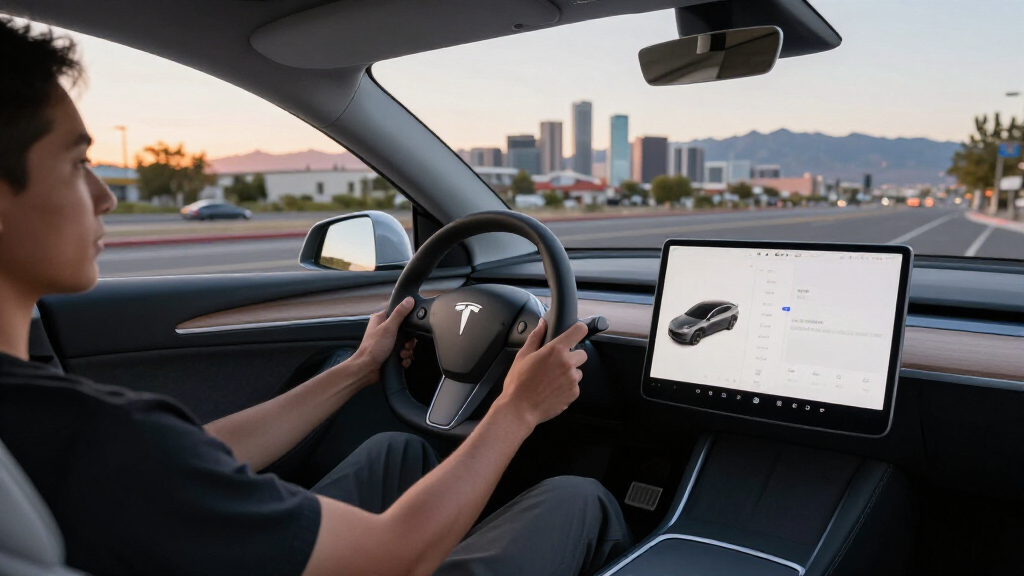
Nevada has approved the operation of thousands of paid robotaxis, marking a major regulatory milestone. Tesla appears to have the edge in deployment and technology, positioning itself as a leader in autonomous mobility.
Nevada has officially authorized the operation of thousands of paid robotaxis, a significant regulatory milestone that could reshape urban mobility. The move allows companies to deploy autonomous taxis for commercial fare-based services, with Tesla identified as the leading manufacturer among the approved fleets. This development positions Nevada as a key testing and deployment hub for autonomous ride-hailing, with potential implications for the broader industry.
Nevada’s Department of Motor Vehicles (DMV) announced the approval of permits for multiple companies to operate autonomous taxis for commercial purposes. The permits cover thousands of vehicles, with Tesla’s autonomous systems, including its FSD (Full Self-Driving) package, playing a prominent role among the approved fleets. The permits are part of Nevada’s broader effort to attract autonomous vehicle testing and deployment, following recent legislative changes that facilitate commercial robotaxi operations. While specific deployment timelines remain unconfirmed, industry insiders suggest Tesla’s technology is well-positioned to capitalize on this opportunity due to its existing infrastructure and recent advancements.Impact of Nevada’s Robotaxi Approval on Autonomous Mobility
This development signals a major shift in the regulatory landscape, potentially accelerating the adoption of autonomous ride-hailing services in urban areas. Nevada’s move could encourage other states to follow suit, creating a more favorable environment for commercial autonomous vehicle deployment. For consumers, this could mean increased access to affordable, driverless transportation options in the near future. For Tesla, this positions the company as a key player in the emerging autonomous mobility market, potentially giving it a competitive edge over rivals lacking similar regulatory approvals or technological readiness.
Tesla Full Self-Driving FSD package
As an affiliate, we earn on qualifying purchases.
As an affiliate, we earn on qualifying purchases.
Nevada’s Regulatory Shift and Industry Positioning
Until now, Nevada has been among the few U.S. states actively supporting autonomous vehicle testing, with a history of issuing permits to various companies. The recent permit expansion reflects a deliberate effort by Nevada regulators to attract commercial robotaxi services, following legislation enacted in late 2023 that streamlines approval processes. Tesla has been advancing its autonomous driving technology, with its FSD beta now available to a broad user base. The company’s existing infrastructure, including its Supercharger network and vehicle fleet, gives it an advantage in scaling autonomous ride-hailing services. Industry analysts see Nevada’s move as part of a broader trend toward integrating autonomous vehicles into daily urban transit, with Tesla positioned to lead due to its technological capabilities and strategic investments.
As an affiliate, we earn on qualifying purchases.
Details on Deployment Timelines and Market Penetration
While permits have been granted, it is not yet clear when commercial operations will begin at scale or how many vehicles will be deployed initially. The actual operational timeline, fleet sizes, and specific companies involved remain unconfirmed. Additionally, regulatory and safety evaluations will influence the pace and scope of deployment, but these details are still emerging.
electric vehicle autonomous driving system
As an affiliate, we earn on qualifying purchases.
As an affiliate, we earn on qualifying purchases.
Next Steps for Autonomous Taxi Deployment in Nevada
Regulators and approved companies are expected to finalize operational plans in the coming months. Public demonstrations and pilot programs may precede full-scale deployment, with industry insiders anticipating initial commercial services to launch within the next year. Monitoring how Tesla and other manufacturers implement their fleets will be key to understanding the market’s trajectory.
As an affiliate, we earn on qualifying purchases.
Key Questions
When will the approved robotaxis start operating commercially in Nevada?
While permits are granted, the exact timeline for commercial operation has not been announced. Industry sources suggest initial deployments could begin within the next 12 months, pending safety and operational approvals.
How many Tesla vehicles are expected to be part of the approved fleets?
The precise number of Tesla vehicles authorized for deployment has not been disclosed. However, industry insiders estimate that Tesla’s existing fleet and recent orders could support thousands of autonomous taxis once fully operational.
What other companies received permits alongside Tesla?
Several other firms, including established autonomous vehicle developers and ride-hailing services, have received permits. Specific company names and fleet sizes are still being confirmed by Nevada regulators.
Will Nevada’s approval influence other states’ policies?
It is likely, as Nevada’s proactive stance could serve as a model for other states seeking to attract autonomous vehicle testing and deployment, especially as industry interest grows.
Source: rss
Halloween Picks
halloween
As an affiliate, we earn on qualifying purchases.