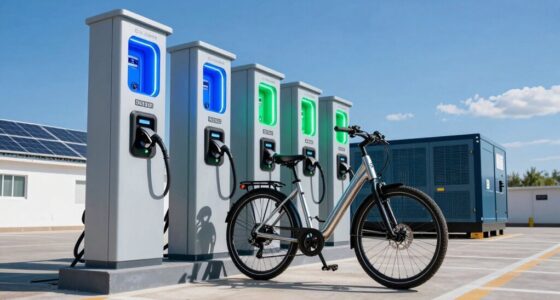
Charging your EV in a cold garage slows down the process because low temperatures increase battery resistance and reduce charging efficiency. When it’s chilly, your battery struggles to accept energy quickly, leading to longer charging times. Thermal management systems can help warm the battery and improve charging speed, but if they’re not active, expect delays. To optimize your charging, consider preconditioning or warming your garage—more tips await to help you stay ahead in cold weather.

Get bike and ride gear delivered free — and shop member deals
- Fast, free delivery on millions of items
- Access to Prime Big Deal Days deals on October 6–7
- Prime Video, Amazon Music and more included
Key Takeaways
- Cold garage temperatures slow EV charging due to increased battery internal resistance.
- Active thermal management systems can warm the battery, improving charging speed and efficiency.
- Preconditioning the battery while plugged in helps maintain optimal temperature for faster charging.
- Using higher power chargers and preheating the garage can mitigate cold-related slowdowns.
- Proper thermal regulation supports battery health and reduces long-term performance impacts in winter.
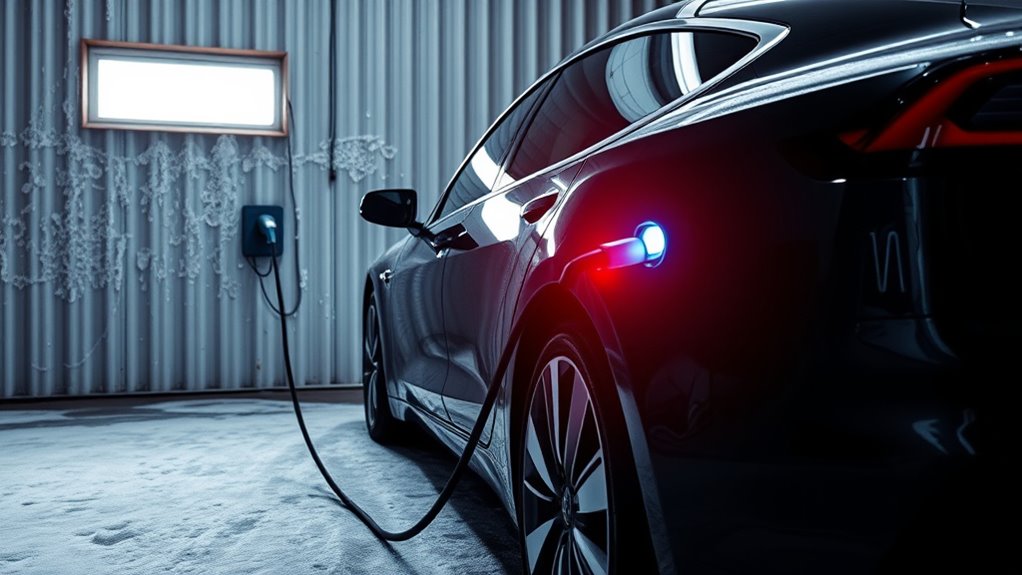
Ever wondered how cold temperatures affect charging your electric vehicle in a garage? When the thermometer dips, your EV’s battery thermal management becomes more critical than ever. Cold weather can markedly slow down your charging speed because batteries don’t perform at their best when they’re chilled. Unlike warm conditions, where charging proceeds swiftly, low temperatures cause internal resistance to rise, making it harder for energy to flow into the battery efficiently. This isn’t just an inconvenience; it’s a technical challenge that can extend your charging times considerably. To counteract this, many modern EVs are equipped with active battery thermal management systems that regulate the battery’s temperature, warming it to an ideal range before or during charging. If your vehicle’s system is functioning correctly, it can help maintain a steady charge rate, but it might still take longer than usual to reach a full charge in cold conditions.
Cold weather slows EV charging; thermal management systems help maintain efficiency in low temperatures.
In practice, you might notice that plugging in your vehicle on a chilly morning results in a slower initial charging rate. This is because the battery thermal management system is working to bring the battery up to a temperature that allows for more efficient energy transfer. Some vehicles automatically activate preconditioning modes that heat the battery while still plugged in, but you need to plan ahead—cold batteries don’t just recover instantly. If you don’t activate these features or if your vehicle lacks advanced thermal management, the charging speed can be drastically reduced, forcing you to wait longer for your EV to reach full capacity. Additionally, understanding battery thermal management systems can help you optimize your charging habits during colder months.
Another important factor is the timing of your charging sessions. Charging during the warmest part of the day, or pre-warming the garage if your vehicle supports it, can help enhance the process. Using a level 2 charger with higher power output can also alleviate some of the cold-related slowdowns, but only if the battery is sufficiently warmed. Keep in mind that frequent cold starts without proper thermal management can stress the battery over time, potentially impacting its longevity.
Ultimately, understanding how your EV’s battery thermal management system works and adjusting your charging habits accordingly will help you get the most out of cold weather. Whether that means preconditioning the battery, scheduling charging sessions for warmer times, or investing in a garage heater, these steps ensure your EV charges efficiently despite the chill. Cold temperatures may slow your charging speed, but with the right strategies, you can keep your vehicle ready to go when you need it.
EV battery thermal management system
As an affiliate, we earn on qualifying purchases.
As an affiliate, we earn on qualifying purchases.
Frequently Asked Questions
Can Cold Temperatures Permanently Damage My EV Battery?
Cold temperatures won’t permanently damage your EV battery if it has proper battery insulation and thermal management. These features help safeguard your battery from extreme cold, maintaining its health and performance. However, consistently exposing your vehicle to very low temperatures without adequate insulation or thermal controls can cause capacity loss over time. To keep your battery in good shape, make certain your EV’s thermal management system functions well, especially in cold environments.
How Does Cold Weather Affect Charging Speed?
Cold weather slows your EV’s charging speed because it affects the battery thermal management system, which struggles to heat the battery efficiently. When the battery is cold, charging speed optimization becomes harder, leading to longer charging times. To mitigate this, pre-condition your battery if possible, and use fast chargers designed for cold conditions. Staying aware of these factors helps guarantee your charging process remains as efficient as possible.
Are There Specific Chargers Better Suited for Cold Environments?
You’ll want a charger specifically designed for cold environments, as some charger types are built tougher for freezing temps. Cold-resistant batteries need chargers that can handle low temperatures without slowing down or causing damage. Look for chargers with robust insulation, smart temperature regulation, and cold-weather features. These chargers guarantee your battery stays healthy and charges efficiently, even in the coldest garages, preventing slow charging or potential damage.
Should I Preheat My Car Before Charging in Winter?
Yes, you should preheat your car before winter charging. Use preheating techniques like turning on the heater or using a block heater if available. This warms the battery and reduces charging time and power loss. Follow winter charging tips by parking indoors or in a warmer spot to keep the battery at ideal temperature. Preheating guarantees your EV charges efficiently and extends battery life during cold months.
What Maintenance Tips Prevent Battery Issues in Cold Garages?
Imagine wrapping your battery in a cozy blanket—that’s what battery insulation does. To prevent cold-related issues, use proper charging strategies like avoiding quick charges in extreme cold and keeping the garage warm when possible. Regularly inspect your battery, keep terminals clean, and guarantee insulation is intact. These steps help maintain ideal performance, preventing cold weather damage and extending your battery’s lifespan.
electric vehicle preconditioning charger
As an affiliate, we earn on qualifying purchases.
As an affiliate, we earn on qualifying purchases.
Conclusion
Charging your EV in a cold garage requires paying attention to temperature rules to keep your battery healthy. Did you know that charging below 0°C can reduce your battery’s efficiency by up to 40%? By following proper procedures, like preconditioning your vehicle and avoiding extreme cold, you can extend your battery’s lifespan and guarantee ideal performance. So, next time it’s chilly outside, remember these tips to keep your car charging smoothly and reliably.
As an affiliate, we earn on qualifying purchases.
As an affiliate, we earn on qualifying purchases.
Fall Picks
fall essentials
As an affiliate, we earn on qualifying purchases.