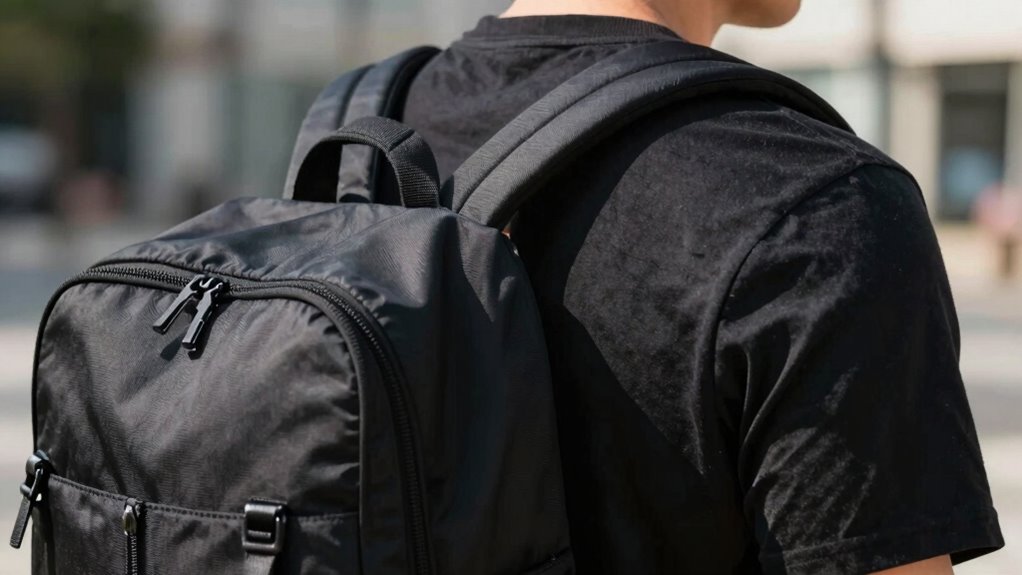

To stop shoulder pain while commuting with a backpack, start by loosening all straps before putting it on. Adjust the shoulder straps so they sit snugly without digging in, allowing for easy movement. Use padded and breathable straps to reduce chafing and guarantee even weight distribution across your shoulders and back. Recheck and tighten straps as needed during your commute. Proper setup not only improves comfort but also helps prevent long-term strain—discover how to perfect your fit.

Get bike and ride gear delivered free — and shop member deals
- Fast, free delivery on millions of items
- Access to Prime Big Deal Days deals on October 6–7
- Prime Video, Amazon Music and more included
Key Takeaways
- Loosen all straps before wearing, then gradually tighten for a snug, comfortable fit that prevents strain.
- Use padded, breathable straps made from soft materials to cushion shoulders and promote airflow.
- Adjust strap length to allow easy movement, ensuring the backpack sits just below shoulder blades for proper weight distribution.
- Incorporate sternum straps or load lifters to stabilize the load and prevent shifting during commuting.
- Regularly reassess and re-tighten straps as weight shifts to maintain comfort and reduce shoulder pain.

Adjusting your backpack straps properly is vital to guarantee comfort and prevent strain during your activities. When you take the time to make ergonomic adjustments, you ensure that the weight is evenly distributed across your shoulders and back, reducing fatigue and discomfort. Start by loosening all the straps before putting the backpack on, so you can make precise adjustments. Once it’s on, tighten the straps gradually, ensuring they sit snugly without digging into your shoulders. The goal is to keep the backpack close to your body, with the weight centered, so it doesn’t sway or pull forward as you move.
The choice of strap materials plays a significant role in your comfort. Look for backpacks with straps made from padded, breathable, and durable materials like foam or mesh. These materials help cushion your shoulders and promote airflow, which keeps you cooler and prevents chafing. If you notice your straps are made from rough or stiff materials, they might cause irritation or discomfort over time. Upgrading to models with softer, more flexible strap materials can make a noticeable difference in your daily commute.
When adjusting for ergonomic comfort, pay attention to strap length. The straps should be long enough to allow easy movement but tight enough to keep the backpack secure against your back. If the straps are too loose, the bag will shift as you walk, forcing your muscles to compensate and potentially leading to strain. On the other hand, if they’re too tight, they can restrict circulation or cause pinching. Aim for a fit where the backpack sits just below your shoulder blades, evenly distributing weight across your upper body.
Another vital aspect of strap adjustments involves the shoulder straps’ positioning. They should sit comfortably on your shoulders without slipping off or feeling too tight. Proper positioning means the straps are aligned with your shoulders’ natural contours, helping you avoid uneven pressure points. Many backpacks come with adjustable sternum straps or load lifters—use these features to stabilize the pack further and balance the load. Proper ergonomic adjustments also include ensuring the straps aren’t twisted or uneven, which can cause discomfort or uneven weight distribution.
Additionally, choosing straps made from high-quality materials designed for durability and comfort can significantly improve your overall experience. Finally, always check your setup before heading out. Adjust your straps after packing your essentials, as added weight can shift the center of gravity. Regularly reassess your strap tension and positioning throughout your commute, especially if you notice any discomfort or shoulder pain. Taking these steps guarantees your backpack setup is optimized for comfort, minimizes strain, and allows you to focus on your day instead of battling shoulder pain.
As an affiliate, we earn on qualifying purchases.
Frequently Asked Questions
Can Adjusting Straps Prevent Shoulder Pain Altogether?
Adjusting your straps can ensure reduce shoulder pain by optimizing strap positioning and adding strap padding where needed. When you position straps evenly, they distribute weight more comfortably, preventing strain. Adding extra padding cushions your shoulders, further easing pressure. Regularly adjusting straps ensures they stay snug but not tight, helping you avoid pain altogether. Stay mindful of strap setup, and you’ll experience a more comfortable commute every time.
How Often Should I Check My Backpack Strap Fit?
You should check your backpack strap fit daily, especially if your straps have padding or ergonomic design features. Think of it like tuning a musical instrument—you want perfect harmony. Regular adjustments guarantee strap padding stays comfortable and ergonomic support remains effective. When straps feel loose or tight, it’s time to readjust. Keeping straps well-fitted prevents shoulder pain and maximizes comfort on every commute.
Are There Different Strap Setups for Different Backpack Styles?
Yes, different backpack styles often require different strap setups. You should consider strap padding and strap width to guarantee comfort and proper fit. For larger or heavier backpacks, opt for wider straps with more padding to distribute weight evenly and reduce shoulder strain. Smaller or lighter packs may have narrower straps, but adding padding can still improve comfort. Adjust straps so they sit snugly without digging into your shoulders.
What Materials Are Best for Shoulder Straps to Reduce Discomfort?
Imagine your shoulder pain vanishing—it’s possible with the right materials. Opt for straps with ergonomic padding that molds comfortably to your shoulders, reducing pressure. Breathable fabrics like mesh or moisture-wicking materials keep you cool and dry, preventing discomfort caused by sweat. These materials work together to distribute weight evenly, so you can carry your backpack all day without pain. Prioritize ergonomic padding and breathable fabrics for a pain-free commute.
Is There an Ideal Weight Limit for Backpacks to Avoid Pain?
You should keep your backpack weight under 10-15% of your body weight to prevent shoulder pain. Proper weight distribution is key, so choose a pack with padded straps that evenly spread the load. If straps aren’t padded well, they’ll put extra pressure on your shoulders, increasing discomfort. Regularly lighten your load and adjust straps for a snug fit, ensuring better weight distribution and reducing strain during your commute.
padded breathable backpack straps
As an affiliate, we earn on qualifying purchases.
As an affiliate, we earn on qualifying purchases.
Conclusion
Think of your backpack straps as the reins guiding a steady steed—balance keeps your journey smooth. When you adjust them just right, you’re steering clear of pain and keeping your shoulders strong, like a rider who trusts their horse. Remember, a simple tweak can turn your daily commute into a confident stride. So, set your straps wisely, and let your backpack be a trusted companion, not a burden—your path to pain-free travels starts with small adjustments.
As an affiliate, we earn on qualifying purchases.
As an affiliate, we earn on qualifying purchases.
Evergreen bestsellers Picks
bestsellers
As an affiliate, we earn on qualifying purchases.