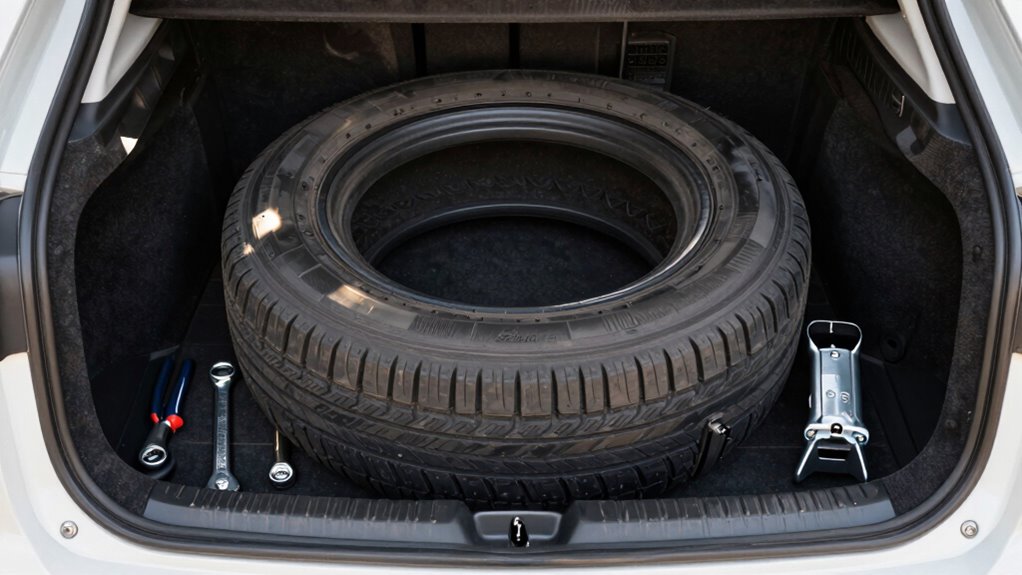

To plan a flat-tire response before it happens, regularly check and maintain your tires, ensuring correct pressure and proper tread. Keep an emergency kit in your vehicle with essentials like a spare, jack, gloves, and reflective triangles, and practice changing a tire at home. Know how to access your tools quickly and choose safe parking spots. Staying prepared now helps you stay calm and act swiftly if you experience a flat. Continue to explore how to make your roadside response even safer.

Get bike and ride gear delivered free with Prime
- Fast, free delivery on millions of items
- Prime Video, Amazon Music and more included
- Member-only deals all year
Key Takeaways
- Prepare a well-stocked emergency kit with necessary tools and ensure all items are in working condition.
- Regularly inspect and maintain tire pressure and tread to prevent unexpected flats.
- Familiarize yourself with your vehicle’s tire-changing procedures and locate all tools beforehand.
- Choose safe, well-lit roadside spots and practice changing a tire at home for confidence.
- Develop a clear response plan, including activating hazard lights and deciding when to call roadside assistance.
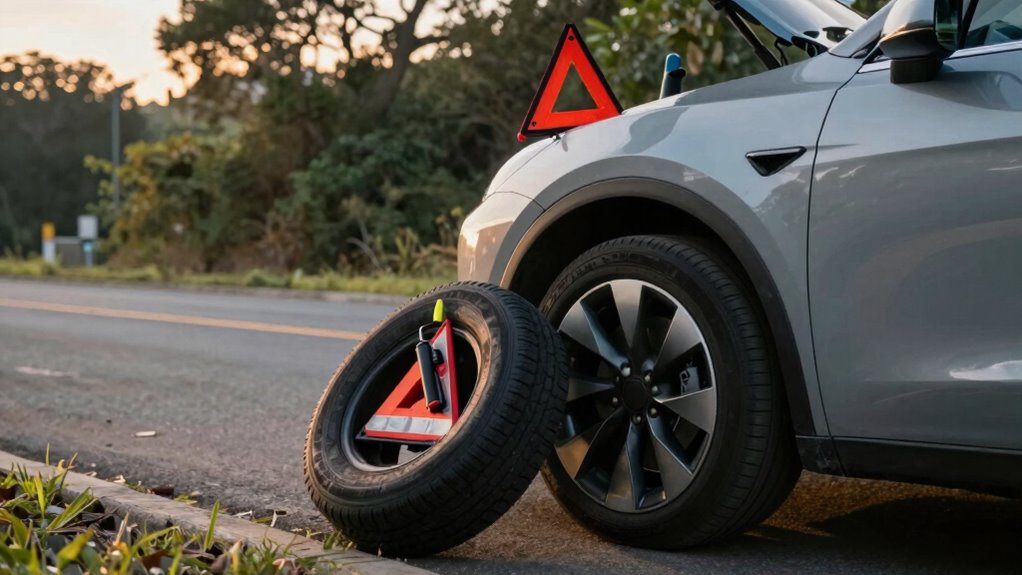
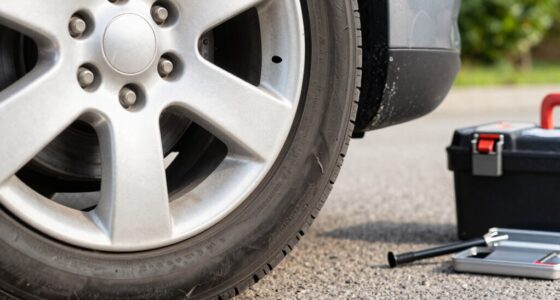
Experiencing a flat tire can be stressful, but with a solid plan in place, you can handle the situation quickly and safely. The key is to prepare beforehand, so you’re not caught off guard when it happens. Start by assembling an emergency kit that includes essential items like a spare tire, a jack, a lug wrench, reflective triangles or flares, and gloves. Keep this kit in your vehicle at all times, and make sure everything is in working order. Regular tire maintenance is equally important. Check your tire pressure monthly and inspect your tires for wear or damage. Properly inflated tires reduce the risk of a flat, and identifying issues early allows you to replace or repair tires before they become a problem on the road.
When you’re planning your response, think about where you’ll pull over safely if a flat occurs. Choose well-lit, flat areas away from traffic where you can change the tire without danger. Familiarize yourself with your vehicle’s owner manual, so you know how to access the spare and operate the jack and other tools. Practicing the process of changing a tire at home can boost your confidence and speed if you ever need to do it on the roadside. Remember, a well-maintained emergency kit makes this task easier and safer. Also, consider investing in a tire repair kit for minor punctures, which can save you time and money. Regular tire maintenance and inspection can help prevent flats and extend the lifespan of your tires. Additionally, understanding the proper tire pressure recommended for your vehicle can significantly reduce the likelihood of a flat. Maintaining tire pressure as part of your routine ensures your tires are less prone to blowouts or punctures. To further reduce the risk, learn about tire rotation and how it contributes to even wear across all tires. Knowing the basics of tire maintenance helps prevent flats, but being prepared for when one occurs is equally essential. Keep your tires properly inflated, rotate them regularly, and replace tires that show signs of excessive wear or damage. This proactive approach extends your tires’ lifespan and reduces the likelihood of sudden breakdowns. When a flat happens, stay calm and activate your hazard lights, then carefully pull over to a safe spot. Use your emergency kit to change the tire, following the instructions you’ve practiced. If you’re uncomfortable doing it yourself, don’t hesitate to call roadside assistance. Having a plan that includes regular tire maintenance, an accessible emergency kit, and clear steps for roadside action guarantees you’re ready for a flat tire—so it doesn’t ruin your day or jeopardize your safety.
Popular right now

KitchenAid Artisan 5-Quart Tilt-Head Stand Mixer, Milkshake

KitchenAid 5.5-Quart Bowl-Lift Stand Mixer, Porcelain White

De'Longhi Magnifica Evo Automatic Espresso Machine with Milk Frother, Silver
As an affiliate, we earn on qualifying purchases.
Frequently Asked Questions
What Tools Are Essential for Fixing a Flat Tire?
You’ll need a tire repair kit, which includes items like a sealant and a plug kit, to fix a flat effectively. Also, make certain your spare tire is well-maintained, properly inflated, and accessible. A jack and lug wrench are essential for removing and installing the spare. Keep these tools in your vehicle at all times, so you’re prepared for emergencies and can quickly get back on the road.
How Often Should I Check My Tire Pressure?
Just like a wise king monitors his kingdom, you should check your tire pressure at least once a month. Regular checks help prevent uneven tread wear, which can lead to flats. Remember, tire rotation also plays a role in maintaining proper pressure and extending tire life. By staying proactive, you guarantee smoother rides, better fuel efficiency, and fewer surprises on the road—keeping your kingdom safe and sound.
Can I Drive on a Flat Tire Temporarily?
You shouldn’t drive on a flat tire, even temporarily, because it can damage your wheel and suspension. Before doing any driving, check your tire’s tread depth and consider a tire rotation to guarantee even wear. If you notice a flat, replace or repair the tire promptly. Driving on a flat risks further damage, so always prioritize safety and get professional help if needed.
What Are the Signs of a Tire That’s About to Blow?
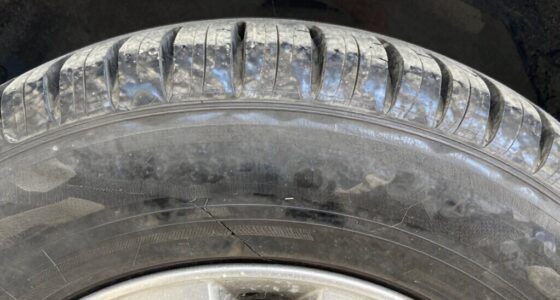
You’ll notice signs like uneven tire wear, which can result from poor tire rotation, and shallow tread depth, indicating low tire health. If your tread is worn down, or you spot bulges or cracks, your tire’s about to blow. Regularly check your tread depth and schedule tire rotations to prevent these issues. Being attentive to these signs helps you avoid sudden blowouts and keeps your tires in top shape.
How Do Weather Conditions Affect Flat-Tire Planning?
Weather conditions are like the seasons of a story, shaping your flat-tire plan. Cold temperatures can make tires brittle, increasing the risk of blowouts, while hot weather causes air to expand and stresses tires. To stay prepared, prioritize weather preparedness and consider seasonal tire changes, swapping out tires suited for winter or summer. This way, you can handle unexpected flats confidently, no matter the forecast.
Conclusion
Planning ahead for a flat tire might seem unnecessary, but it’s a small step that can save you big time on the road. Imagine being stranded, frustrated, or risking further damage—all easily avoided with a quick plan. Keep a spare, tools, and emergency contacts handy. Think of it like packing an umbrella: it’s a simple precaution that guarantees you’re prepared for unexpected weather, or in this case, a flat tire. Better safe than sorry!