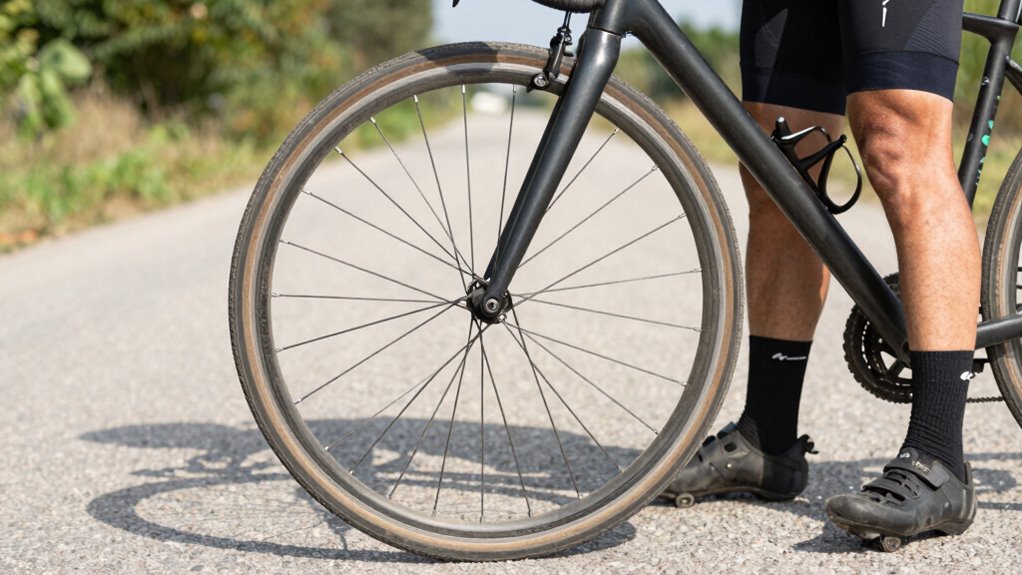

You should verify your wheel whenever you notice wobbling, uneven tire wear, or rim damage that impacts performance or safety. Use your eyes and hands to check for side-to-side rim deviations, cracks, or dents. Keep truing the wheel with small adjustments unless the damage is severe, like cracks or bending. If wobbling persists after adjustments or damage seems serious, it’s best to stop and seek professional help. Continue to explore how to ensure your wheel stays in top shape.
Key Takeaways
- True the wheel when you notice slight rim wobble, minor uneven tire wear, or rim deviations that can be corrected with spoke adjustments.
- Stop and seek professional help if the rim is severely bent, cracked, or warped beyond minor truing adjustments.
- Avoid truing if there is visible rim damage, cracks, or dents that compromise wheel integrity.
- Use incremental spoke tension adjustments and check alignment frequently to prevent over-tightening or rim failure.
- Cease truing immediately if you detect signs of rim failure or increased wobbling, and consult a professional for repairs.

Knowing when to true a wheel is essential for maintaining safe and smooth riding. Over time, your bike wheel can develop uneven tire wear, which affects riding performance and safety. If you notice that your tire isn’t wearing evenly—perhaps certain spots look more worn down than others—it’s a sign that your wheel might need truing. A wheel that’s out of true can cause the tire to rub against the frame or fork, leading to uneven tire wear and potentially dangerous blowouts. Additionally, if you observe any rim damage, such as dents, cracks, or warping, it’s a clear indicator that truing is necessary. Rim damage not only compromises ride quality but also increases the risk of sudden failures.
Uneven tire wear or rim damage indicates your wheel needs truing for safe riding.
Before attempting to true your wheel, check for signs of rim wobble by spinning the wheel and observing if the rim deviates side to side. If it wobbles excessively, it’s time to take action. Trueing involves adjusting the tension of the spokes to bring the rim back into proper alignment. If your wheel’s rim is slightly out of true, minor adjustments can often resolve the issue. However, if the rim is severely damaged or bent, trying to true it yourself could do more harm than good. In such cases, stopping and seeking professional help is the safest choice, as a damaged rim might require replacement to ensure your safety.
When you start truing, it’s important to have the right tools, including a spoke wrench and a truing stand or a stable bike frame. Carefully identify the areas where the rim deviates and make small, incremental adjustments to the spoke tension. Tightening spokes pulls the rim into alignment, while loosening allows it to move away from the spoke. Be patient and make adjustments gradually, checking frequently to see if the rim is becoming more centered. Remember, over-tightening spokes can cause additional rim damage or create new issues like rim flex or spoke breakage. Regularly inspecting your wheel and understanding spoke tension are key to successful truing.
If, during the process, you notice persistent rim wobbling, cracks, or significant dents, stop immediately. Continuing to force the wheel into true can worsen the damage and possibly lead to rim failure. It’s best to get professional help in these situations. A bike shop can assess whether your rim can be repaired or if it’s safer to replace it entirely. Properly trued wheels not only improve ride quality but also extend the life of your tire and prevent rim damage caused by uneven stress distribution. Regular checks and timely truing preserve your wheel’s integrity and keep your rides safe and smooth.
Frequently Asked Questions
Can I True a Wheel on the Road Without Special Tools?
You can try DIY repairs to true a wheel on the road without special tools, but it’s not ideal. Basic tools like a spoke wrench can help, but you need to know how to use them properly. If you don’t have the right tool requirements or experience, it’s safer to stop and get help. Truing a wheel without proper tools risks damaging the wheel further, so consider seeking professional assistance if you’re unsure.
How Do I Know if My Wheel Is Too Damaged to True?
If your wheel has significant rim damage or spoke cracks, it’s too damaged to true. Studies show that over 60% of rim cracks weaken the wheel’s integrity, making trueing ineffective. Check for uneven tire wear, wobbling, or side-to-side movement—these indicate severe damage. If repairs don’t restore true alignment or if cracks are visible, stop riding immediately and get professional help. Riding damaged wheels risks further harm and unsafe riding conditions.
Is It Safe to Ride After a Wheel Has Been Trued?
Riding after your wheel has been trued can be safe if the process was done correctly and the wheel is still structurally sound. Check wheel safety by spinning it smoothly and ensuring no wobbles or cracks. If it feels secure and true, your bike is road ready. However, if you notice persistent issues or damage, it’s best to stop and get help, as riding on a compromised wheel risks accidents and injury.
How Long Does It Typically Take to True a Wheel Professionally?
A professional wheel truing typically takes between 30 minutes to an hour, depending on the wheel’s condition. While it might seem quick, don’t rush the process; precision matters. You might think it’s just a quick fix, but a proper wheel truing guarantees safety and longevity. Rushing can lead to uneven wear or further damage, so trust the expert for the best results and get back on your bike confidently.
What Are Common Signs That Indicate I Should Stop and Seek Help?
If you notice visual signs like bent or broken spokes, or see uneven tire contact, stop immediately. Unusual noises such as clicking, grinding, or squeaking also indicate a problem. These signs mean you should seek help right away to prevent further damage or accidents. Don’t overlook these cues; stopping and getting professional assistance ensures your safety and keeps your wheel in good condition.
Conclusion
So, next time your wheel’s wobbling like a bad dance partner, remember: it’s probably crying out for a true. But hey, if you’re tempted to keep riding on that wonky wheel, just know you’re risking a sudden stop—or worse, a scenic fall. Sometimes, stopping to get help isn’t giving up; it’s just avoiding an unintended trip. After all, who knew that a little trueing could save you from a dramatic crash?