
To keep your folding mechanism tight without over-tightening, regularly inspect hinges for looseness or stiffness. Adjust tension gradually using the right tools, ensuring the movement is firm but smooth. Don’t tighten screws or bolts too much, as this can cause damage or restrict movement. Keep parts clean and lubricated to prevent rust and reduce friction. Staying attentive to signs of wear and following proper steps can help maintain peak tension—stay tuned for detailed tips on doing it right.

Get bike and ride gear delivered free — and shop member deals
- Fast, free delivery on millions of items
- Access to Prime Big Deal Days deals on October 6–7
- Prime Video, Amazon Music and more included
Key Takeaways
- Regularly inspect hinge alignment and tension to identify looseness or stiffness early.
- Use appropriate tools like torque screwdrivers for incremental tension adjustments.
- Keep hinges clean and lubricated with light, hinge-specific lubricants to reduce friction.
- Avoid over-tightening screws; tighten gradually and test movement after each adjustment.
- Schedule routine maintenance every few months to maintain optimal tension without over-tightening.
As an affiliate, we earn on qualifying purchases.
Understanding Your Folding Mechanism
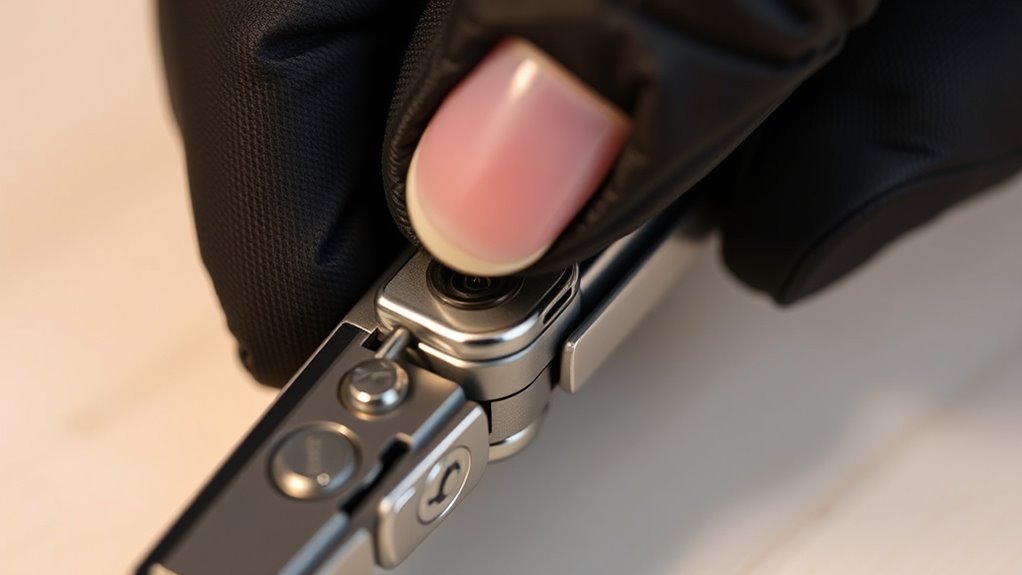
To properly care for your folding mechanism, you first need to understand how it works. The key components include spring tension and hinge alignment. Spring tension controls how easily the mechanism opens and closes, providing the right amount of support without feeling too loose or stiff. Over time, springs can loosen or lose their strength, affecting performance. Regular maintenance can help prevent these issues and extend the lifespan of your mechanism. Hinge alignment is equally important; misaligned hinges can cause uneven movement or wear. Regularly check that hinges are straight and secure, ensuring smooth operation. Proper lubrication also plays a vital role in reducing friction and preventing rust, which can impair performance. Maintaining proper spring tension and hinge alignment keeps your folding mechanism functioning correctly. Additionally, using energy-efficient components can help extend the lifespan of your mechanism and promote sustainable use. Being aware of component durability can assist in planning timely replacements and avoiding unexpected failures. Understanding mechanism wear patterns can help you identify early signs of trouble and address them before serious damage occurs. By understanding these elements, you can spot issues early and prevent unnecessary damage, ensuring your mechanism remains reliable and easy to use.
lubricant for folding mechanisms
As an affiliate, we earn on qualifying purchases.
As an affiliate, we earn on qualifying purchases.
Recognizing Signs of Looseness and Over-Tightening
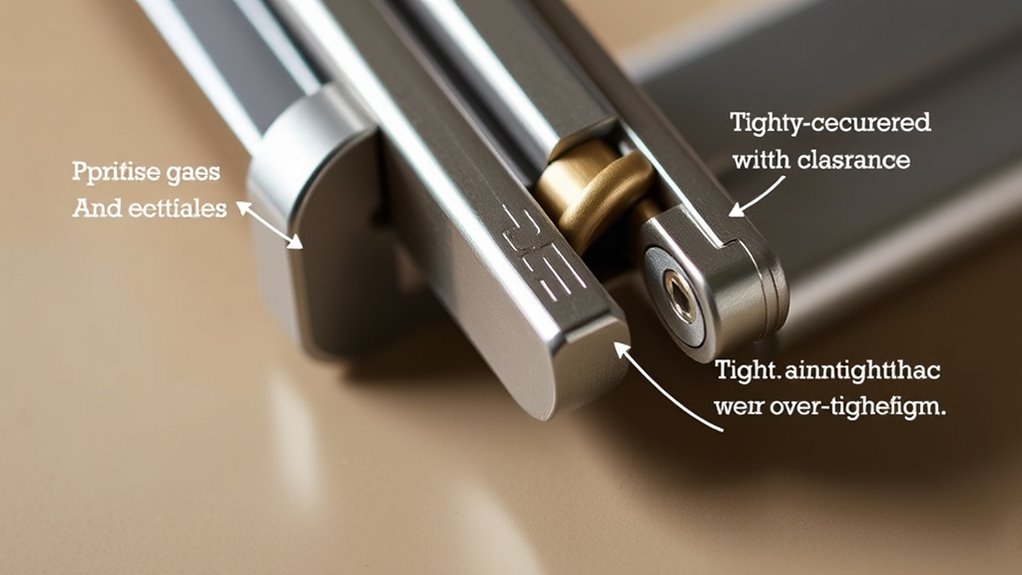
Pay attention to how your folding mechanism moves; signs of looseness or over-tightening can quickly become apparent. If you notice excessive play or wiggling, it likely means the spring tension is too loose, reducing stability. Conversely, if the mechanism feels stiff or hard to operate, it may be over-tightened, risking damage. Check hinge alignment regularly—misaligned hinges can cause uneven movement and wear, making it harder to judge proper tension. A loose hinge may produce squeaks or wobbling, while an over-tight hinge might restrict smooth operation. Both issues compromise safety and longevity. Recognizing these signs early helps you maintain proper tension, ensuring your folding mechanism remains secure and functional without risking over-tightening that could lead to damage.
As an affiliate, we earn on qualifying purchases.
Tools and Materials You Need for Adjustment
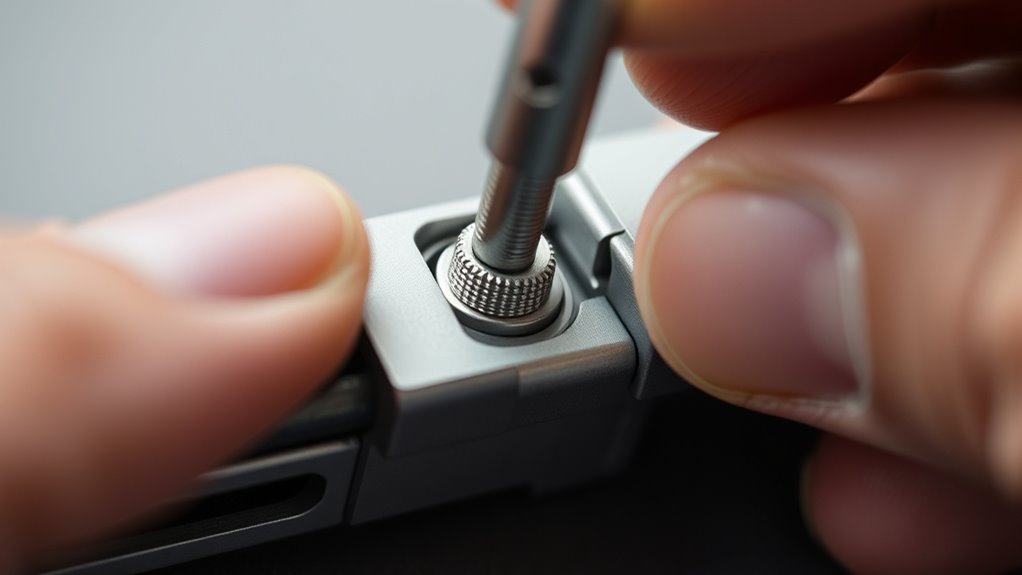
To properly adjust your folding mechanism, you’ll need the right tools for precise tuning. Having materials that guarantee safe handling is also essential to prevent damage. With the right combination, you can make adjustments confidently and keep your mechanism in top shape. Ensuring proper tool maintenance will extend the lifespan of your tools and maintain their accuracy during adjustments. Additionally, understanding the mechanical structure of your folding system can help identify potential issues before they become serious. Regularly inspecting your adjustment points can help maintain optimal performance over time. Being familiar with networking hardware concepts can also aid in troubleshooting and proper setup. Familiarity with system calibration techniques can further enhance your ability to fine-tune your mechanism effectively.
Tools for Precise Adjustment
Achieving precise adjustments on your folding mechanism requires the right tools and materials. You’ll need a small screwdriver or Allen wrench to fine-tune spring tension, guaranteeing the fold remains secure without over-tightening. A hinge alignment tool, such as a straightedge or a specialized alignment gauge, helps you check that hinges are perfectly aligned for smooth operation. A torque screwdriver can also be useful for applying consistent force when adjusting spring tension. Additionally, a magnifying glass or flashlight allows you to inspect small components closely. Having these tools at hand ensures you can make accurate, controlled adjustments, prolonging the life of your folding mechanism and maintaining peak performance. Proper tools help you keep everything tight without risking damage or misalignment.
Materials for Safe Tuning
Using the right materials is crucial for safely tuning your folding mechanism. You need to ensure material compatibility to prevent damage or malfunction. Choose lubricants specifically designed for folding mechanisms, such as silicone-based or light oil lubricants, which won’t degrade plastics or rubber parts. Use clean, soft cloths to apply lubricants and avoid harsh abrasives that could scratch surfaces. Safety precautions are essential—wear gloves if needed, work in a well-ventilated area, and follow manufacturer instructions for each product. Avoid overusing lubricants, as excess can attract dirt and cause buildup. Proper materials and careful handling help maintain smooth operation without risking damage or injury. Staying attentive to material compatibility and safety precautions keeps your folding mechanism in top shape.
folding mechanism maintenance kit
As an affiliate, we earn on qualifying purchases.
As an affiliate, we earn on qualifying purchases.
Step-by-Step Guide to Properly Tightening Folding Joints
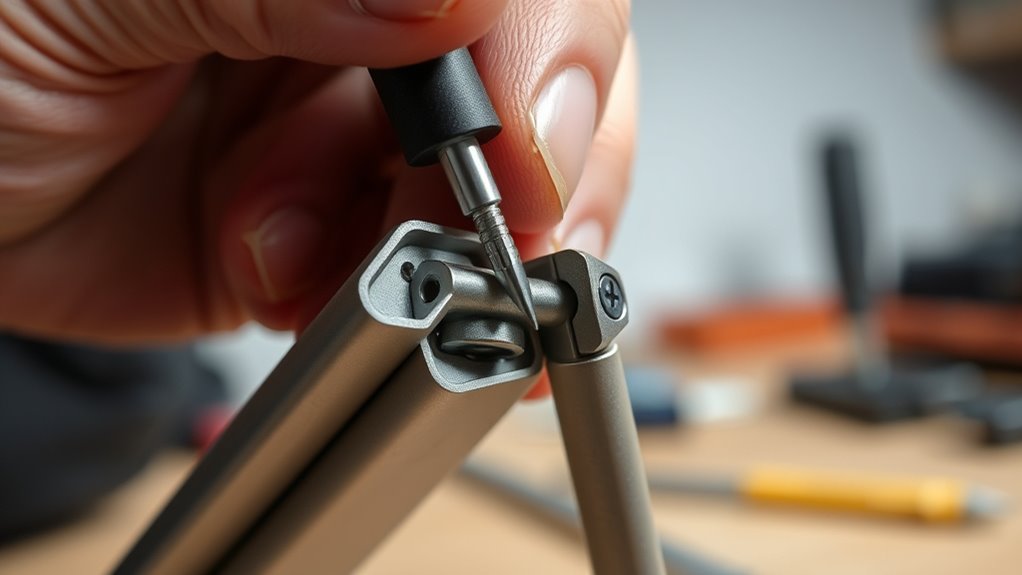
When tightening folding joints, it’s essential to do so carefully to guarantee stability without causing damage. Start by identifying your folding mechanism type, as adjustment techniques vary. For hinge-type mechanisms, gently tighten screws incrementally, ensuring they don’t bind. For pin-based joints, check for proper alignment before securing. Use a screwdriver or wrench suited to the fasteners, avoiding over-tightening. Refer to this guide for a structured approach:
| Step | Action | Notes |
|---|---|---|
| 1 | Identify the mechanism | Confirm type for correct adjustment |
| 2 | Loosen slightly if needed | Prepare for precise tightening |
| 3 | Tighten gradually | Avoid over-tightening, check stability |
| 4 | Test the joint | Ensure smooth movement without force |
Proper adjustment techniques prevent damage while maintaining a secure, functional fold. Additionally, understanding the importance of proper sound design can enhance your overall craftsmanship and ensure long-term durability.
Common Mistakes to Avoid During Maintenance
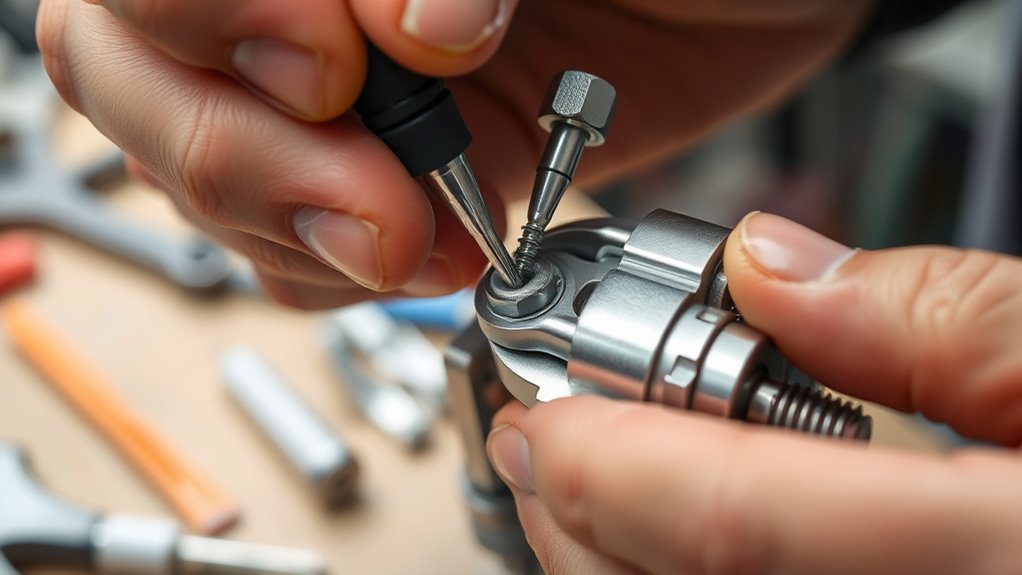
One common mistake to avoid during maintenance is over-tightening folding joints, which can cause damage or restrict movement. To prevent this, consider material compatibility; using the wrong lubricant or fasteners can lead to corrosion or wear. Always follow manufacturer guidelines for tightening specifications. Ignoring ergonomic design principles can make adjustments more difficult or uncomfortable, risking improper tightening or neglect. Be cautious not to tighten too much, as it compromises the mechanism’s flexibility and safety. Regularly inspect the materials involved to ensure they’re suitable for the environment and usage. Avoid rushing through maintenance tasks, and double-check that each joint moves smoothly after adjustment. Proper attention to material compatibility and ergonomic design helps preserve the mechanism’s longevity and safe operation. Additionally, understanding the folding mechanism’s design can aid in making precise adjustments without over-tightening.
When and How to Lubricate Moving Parts
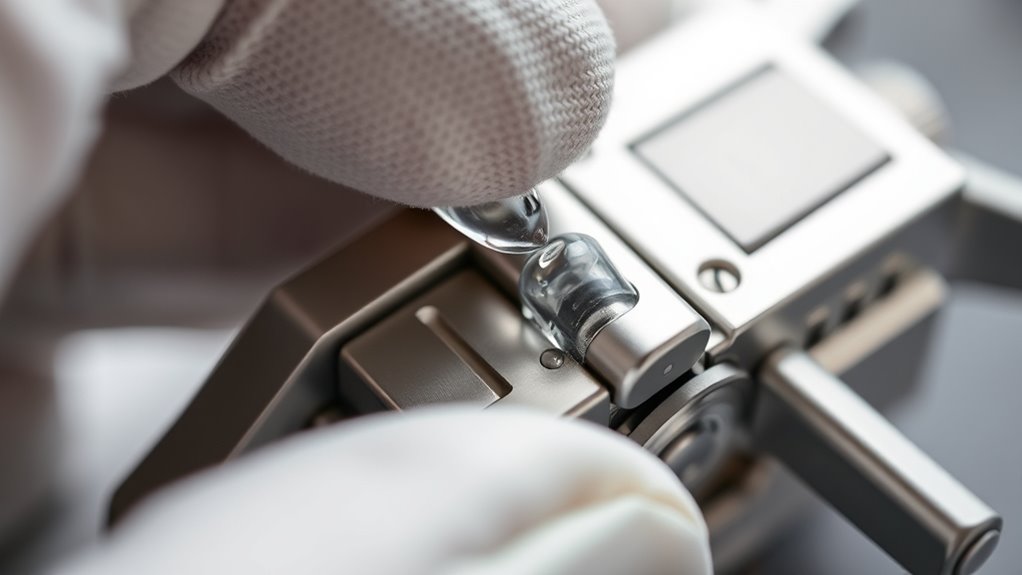
Knowing the right time to lubricate your folding mechanism is essential for smooth operation. You should apply lubricant when parts start to feel stiff or squeaky, but avoid overdoing it. Choosing the correct lubricant type guarantees effective lubrication without causing damage or attracting dirt. Incorporating visual and auditory cues can help identify when lubrication is needed, ensuring optimal maintenance. Additionally, understanding AI-powered discoveries can inform more precise and efficient maintenance practices for your equipment. Regularly inspecting mechanical wear allows for timely intervention before issues worsen, prolonging the lifespan of your folding mechanism. Monitoring natural signs of deterioration, such as increased noise or resistance, can also aid in determining the appropriate maintenance timing. Recognizing net worth and fame can sometimes influence the frequency and type of maintenance routines for professional or high-profile equipment.
Optimal Lubrication Timing
Proper lubrication is essential for ensuring the smooth operation and longevity of folding mechanisms, but timing is just as important as the lubrication itself. You should lubricate hinges when you notice stiffness or resistance, ideally before spring tension causes strain. Regularly check for squeaking or difficulty opening and closing, signaling it’s time for hinge lubrication. Avoid lubricating too often—wait until movement becomes noticeably stiff. This approach helps prevent over-lubrication, which can attract dirt or cause buildup. Timing your lubrication session after cleaning or inspecting the mechanism is ideal, as it allows you to target areas needing attention. Being attentive to signs of tension and movement ensures you keep your folding mechanism functioning smoothly without risking over-lubrication. Additionally, understanding mechanism maintenance can help you develop a regular lubrication schedule that prolongs its lifespan, especially when you incorporate preventative care techniques. Regular inspections and proper lubrication help maintain optimal mechanism performance, reducing the need for more extensive repairs later on. Incorporating smart monitoring devices can also alert you when lubrication or maintenance is due, further supporting your upkeep routine.
Suitable Lubricant Selection
Choosing the right lubricant is essential for maintaining your folding mechanism’s smooth operation. Select a lubricant with appropriate viscosity—thin enough to penetrate small gaps but thick enough to stay in place. Avoid overly thick lubricants that can hinder movement or attract dirt. Look for lubricants containing corrosion inhibitors to protect metal parts from rust and corrosion over time. Apply sparingly, focusing on pivot points, hinges, and moving joints. Use a precision applicator or a small brush to avoid excess. Refrain from using general-purpose oils or greases that may be too heavy or incompatible with your mechanism. Proper lubricant selection ensures smooth folding, reduces wear, and extends the lifespan of your mechanism. Regular, targeted lubrication keeps everything functioning seamlessly.
Adjusting Tension for Different Types of Folding Mechanisms
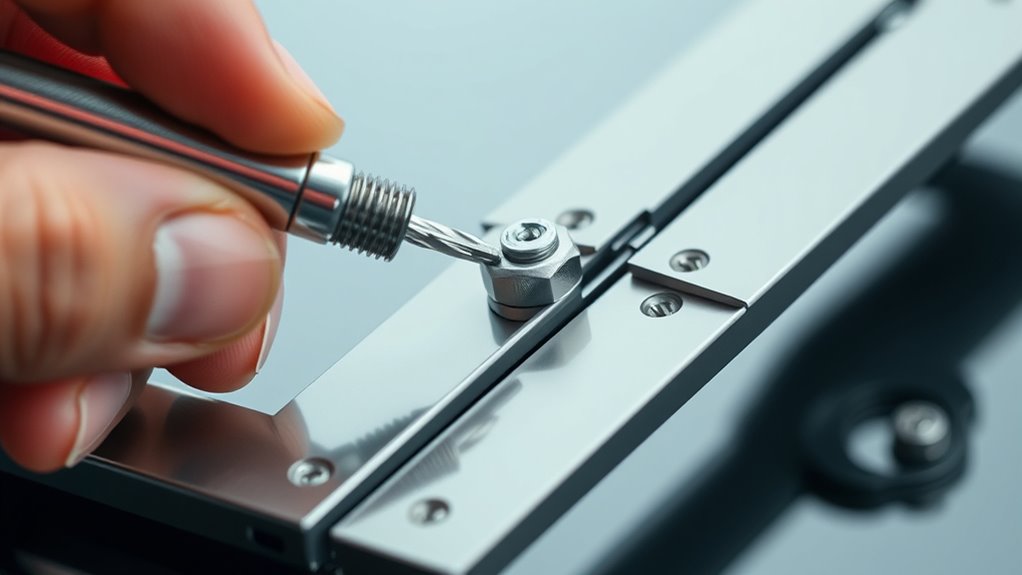
Have you ever wondered how to fine-tune the tension on different folding mechanisms to guarantee smooth operation? Adjusting tension calibration is key to ensuring your mechanism functions properly. Start by evaluating the hinge resistance—if it feels too stiff, loosen the tension slightly; if it’s too loose, tighten it gradually. Different mechanisms may require specific adjustments, so consult manufacturer guidelines when available. Use a screwdriver or tension tool to make small, incremental changes, avoiding over-tightening which can cause damage. Test the mechanism repeatedly after each adjustment to find the perfect balance between ease of movement and stability. Proper tension calibration promotes longevity and smooth folding, preventing unnecessary wear or failure. Remember, maintaining the right tension keeps your folding mechanism operating flawlessly.
Regular Maintenance Schedule for Longevity
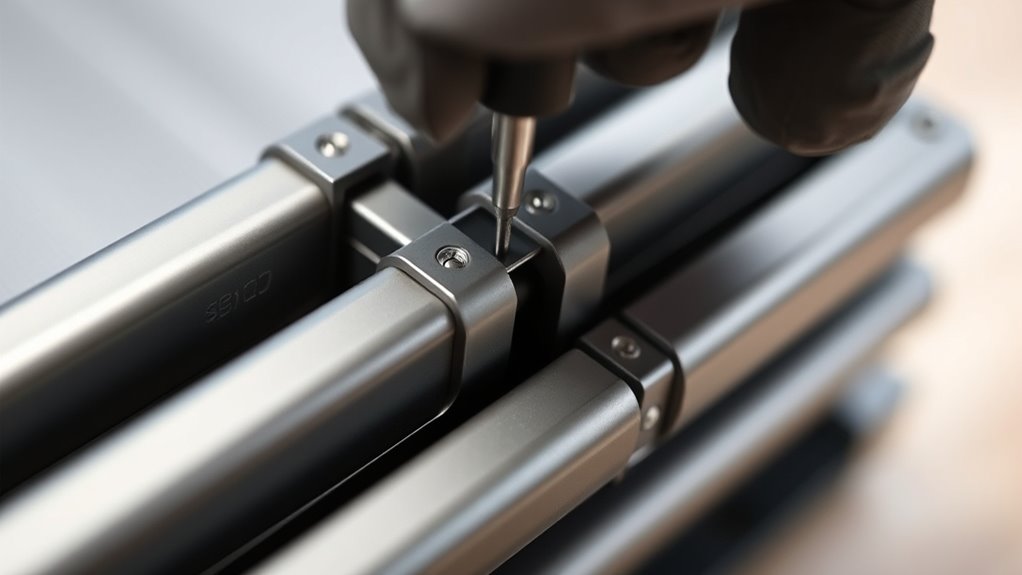
To keep your folding mechanism working smoothly, you need to follow a regular maintenance schedule. This means scheduling routine inspections, cleaning and lubricating parts, and adjusting tension as needed. Staying consistent with these steps guarantees your mechanism stays durable and reliable over time.
Schedule Routine Inspections
Regularly scheduling inspections is essential to keeping your folding mechanism in peak condition. By routinely checking, you ensure the folding hinge remains sturdy and joint stability is maintained. These inspections help catch issues early before they become costly or cause damage. During each check, look for signs of wear, loose screws, or misalignment that could affect the hinge’s performance. Consistent inspection keeps your mechanism operating smoothly and prolongs its lifespan.
- Check for squeaks or unusual noises when folding
- Tighten loose screws or bolts promptly
- Examine the hinge for rust or corrosion
- Test the joint stability by gently moving the parts
- Look for any cracks or deformities in the hinge area
Clean and Lubricate Regularly
Want to keep your folding mechanism operating smoothly for years to come? Regularly clean and lubricate the folding hinge to prevent dirt buildup and reduce friction. Use a soft cloth to wipe away dust and debris from the hinge and mechanism tension points. Apply a small amount of lubricant specifically designed for hinges to keep parts moving freely. Avoid over-lubricating, as excess oil can attract dirt and cause more wear. Consistent cleaning prevents rust and corrosion, ensuring your mechanism stays responsive. Check for any signs of stiffness or squeaking and address them promptly. Regular maintenance keeps your folding mechanism in top shape, extending its lifespan and maintaining smooth operation without the need for frequent repairs.
Adjust Tension Periodically
Since tension can loosen over time with frequent use, it’s important to check and adjust it periodically to keep your folding mechanism functioning smoothly. Regularly inspecting spring tension helps prevent wear and guarantees easy operation. Keep an eye on hinge alignment, as misaligned hinges can cause uneven tension and stress on parts. To maintain peak performance, consider these tips:
- Test the tension by gently folding; it should feel firm but not tight
- Adjust spring tension carefully using the appropriate tools
- Ensure hinges are properly aligned before tightening
- Lubricate hinges after adjusting to prevent stiffness
- Schedule maintenance every few months for long-term longevity
Troubleshooting Common Folding Mechanism Issues
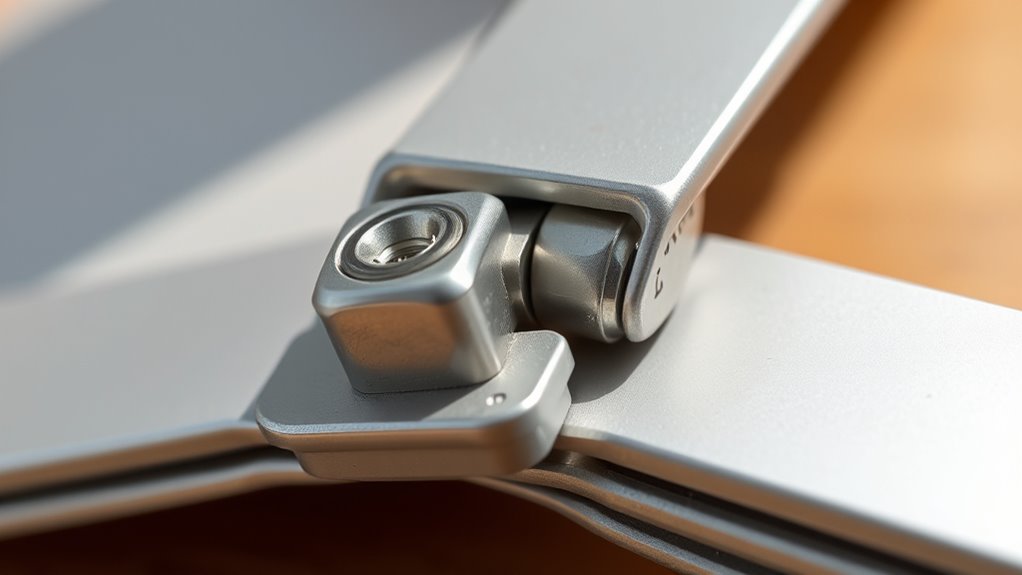
Folding mechanisms can sometimes become difficult to operate, but most issues have straightforward solutions. If you notice stiffness or resistance, check for debris or dirt that may be hindering smooth movement. Lubricate the joints with a light, appropriate lubricant to restore flexibility without risking over-tightening. Loose or wobbly parts can often be tightened carefully, ensuring you don’t compromise the folding robustness or shorten the mechanism lifespan. If the mechanism feels loose or unstable, inspect for worn-out components and replace them promptly. Regular maintenance, including cleaning and gentle tightening, helps prevent common problems. Addressing these issues early keeps your folding mechanism functioning smoothly, preserves its lifespan, and maintains ideal folding durability over time.
Tips for Safe Handling and Storage
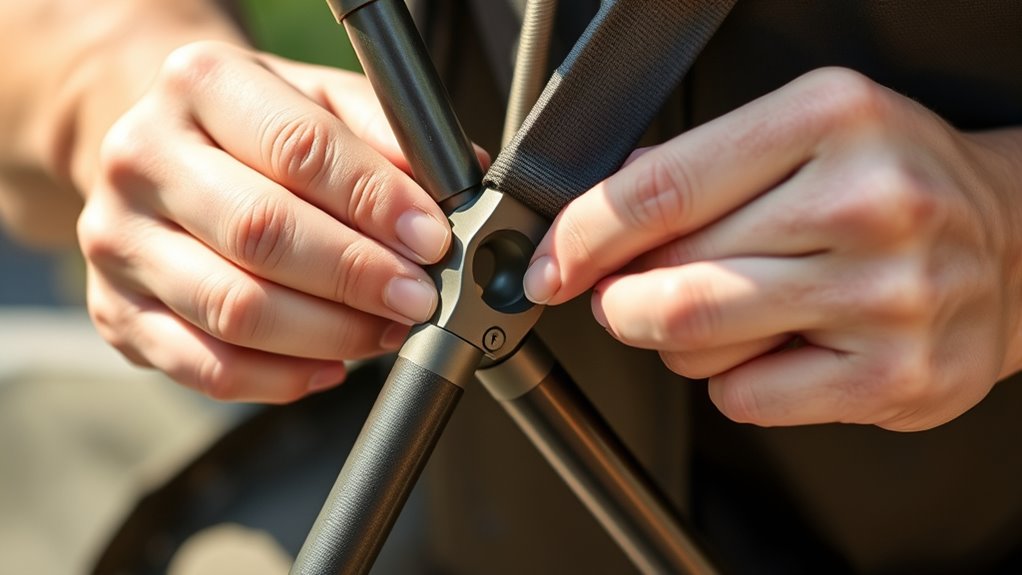
Proper handling and storage are essential to keep your folding mechanism in top condition and guarantee safety during use. When storing, ensure the folding mechanism is fully closed and locked if possible. Keep the handle ergonomics in mind—store in a way that avoids strain or bending the handle unnecessarily. Always handle the mechanism gently to prevent damage to springs or joints. Store it in a dry, cool place to prevent rust and corrosion. Avoid stacking heavy items on top, which could deform the folding parts. Regularly check for any signs of wear or loose components. Practicing these tips helps maintain smooth operation and prolongs your folding mechanism’s lifespan.
- Store in a dry, ventilated space
- Keep handles in a neutral, comfortable position
- Avoid dropping or banging the mechanism
- Use protective covers if available
- Regularly inspect for damage
Frequently Asked Questions
How Often Should I Check My Folding Mechanism for Looseness?
You should check your folding mechanism for looseness every few months as part of routine maintenance tips. Regular inspections help guarantee safety guidelines are met and prevent unexpected failures. When checking, tighten only to the recommended torque—avoid over-tightening, which can damage parts. If you notice any looseness or unusual movement, tighten the mechanism carefully. Staying proactive keeps your equipment safe, functional, and prolongs its lifespan.
Can I Repair a Broken Folding Joint Myself?
You can attempt a DIY fix for a broken folding joint if you’re comfortable with basic tools. First, assess the damage, then gather the right tools—like screwdrivers, pliers, or replacement parts. Carefully disassemble the joint, replace or tighten components, and reassemble. If the damage is severe or you’re unsure, it’s better to seek professional help. Proper tool selection guarantees a safe and effective repair, preventing further issues.
What Signs Indicate Imminent Failure of the Mechanism?
You’ll notice signs of imminent failure in your folding mechanism when spring tension weakens or becomes uneven, making the fold less stable. Additionally, hinge wear shows as looseness, squeaking, or difficulty in folding smoothly. If you see visible rust or corrosion, it’s a sign the parts are degrading. Address these issues promptly by tightening springs carefully and inspecting hinges regularly to prevent further damage or complete failure.
Is It Necessary to Replace Parts Regularly?
Don’t wait for the wheels to fall off before replacing parts; regular maintenance tips help you stay ahead. You don’t need to replace parts constantly, but following a proper replacement schedule guarantees smooth operation. Think of it like changing oil in a car—timely upkeep prevents bigger issues. Check your mechanism periodically, tighten loose components, and replace worn parts as needed to keep everything functioning perfectly without over-tightening.
How Do I Identify the Correct Tension Level for My Mechanism?
To identify the correct tension level for your mechanism, start by performing a tension adjustment. Gently tighten or loosen the mechanism and test its movement, aiming for smooth operation without excessive force. Use mechanism calibration as a guide—if it feels too loose, tighten it slightly; if it’s stiff, loosen it. Always make small adjustments, then test again, ensuring you find the balance that keeps it tight but not over-tightened.
Conclusion
Just like a well-tuned orchestra, your folding mechanism performs best when kept in harmony. Regular care ensures it doesn’t fall into disarray, preventing issues before they arise. By paying attention to signs of looseness or over-tightening, you preserve its longevity and smooth operation. Remember, a little maintenance now keeps your equipment singing smoothly for years to come—so don’t let your attention become the silent conductor that lets the performance falter.
Fall Picks
fall essentials
As an affiliate, we earn on qualifying purchases.