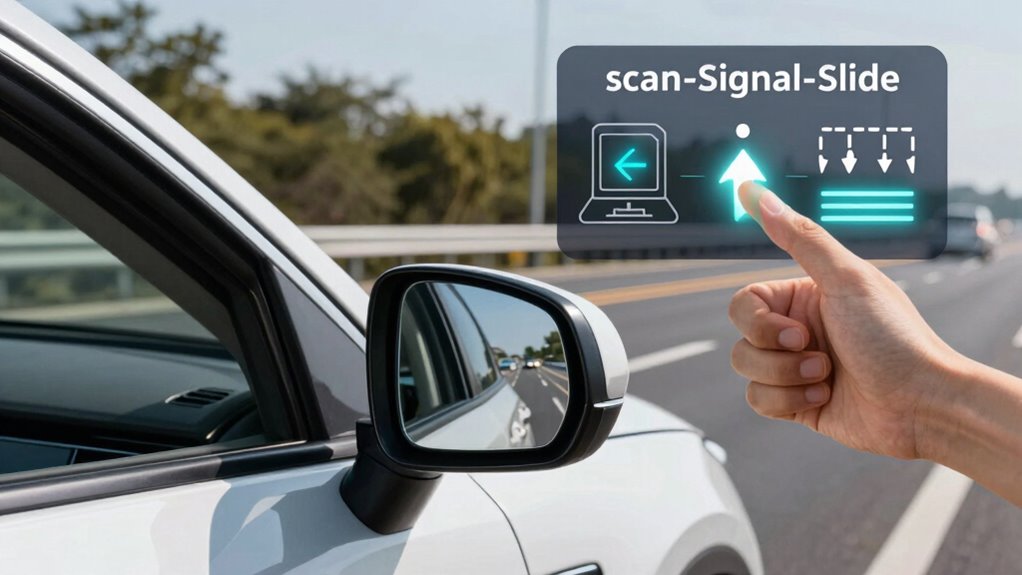

The ‘scan–signal–slide’ method helps you change lanes safely and predictably. First, you scan your blind spots by looking over your shoulder and checking mirrors to make certain no vehicles are hidden. Then, you signal your intentions at least three seconds in advance with clear, functioning signals. Finally, you smoothly steer into the new lane while maintaining steady speed and ongoing awareness. Mastering this process ensures a safer driving experience—continue to explore these techniques for more confidence behind the wheel.
Key Takeaways
- Scan carefully by checking blind spots over your shoulder before signaling to detect hidden vehicles.
- Signal your lane change at least 3 seconds in advance to alert other drivers early.
- Slide into the new lane smoothly after confirming it is clear, maintaining a steady speed.
- Continuously check mirrors during the maneuver to monitor surrounding traffic and adjust as needed.
- Practice the ‘scan–Signal–Slide’ sequence regularly to develop safe, predictable lane-changing habits.

Changing lanes safely requires more than just steering; it involves a deliberate sequence to guarantee you’re aware of your surroundings and communicate your intentions clearly. One of the most critical aspects of this process is understanding blind spot awareness. Before you even turn on your signals, it’s important to look over your shoulder to check your blind spots. These are areas your mirrors can’t cover, and failing to account for them can lead to dangerous situations. By actively glancing over your shoulder, you gain a full picture of what’s happening around your vehicle, reducing the risk of cutting off another driver or missing an approaching vehicle. Once you’re confident there are no vehicles in your blind spots, you can proceed with signaling techniques. Proper signaling is essential for alerting other drivers to your intentions, giving them time to react and adapt accordingly. Use your turn signals well in advance—ideally at least 3 seconds before you intend to change lanes—so others aren’t caught off guard. Make sure your signals are clear and functioning properly, and avoid flickering or delayed responses that can confuse other drivers.
After checking your blind spots and signaling, the next step is the actual slide—gliding smoothly into the new lane. The key here is to keep your movements deliberate and controlled. Once your signals are on and you’re sure the lane is clear, gently steer into the desired lane, maintaining a steady speed. Keep an eye on your mirrors as you move, ensuring no vehicle is approaching too quickly from behind. This continuous awareness helps you adjust your position if necessary, avoiding abrupt lane changes that might cause accidents. Remember, your goal is to make your lane change seamless and predictable. The combination of thorough blind spot checks, proper signaling techniques, and smooth steering creates a safe environment for everyone on the road. Additionally, understanding the importance of contrast ratio can help you better judge the visibility and clarity of your car’s signals and lights in various conditions. By practicing this method consistently, you develop a rhythm that minimizes risks and enhances your confidence behind the wheel. Always stay alert for other drivers’ signals and behaviors, as road conditions and traffic flow can change unexpectedly. Using the ‘scan–Signal–Slide’ method effectively turns a potentially risky maneuver into a safe, predictable part of your driving routine.
Frequently Asked Questions
How Does Weather Affect the Scan–Signal–Slide Method?
Weather challenges like rain, fog, or snow can reduce visibility concerns, making it harder for you to see other vehicles or hazards during your scan. You should slow down and pay extra attention to mirror checks and blind spots. Use your signals earlier, and slide carefully into the next lane, ensuring your movements are deliberate and clear despite the weather conditions. Stay cautious to keep yourself and others safe.
Is This Method Suitable for All Vehicle Types?
This method is like a versatile tool, suitable for most vehicle types, from cars to trucks. You can adapt the scan–signal–slide technique as part of your lane change techniques regardless of your vehicle. Smaller vehicles might maneuver more easily, but the core steps remain effective across different types. Always adjust your approach based on your vehicle’s size and handling, ensuring safety with every lane change.
How Long Should I Signal Before Changing Lanes?
You should signal with your turn signal at least 3 seconds before changing lanes. This gives drivers in your blind spot enough time to notice your intention and react accordingly. Remember to check your blind spot by glancing over your shoulder before sliding into the new lane. Using your turn signal consistently and early helps guarantee a safe, smooth lane change, reducing the risk of accidents.
Can This Method Be Used During Heavy Traffic?
In heavy traffic, you can still use the ‘scan–Signal–Slide’ method, but it’s like steering through a swirling river—you must stay alert to the flow of traffic and your surroundings. Driver awareness is essential, so you’ll need to be quick and precise, watching for gaps and riding the wave of traffic flow safely. This method helps you make confident, safe lane changes even amid chaos, keeping everyone’s journey smooth.
What Are Common Mistakes to Avoid With This Technique?
You should avoid neglecting your blind spot, as it’s a common mistake that can lead to accidents. Always check it before changing lanes, even if you’ve signaled. Additionally, make certain your mirrors are properly adjusted so you can see clearly around you. Rushing the scan or not signaling properly can cause confusion. Take your time, double-check your blind spots, and use your mirrors effectively for a safe lane change.
Conclusion
By mastering the ‘scan–signal–slide’ method, you steer your vehicle like a skilled sailor steering calm waters, avoiding unseen dangers. Always scan your blind spots, signal your intentions clearly, and slide smoothly into the new lane. Think of this routine as your safety compass, guiding you through traffic’s unpredictable currents. Stay vigilant and confident—your careful approach ensures a safe journey, turning every lane change into a seamless, worry-free voyage.