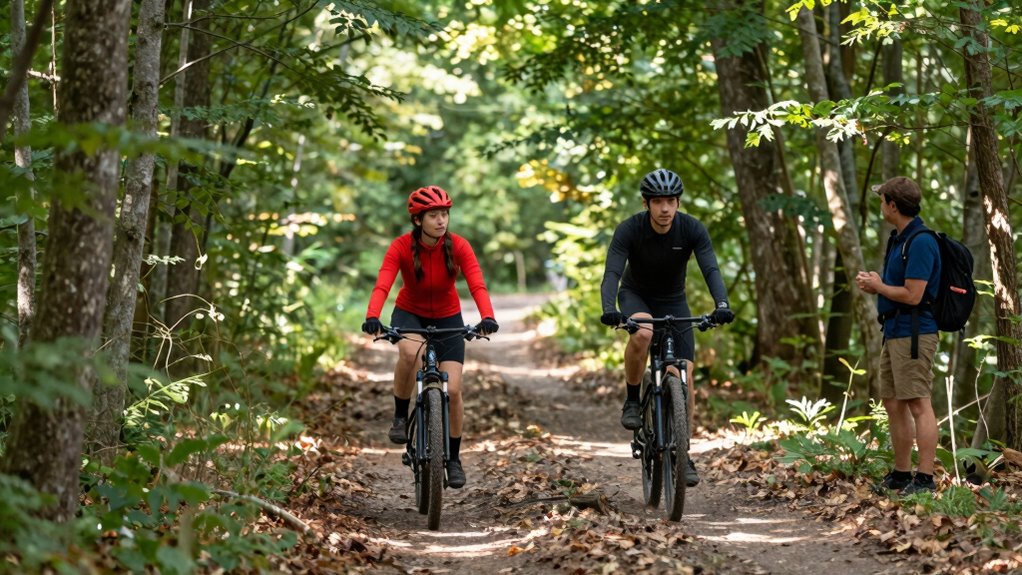

To keep everyone calm on shared paths, communicate clearly and politely with confident gestures like eye contact or a friendly nod, and use verbal cues such as “Passing on your left.” Be patient and wait for safe moments to pass, maintaining a respectful distance and appropriate speed. Respect different users’ needs and adapt your approach accordingly. If you want to master calming passing habits, you’ll discover effective strategies that foster trust and safety.

Get bike and ride gear delivered free with Prime
- Fast, free delivery on millions of items
- Prime Video, Amazon Music and more included
- Member-only deals all year
Key Takeaways
- Communicate your intentions clearly with eye contact, gestures, or verbal cues to prevent confusion.
- Maintain a safe distance and adjust speed appropriately when passing others to ensure comfort.
- Be patient and avoid rushing, especially if others seem hesitant or unsure.
- Respect different users’ speeds and needs, giving ample space and avoiding sudden moves.
- Stay calm and polite in difficult situations, using friendly gestures or words to de-escalate conflicts.
Recognizing When to Pass and When to Wait
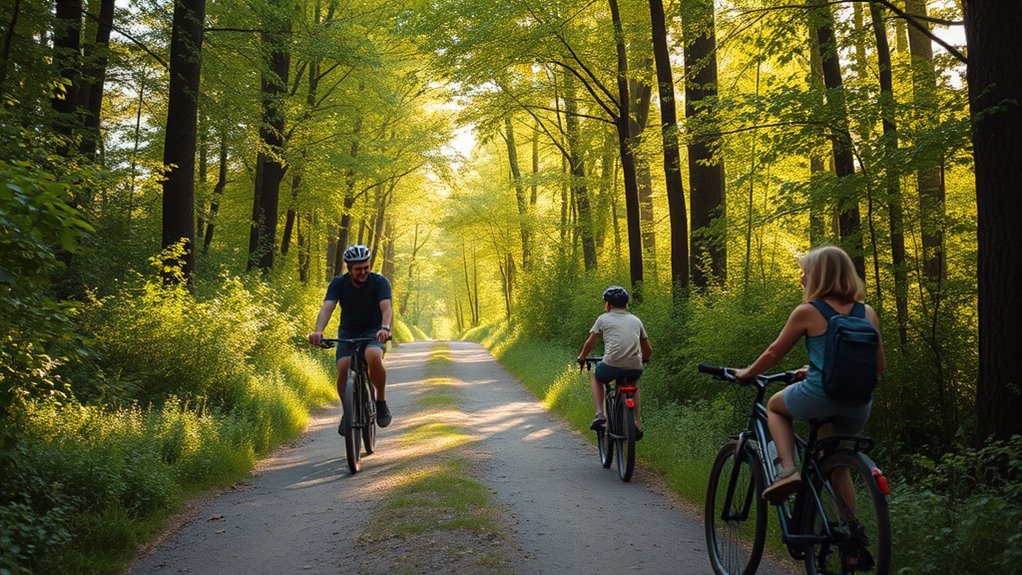
Knowing when to pass and when to wait is essential for passing etiquette. Your passing patience and timing awareness are key to ensuring a smooth and respectful experience for everyone. Look for signs that indicate a safe opportunity to pass, such as a clear path ahead and enough space to do so safely. Avoid rushing if the rider or pedestrian appears unsure or hesitant; instead, exercise patience and wait for a more suitable moment. Pay attention to your surroundings, including oncoming traffic or other path users, to determine the right time to pass. Remember, rushing can lead to accidents or discomfort, so trust your judgment and be patient until the conditions are ideal for passing safely. Practicing situational awareness can greatly enhance your ability to judge the right moment to pass. Being aware of your environment helps you anticipate movements and ensures safer passing decisions. Additionally, understanding passenger and pedestrian behavior can help you better interpret when it’s appropriate to proceed or wait. Developing positive communication skills can also improve interactions and reduce misunderstandings on shared paths.
Communicating Clearly and Politely
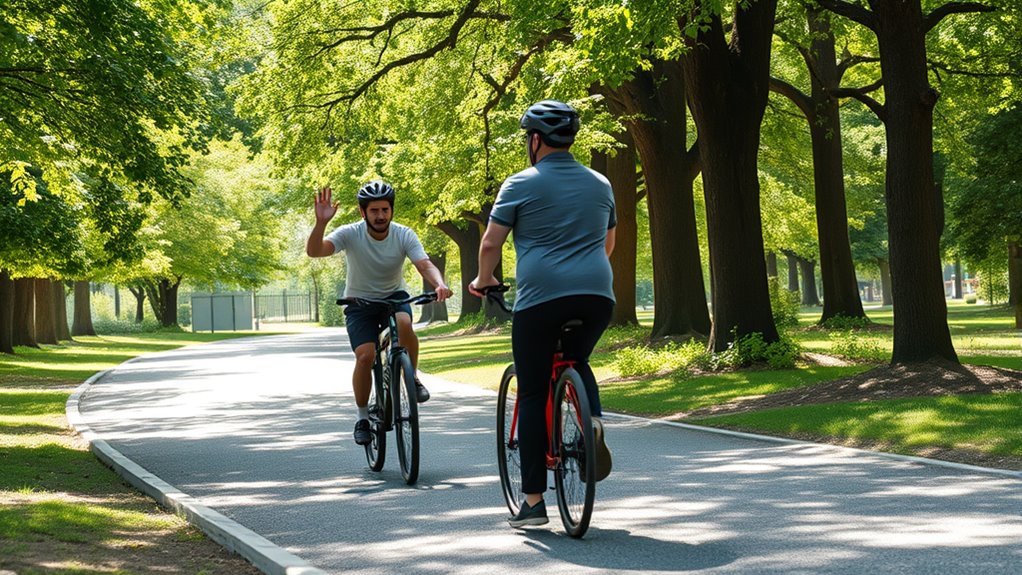
Once you’ve decided it’s the right moment to pass, communicating your intentions clearly and politely helps guarantee everyone stays safe and comfortable. Use confident body language, like making eye contact or giving a gentle nod, to signal your approach. Keep your tone of voice calm and friendly, avoiding any aggressive or hurried sounds. A simple verbal cue, such as “Passing on your left,” combined with relaxed body language, reassures the other person. Be mindful of your facial expressions—smiles or neutral expressions work best—and avoid sudden movements. Clear communication minimizes confusion and reduces anxiety for everyone involved. Remember, a respectful tone and open body language show you’re considerate, making the passing smoother and more pleasant for all. Additionally, understanding the importance of projector technology features can help you better communicate and coordinate with others during shared activities.
Maintaining a Safe Distance and Speed
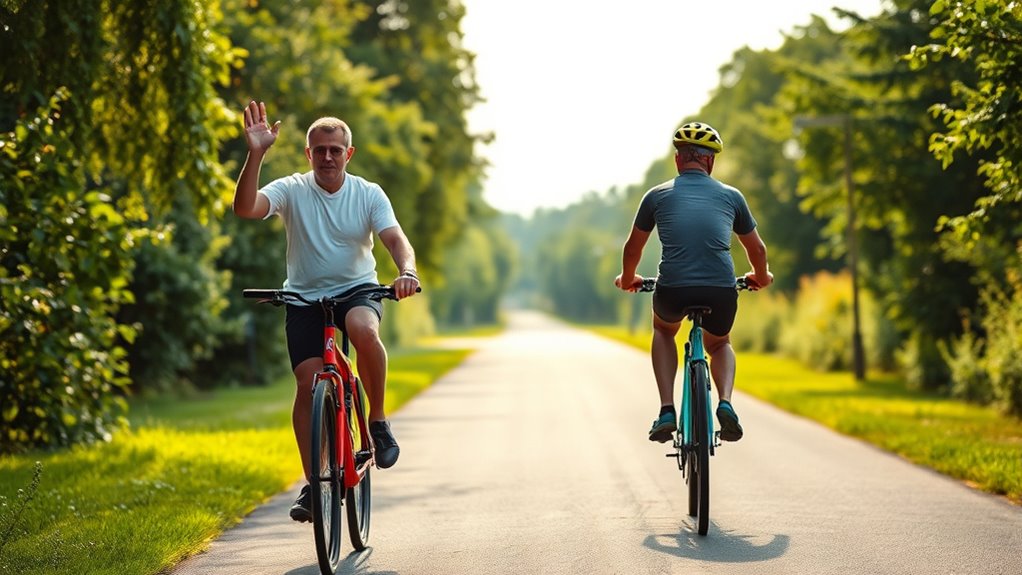
Maintaining a safe distance and appropriate speed is essential for smooth and secure passing. Use clear passing signals, like hand gestures or verbal cues, to communicate your intentions to others. This clear communication helps everyone stay aware and prepared. Follow lane etiquette by staying within your lane and avoiding sudden movements, which can surprise others and cause accidents. Keep a respectful distance, both from the rider or pedestrian you’re passing and from oncoming traffic, to give yourself enough space to react if needed. Adjust your speed to match the situation—pass quickly when safe, but avoid rushing or aggressive driving. Properly managing your speed can also reduce noise pollution, contributing to a more peaceful environment for everyone involved. Being mindful of your vehicle’s momentum and how it affects others can further enhance safety and comfort during passing maneuvers. Additionally, understanding navigation and mapping principles can help you anticipate and respond to complex traffic scenarios more effectively. Being aware of traffic flow patterns helps prevent abrupt stopping and enhances overall safety during passing. Developing good situational awareness ensures you can adapt to unexpected changes and maintain a calm, controlled driving style.
Being Mindful of Different Users and Their Needs
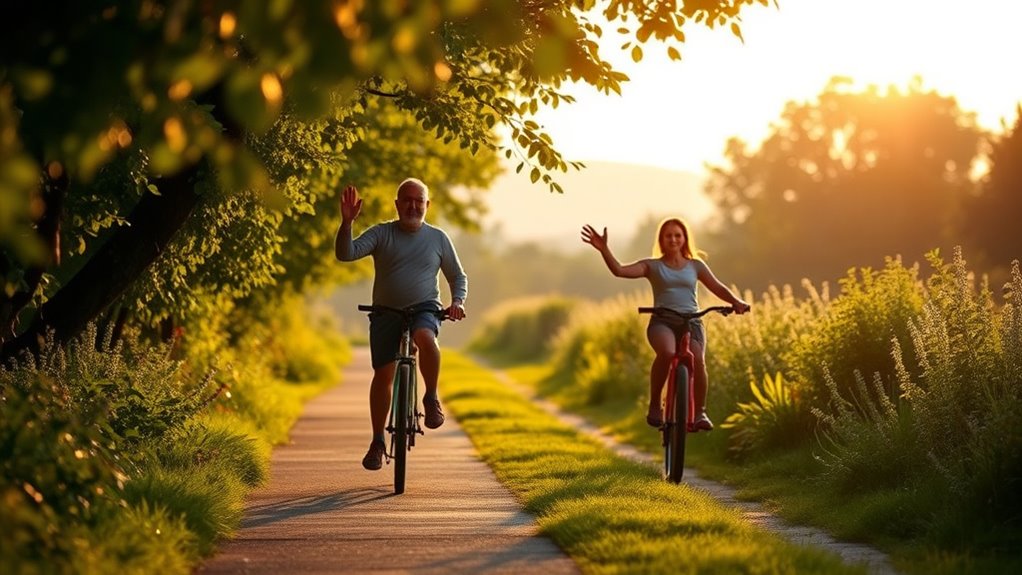
Being mindful of different users and their needs means paying close attention to how various people share the road. You should practice shared space awareness, recognizing that pedestrians, cyclists, and motorists may have different speeds and comfort levels. Adopt inclusive etiquette by giving ample space when passing and avoiding sudden moves that could startle others. Respect quiet zones or designated areas, and be patient with slower users. Keep an eye out for hand signals or eye contact to communicate your intentions clearly. Adjust your speed and approach to suit the environment, ensuring everyone feels safe and respected. Remember, considerate behavior fosters a calm, inclusive atmosphere for all.
- Respect different speeds and comfort levels
- Give ample space when passing
- Be patient with slower users
- Use clear signals to communicate
Handling Difficult Situations Gracefully
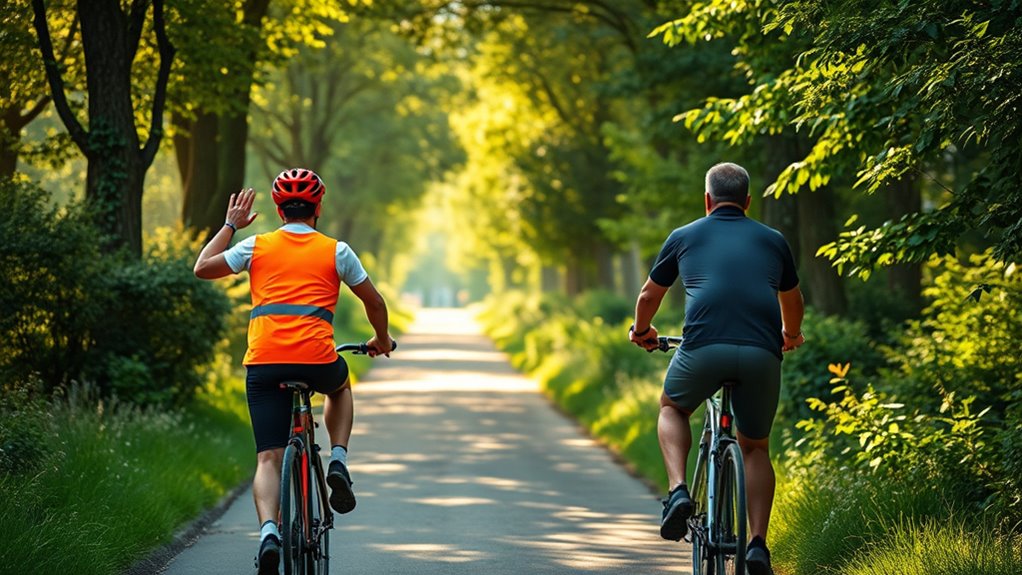
Handling difficult situations gracefully requires staying calm and composed, even when others may be impatient or upset. When someone doesn’t follow proper passing etiquette or seems rushed, resist the urge to react defensively. Focus on maintaining shared path safety by communicating clearly and giving space. If a cyclist or pedestrian becomes aggressive, avoid escalating the situation—use a friendly gesture or a gentle verbal reminder if appropriate. Remember, everyone’s goal is to share the path safely, so patience is key. If tensions rise, slow down or step aside to let the other person pass, showing respect and understanding. Practicing de-escalation techniques can further de-escalate tense encounters and promote mutual respect. Cultivating empathy and patience during these moments helps prevent conflicts, keeps everyone calm, and ensures shared path safety remains the priority. Being aware of auditory processing challenges can also help in understanding different reactions and responses during stressful situations. Recognizing conflict resolution strategies can enhance your ability to handle such moments effectively and peacefully.
Frequently Asked Questions
How Can I Tell if Someone Wants Me to Pass or Wait?
You can tell if someone wants you to pass or wait by observing their body language and eye contact. If they make eye contact and nod or step aside, it signals they’re okay with you passing. Conversely, if they avoid eye contact, stand firm, or show signs of hesitation, it’s polite to wait. Pay attention to these cues; they help keep everyone calm and respectful on shared paths.
What Sounds or Signals Are Best for Communication During Passing?
Did you know that 85% of cyclists prefer visual signals over horn sounds? When passing, use clear hand gestures like a raised hand or a wave to signal your intention. Horn signals can also work, but keep them gentle and brief to prevent startling others. Combining both methods ensures effective communication, helping everyone stay calm and safe during passing. Always be attentive to others’ signals, too.
How Do I Handle a Situation Where Someone Is Blocking the Path?
When someone blocks the path, practice passing patience by giving them a courteous gesture, like a friendly nod or a wave, to signal you’re waiting. If they don’t move, maintain a calm distance and wait for a safe opportunity to pass. Avoid rushing or sounding impatient. Your respectful demeanor encourages others to be courteous too, helping everyone stay calm and safe on shared paths.
What Should I Do if I Feel Unsafe During a Pass?
If you sense danger during a pass, trust your instincts and act quickly. Signal your intentions with clear emergency signals, like a loud call or a hand wave, to alert others. Maintain your pace, stay aware of your surroundings, and if needed, create space by moving off the path safely. Your safety precautions are essential—don’t hesitate to prioritize your well-being and seek help if the situation escalates.
How Can I Stay Calm in Tense Passing Encounters?
To stay calm during tense passing encounters, focus on your breathing by using breathing techniques like slow, deep breaths. Practice mindfulness exercises, such as observing your surroundings without judgment, to keep your mind centered. Remind yourself that most situations are temporary and maintain a relaxed posture. By staying present and calm, you can reduce tension and guarantee a smoother, safer passing experience for everyone involved.
Conclusion
Remember, practicing good passing etiquette keeps shared paths safe and enjoyable for everyone. Did you know that nearly 60% of cycling accidents happen during passing? By recognizing when to pass, communicating clearly, and respecting others’ needs, you help prevent conflicts and accidents. Stay mindful, be patient, and handle tricky situations gracefully. Your courteous actions not only protect you but also create a calmer, more welcoming environment for all users.
Fall Picks
fall essentials
As an affiliate, we earn on qualifying purchases.