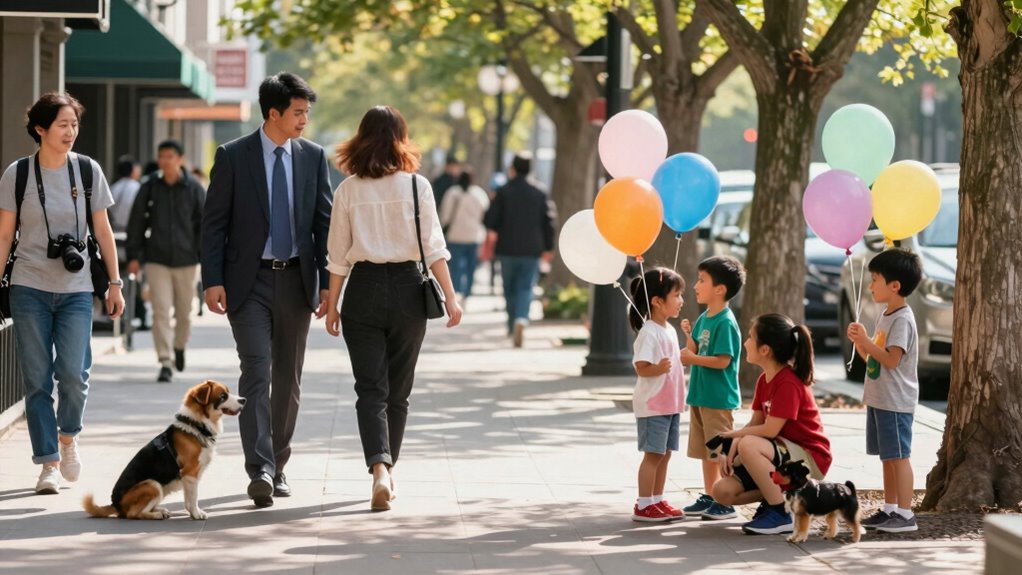

To prevent chaos, practice courteous moves by respecting shared spaces and yielding to pedestrians like children and the elderly. Keep your dog on a short leash, clean up after it, and control its behavior around others. Teach kids to stay alert and cross streets safely using signals and eye contact. Be mindful of others’ pace in crowded areas and follow safety protocols. If you want to master these simple yet effective habits, there’s more you can learn to create a safer community.
Key Takeaways
- Keep dogs on short leashes and clean up after them to prevent accidents and maintain cleanliness around pedestrians and children.
- Teach kids to stay on sidewalks, obey traffic signals, and look both ways before crossing to ensure their safety.
- Make eye contact or use signals before passing pedestrians or dogs to avoid startling or startling others.
- Respect the pace and space of pedestrians, children, and dogs to foster a calm, orderly shared environment.
- Practice patience and model respectful behavior to promote safety and harmony in busy urban spaces.

Practicing courtesy when sharing public spaces guarantees everyone feels safe and respected, whether you’re walking, playing, or commuting. Urban etiquette isn’t just about politeness; it’s about creating an environment where all users—pedestrians, dogs, and children—can coexist peacefully. One of the most important aspects of this is understanding and following safety protocols that keep everyone secure. When you step onto busy sidewalks, remember that your actions directly impact others’ safety. Yield to those who are more vulnerable, like kids or elderly pedestrians, and be mindful of your surroundings. Keep noise levels reasonable and avoid sudden movements that might startle others, especially in crowded areas. Using proper signaling, like making eye contact or giving a friendly nod before passing, helps prevent misunderstandings or accidental collisions. Incorporating local automation can also help manage traffic flow and pedestrian safety, making shared spaces more efficient and secure.
When it comes to dogs, urban etiquette becomes even more essential. Always keep your dog on a short leash in public spaces, respecting local regulations and safety protocols. This not only protects your pet but also others—small children, fellow dog walkers, or even those who are afraid of dogs. Be attentive to your dog’s behavior; if your pet shows signs of stress or aggression, it’s best to step aside or find a quieter spot. Cleaning up after your dog is fundamental, demonstrating respect for shared spaces and the people around you. Carrying waste bags and disposing of them properly is a simple courtesy that prevents conflicts and keeps the environment clean.
For kids, teaching good manners and respect for urban etiquette helps foster a safer community. Encourage them to stay on sidewalks and avoid darting into traffic. Make sure they understand the importance of looking both ways before crossing streets and listening to crossing guards or traffic signals. When kids are playing, remind them to be aware of their surroundings and to give way to pedestrians or cyclists. As a responsible adult, model these behaviors—show patience and set clear boundaries. Respecting the pace and space of others helps prevent chaos, especially during busy times when pedestrian traffic is high.
Frequently Asked Questions
How Can Pedestrians Better Signal Their Intentions to Others?
You can better signal your intentions by using clear gesture signaling, like raising your hand or pointing when crossing or turning. Making eye contact with drivers or other pedestrians shows you’re aware and intent to act. These cues help others anticipate your moves, reducing confusion and potential accidents. Combining gesture signaling with eye contact guarantees your intentions are understood, creating a safer, more courteous environment for everyone around you.
What Are Effective Ways to Train Dogs for Courteous Street Behavior?
Imagine you’re channeling a Victorian dog trainer—training your dog for courteous street behavior starts with positive reinforcement and consistent leash training. Reward good manners like sitting calmly at crosswalks or walking politely past strangers. Use treats and praise to encourage desired actions, and always stay patient. This approach helps your dog understand expectations, making street interactions safer and more courteous. Remember, patience and consistency are your best allies in shaping good manners.
How Can Parents Teach Kids About Pedestrian Safety and Courtesy?
You can teach kids about pedestrian safety and courtesy by setting clear rules and practicing together. Show them how to look both ways before crossing and use polite gestures like waving thanks. Reinforce the importance of obeying traffic signals and staying on sidewalks. Make learning fun with role-playing and praise their good street manners. Consistent guidance helps children develop safe habits, ensuring their safety and respectful behavior on the street.
What Are Common Misunderstandings Between Pedestrians and Dog Owners?
You might assume dogs always have the right of way, but it’s important to respect pedestrian right of way, especially on busy sidewalks. Many misunderstand dog leash etiquette, expecting dogs to stay close, but owners might not realize they’re blocking the path or startling pedestrians. Clear communication helps. As a pedestrian, slow down and politely ask dog owners to control their pets, fostering mutual respect and preventing potential conflicts.
How Do Cultural Differences Influence Courtesy Moves in Public Spaces?
Cultural differences profoundly shape courtesy moves in public spaces, challenging the idea that social norms are universal. You might assume everyone follows similar cross-cultural etiquette, but in reality, what’s polite in one culture could be seen as intrusive in another. By understanding and respecting diverse social norms, you can avoid misunderstandings, demonstrating sensitivity and fostering harmony in shared environments. Embracing these differences helps prevent chaos and promotes respectful interactions.
Conclusion
By practicing simple courtesy moves, you create a smoother, safer environment for everyone—pedestrians, dogs, and kids alike. A quick smile, a gentle nod, or a courteous gesture can prevent chaos and foster harmony. Imagine the scene if we all took that extra moment to be considerate—how much more enjoyable and peaceful our streets would be. Isn’t it worth a small act of kindness to keep the chaos at bay and make everyday life better for all?