
TL;DR

Get bike and ride gear delivered free — and shop member deals
- Fast, free delivery on millions of items
- Access to Prime Big Deal Days deals on October 6–7
- Prime Video, Amazon Music and more included
Cycling Weekly columnist Michael Hutchinson has published a humorous argument that a level saddle and other common bike-fit rules are useful starting points, not universal requirements. He says riders can adapt to small changes, but saddle choice, cleat position and other individual needs may call for trial and error or professional fitting.
Cycling Weekly columnist Michael Hutchinson has argued that familiar bike-fit rules, including keeping a bicycle saddle level, can serve many riders but should not be treated as universal. In a humorous column prompted by a friend lowering his saddle on a hot ride, Hutchinson says small adjustments are often manageable, while some riders benefit from individual fitting advice.
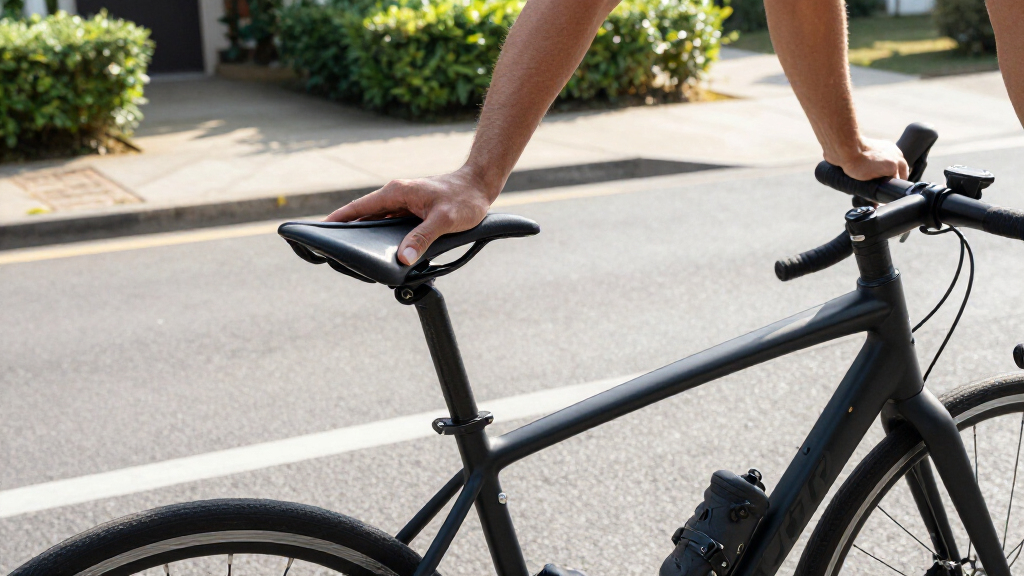
Hutchinson recounts riding with his friend Bernard, who stopped during a hot afternoon ride and lowered his saddle by a few millimetres because it “feels right” to him in warm weather. The anecdote leads into Bernard’s wider view that formal bike fitting is a myth and that riders should trust what looks right. Hutchinson presents that attitude playfully rather than as a technical finding.
Bernard’s rules of thumb include setting saddle height at 0.833 times the inside-leg measurement, keeping the saddle level for most riders, and positioning its nose 60–65 millimetres behind the bottom bracket. The column also gives a visual cue for handlebar position and a preference for 170-millimetre cranks, while making exceptions for triathletes and time-trial riders. These are Bernard’s guidelines as reported by Hutchinson, not a prescription endorsed for every cyclist.
Hutchinson says the approach is “not a million miles out” for many people because riders can accommodate modest differences in position. He also points to the limits of general rules: finding a comfortable saddle can involve expensive trial and error, and some cyclists may benefit from detailed work on cleat position, cleat angle and insoles, particularly when trying to address knee problems.
When Simple Fit Rules Fall Short
The column speaks to cyclists weighing a do-it-yourself adjustment against a paid bike fit. Its practical message is that common measurements can provide a starting point, but comfort and individual needs still matter. A rule that works for one rider may not settle questions about saddle shape, foot alignment or a position that causes discomfort.
Hutchinson’s point about saddle costs also gives the discussion a consumer angle: repeated purchases to find a suitable saddle can add up. Meanwhile, riders experiencing persistent discomfort or seeking help with cleat alignment may find that a tailored assessment addresses issues a general formula cannot. The column does not offer clinical advice or compare fitting methods; it presents a personal argument about the balance between standard guidance and experimentation.
As an affiliate, we earn on qualifying purchases.
From Frame Builders to Bike Fits
Hutchinson contrasts Bernard’s informal rules with the history of bicycle fitting. He writes that bike fitting was not a distinct specialism in the cycling world he and Bernard grew up in, although bespoke frame builders often used their own systems to choose frame geometry based on a rider’s measurements. The column notes that these methods were not necessarily precise by modern standards.
Hutchinson is a writer, journalist and former professional cyclist. The source describes him as a multiple national title winner in Britain and Ireland who competed at the World Championships and Commonwealth Games. His credentials provide context for the column, but the piece remains an opinion-led commentary built around a friend’s habits and the author’s experience, not a published technical study.
“I reckon his system is not a million miles out.”
— Michael Hutchinson, Cycling Weekly columnist
As an affiliate, we earn on qualifying purchases.
Limits of the Rules of Thumb
The column does not provide research showing how often the listed measurements work, nor does it establish that lowering a saddle on a hot day has a physiological benefit. Bernard’s warm-weather explanation is a personal preference, and Hutchinson’s account does not test it. The suggested measurements should not be read as individualized fitting advice.
It also does not set out which riders specifically need professional fitting, quantify the cost or effectiveness of a fitting, or establish that insoles prevent knee problems. Hutchinson says that some riders benefit from detailed attention to cleats and insoles; the source offers no clinical evidence or case data to measure those benefits.
As an affiliate, we earn on qualifying purchases.
Adjustments Remain a Personal Choice
The source reports no scheduled follow-up, formal recommendation or new technical guidance from Cycling Weekly. Hutchinson’s closing point is that riders can experiment with small changes and reverse them if they do not work. The column leaves the decision between self-adjustment and a professional fit to each rider’s circumstances, without presenting a new standard for saddle position.
For readers applying the discussion, the clearest distinction in the piece is between general starting points and individual fit concerns: a modest saddle adjustment may be easy to test, while persistent discomfort or questions about cleats and knee alignment are among the areas Hutchinson says may warrant more detailed attention.
bike fitting tools for saddle and cleats
As an affiliate, we earn on qualifying purchases.
As an affiliate, we earn on qualifying purchases.
Key Questions
Does the column say every bicycle saddle should be level?
No. The level-saddle rule is described as Bernard’s rule of thumb for most riders, with exceptions for triathletes and time-trial riders. Hutchinson does not present it as a universal technical standard.
What saddle-height formula does the column mention?
Bernard’s guideline is to set saddle height at 0.833 times the rider’s inside-leg measurement. The column presents this as an informal formula, not a personalized fit assessment.
Does Hutchinson recommend professional bike fitting?
He does not make a blanket recommendation. He says simple rules may work for many riders, while some benefit from detailed attention to cleat positions, angles and insoles.
Does heat make a saddle need to be lowered?
The source does not establish that. Bernard says he lowers his saddle slightly on hot days because it feels right to him; Hutchinson offers the episode as an anecdote rather than evidence of a general effect.
Source: rss
Fall Picks
fall essentials
As an affiliate, we earn on qualifying purchases.