
Most commuters overlook the importance of a proper helmet fit check, risking safety and comfort. You should make sure your helmet sits level, covers your forehead, and is snug but not tight. Check that straps form a “V” under your ears and are just firm enough for a secure fit. Ignoring these steps can lead to helmet shifting or discomfort during rides. Keep watching to discover how a quick fit check can make a big difference.

Get bike and ride gear delivered free — and shop member deals
- Fast, free delivery on millions of items
- Access to Prime Big Deal Days deals on October 6–7
- Prime Video, Amazon Music and more included
Key Takeaways
- Many commuters neglect to verify if their helmet sits level and covers the forehead properly before riding.
- They often overlook adjusting straps to ensure a snug, secure fit under the ears.
- Commuters frequently skip quick checks for helmet movement or tightness during each ride.
- A common mistake is not inspecting helmet position after minor adjustments or long-term use.
- Failing to confirm proper fit can lead to reduced helmet effectiveness during impacts.

A proper helmet fit is vital for your safety and comfort, whether you’re cycling, skateboarding, or engaging in any activity that requires head protection. Many commuters overlook the importance of this step, assuming that simply wearing a helmet is enough. But if your helmet isn’t fitted correctly, it can compromise helmet safety and leave you vulnerable in a fall or collision. The key lies in proper adjustment—making sure your helmet sits properly on your head rather than feeling loose or tight.
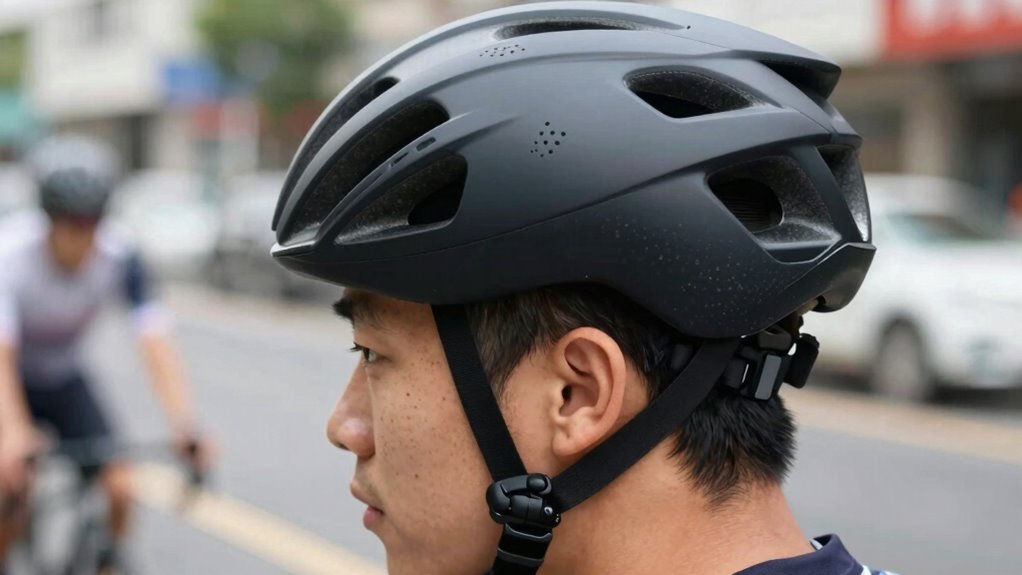
First, you need to position the helmet correctly on your head. It should sit level, covering your forehead without tilting forward or backward. The front edge should sit about one to two finger-widths above your eyebrows, giving you ample protection for your face and forehead. If it slides around or shifts easily when you move your head, it’s too loose. Conversely, if it feels painfully tight or causes discomfort, it’s probably too tight. Achieving the right fit involves adjusting the straps and the internal fit system, if your helmet has one.
Position your helmet level, one to two finger-widths above your eyebrows, for optimal protection and comfort.
The straps are vital in guaranteeing helmet safety. When fastened, they should form a “V” shape under each ear and be snug but not tight enough to cause discomfort. You should be able to fit only one or two fingers between the strap and your chin. A common mistake is leaving the chin strap loose, which allows the helmet to move during an impact. Proper adjustment means you tighten the straps until they hold the helmet securely in place, yet remain comfortable enough to breathe and speak normally. Regularly checking and adjusting your helmet also helps ensure the helmet’s fit remains optimal over time, especially if you wear it frequently or after impacts. Additionally, understanding how helmet safety standards relate to proper fit can give you peace of mind about your protective gear. Ensuring the helmet meets safety standards can prevent injuries and provide confidence during your ride. Moreover, a well-fitted helmet can help prevent neck strain by distributing impact forces more evenly across your head and neck area.
Many commuters skip these steps, trusting that their helmet is fine just because it’s on their head. But a helmet that’s not properly adjusted won’t offer the full extent of helmet safety. It could shift during a crash, exposing your head or failing to absorb impact properly. Regularly checking and adjusting your helmet guarantees it remains in prime condition and offers maximum protection. Also, being aware of proper fitting techniques can help you quickly assess whether your helmet is correctly positioned each time you ride. Remember, a well-fitted helmet isn’t just about comfort—it’s about safety. Taking a few moments to get your helmet right every time you ride can make all the difference in an emergency.
As an affiliate, we earn on qualifying purchases.
Frequently Asked Questions
How Often Should I Recheck My Helmet Fit?
You should recheck your helmet fit every few months or after any impact to guarantee proper helmet maintenance. Regularly verifying fit helps maintain helmet customization for comfort and safety. If your helmet feels loose or tight, adjust it promptly. Remember, a well-fitted helmet offers better protection, so don’t skip these checks. Consistent fit checks are essential to keep your helmet effective and comfortable during every ride.
Can a Helmet Be Too Tight?
Yes, a helmet can be too tight, which can cause discomfort and reduce proper ventilation features. If your helmet material feels overly constrictive or causes pressure points, it’s too tight. Make certain it fits snugly without pinching or pressing uncomfortably against your head. Good ventilation features shouldn’t be compromised, so adjust the straps or try a different size if needed. A properly fitted helmet balances safety, comfort, and airflow.
What Signs Indicate a Helmet No Longer Fits Properly?
Think of a helmet like a snug glove; if it no longer fits, it slips or feels loose. Signs include excessive movement when you shake your head, discomfort from the helmet pressing unevenly, or the chin strap not fitting snugly. Over time, helmet material can stretch or settle, making it less secure. Always check that your chin strap stays firm and the helmet stays comfortably snug for safety.
Does Helmet Fit Affect Safety Performance?
Yes, a helmet fit greatly affects safety performance. When your helmet fits properly, it stays secure during a crash, offering maximum protection. Poor fit can compromise helmet ventilation, leading to discomfort and distraction, and may cause you to adjust it frequently, risking improper positioning. Additionally, aesthetic considerations matter—if a helmet looks loose or uncomfortable, you might not wear it consistently, reducing its protective benefits. Proper fit ensures safety, comfort, and confidence.
Are There Different Fit Checks for Different Helmet Types?
You bet there are different fit checks for different helmet types. For bike helmets, make sure they sit level and snug, with the straps comfortably secure, considering helmet materials and ventilation features. For skate or snow helmets, check for a secure fit around the head, ensuring they don’t wobble. Each helmet type has unique design elements, so adjusting your fit check accordingly keeps you safe and comfortable no matter what you wear.
As an affiliate, we earn on qualifying purchases.
Conclusion
So, next time you hop on your bike, remember: a helmet that fits well isn’t just a detail, it’s your shield against the unexpected. Don’t let a loose helmet be your Achilles’ heel—check it properly, every time. Think of your helmet as your silent guardian, standing between you and harm. If it’s not snug, it’s not safe. Because in the end, a helmet that fits isn’t just a piece of gear—it’s your lifeline.
As an affiliate, we earn on qualifying purchases.
As an affiliate, we earn on qualifying purchases.
Fall Picks
fall essentials
As an affiliate, we earn on qualifying purchases.