
To stay visible in rain and fog without blinding others, choose headlights with adjustable brightness and warm tones, and use low beams instead of high beams. Activate fog lights carefully, aiming them properly to illuminate the road without causing glare. Keep your lights clean and well-aligned, and maintain a safe distance and slower speed to improve safety. If you want to learn how to optimize your vehicle’s visibility even further, there’s more helpful advice ahead.

Get bike and ride gear delivered free — and shop member deals
- Fast, free delivery on millions of items
- Access to Prime Big Deal Days deals on October 6–7
- Prime Video, Amazon Music and more included
Key Takeaways
- Use low beams and properly aimed fog lights to illuminate the road without causing glare.
- Keep headlights and taillights clean and correctly aligned for maximum visibility.
- Wear reflective clothing and add reflective decals to increase vehicle visibility in poor weather.
- Maintain a safe following distance and reduce speed to improve reaction time and prevent glare.
- Choose headlights with warmer color temperatures (around 3000K) to reduce reflections and enhance contrast.
Choosing the Right Headlights for Poor Visibility
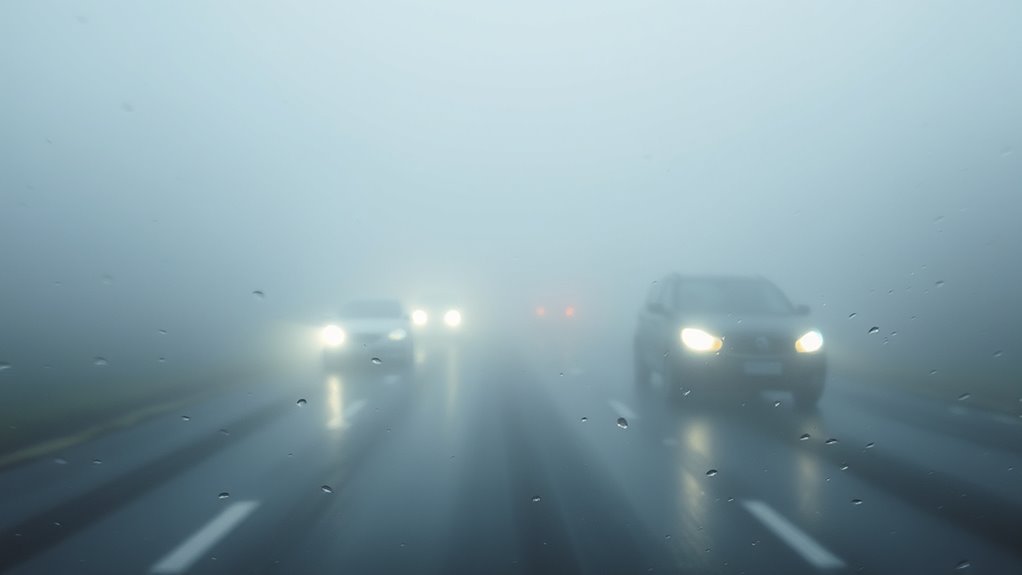
When visibility drops in rain and fog, choosing the right headlights becomes essential for safe driving. You need headlights with appropriate brightness to cut through the haze without causing glare for other drivers. Opt for headlights with adjustable brightness, allowing you to tailor the light output based on conditions. The color temperature also matters: warmer tones (around 3000K) reduce glare and improve contrast in fog, while cooler tones (around 6000K) can enhance visibility in rain. Avoid overly bright or bluish lights, as they may reflect off moisture and fog, reducing your view. Selecting headlights with the right brightness and color temperature helps you see better and be seen, making your drive safer during poor visibility conditions.
Using Fog Lights Effectively and Responsibly
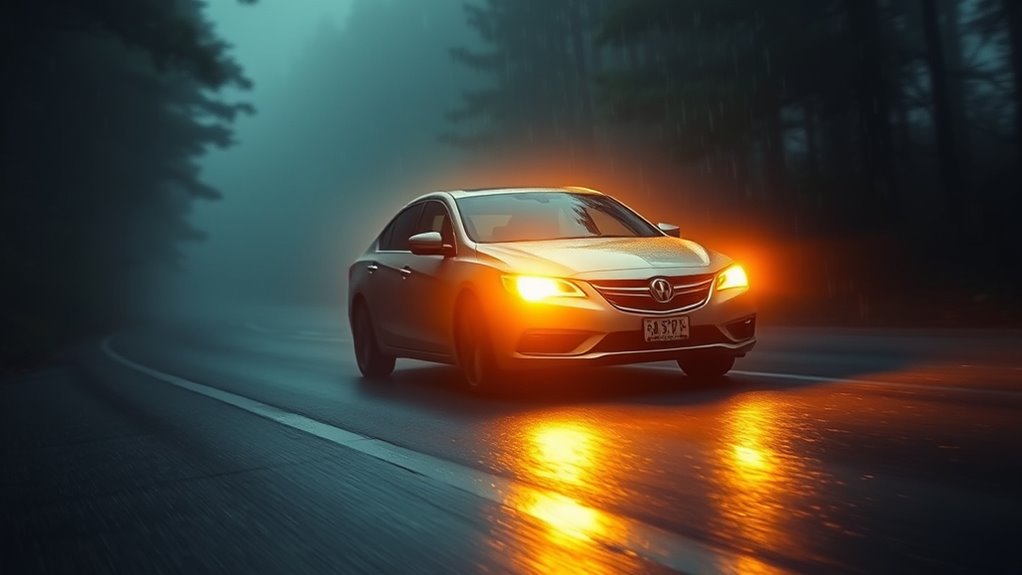
Using fog lights correctly can substantially improve your visibility and safety in foggy conditions, but they must be used responsibly to avoid causing glare or confusion for other drivers. Focus on beam patterns; fog lights should emit a low, wide beam that illuminates the road immediately ahead without lighting up the sky or reflecting off the fog, which can impair your vision. Light color also matters—select yellow or selective yellow fog lights, as these colors reduce glare and penetrate fog better than bright white lights. Always turn fog lights on only when visibility drops markedly and turn them off once conditions improve. Overusing or misusing fog lights can distract or blind other drivers, so use them thoughtfully and in accordance with local regulations. Proper beam pattern can help you maximize your visibility without causing undue glare. Proper installation and adjustment are essential to ensure your fog lights function as intended and do not impair others’ vision. Awareness of light color options can enhance your safety and effectiveness in foggy conditions. Being aware of local regulations regarding fog light use can also help you avoid penalties and ensure safe driving practices. Additionally, understanding the importance of proper use can further enhance your safety and compliance.
Adjusting Your Vehicle’s Lighting for Optimal Safety
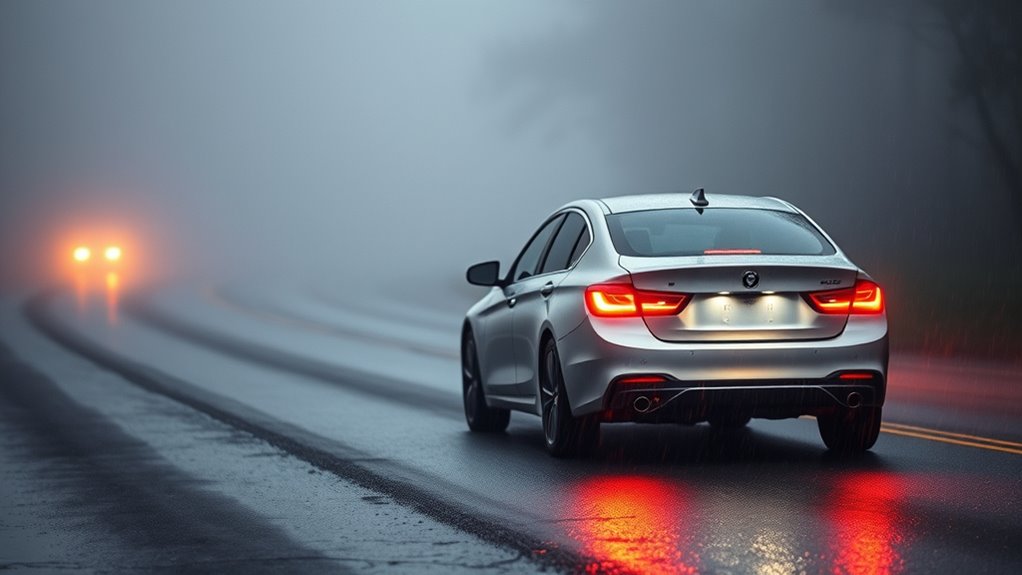
To improve your visibility in rain and fog, make sure you’re using your low beams instead of high beams, which can reflect light and reduce your sight distance. Activate your fog lights when conditions worsen, but only when visibility is seriously compromised. Also, check that your headlights are properly aligned to prevent blinding others and to maximize your own field of view.
Use Low Beams
In rainy and foggy conditions, your vehicle’s low beams are essential for maintaining visibility without causing glare or reflections that can impair your view. Low beams produce a focused beam pattern that directs light downward, reducing the risk of bouncing back as reflections. This helps you see clearly without blinding other drivers. The headlight brightness should be set appropriately—bright enough to illuminate the road but not so intense that it creates glare. Imagine the difference below:
| Brightness Level | Effect |
|---|---|
| Too Bright | Causes glare, impairs your and others’ vision |
| Proper Brightness | Enhances visibility without reflection |
| Dim | Fails to illuminate hazards |
| Excessively Dim | Increases risk of missing obstacles |
Using low beams correctly ensures safer travel in poor weather conditions.
Activate Fog Lights
Activating your fog lights can substantially improve visibility when fog, heavy rain, or mist reduce the effectiveness of your low beams. Fog lights are designed with specialized headlight technology to cut through adverse weather conditions, making it easier to see and be seen. Use them when visibility drops below 100 meters, but turn them off once conditions improve to avoid blinding other drivers. Properly adjusting your fog lights guarantees maximum safety without causing glare or confusion for others on the road. Additionally, ensure your vehicle’s lighting system is compatible with smart headlamp technology that can adapt to changing weather conditions for optimal safety. Modern vehicles often feature adaptive lighting systems that automatically adjust to weather and driving conditions, further enhancing road visibility and safety. Regularly inspecting and maintaining your vehicle lighting ensures your lights function properly and remain effective in poor weather. Incorporating energy-efficient lighting solutions can also contribute to sustainable vehicle operation and reduce environmental impact. Furthermore, being aware of lighting regulations specific to your region helps ensure compliance and safe driving practices.
Maintain Proper Alignment
Properly aligning your fog lights is essential to guarantee they enhance visibility without causing glare or confusion for other drivers. Misaligned lights can impair lane discipline and reduce hazard awareness, increasing accident risk. Check your vehicle’s alignment regularly and adjust the beams so they point slightly downward, illuminating the road ahead without blinding others. Use a flat surface and a wall for accurate calibration. Consider this quick reference:
| Adjustment Step | Purpose | Tip |
|---|---|---|
| Check height | Prevent glare and improve lane discipline | Use a level and tape measure |
| Aim beams downward | Enhance hazard awareness | Keep light focused on road |
| Test alignment at night | Confirm proper beam angle | Seek a second opinion |
| Recalibrate if needed | Ensure maximum safety | Visit a mechanic if unsure |
Proper alignment keeps everyone safe and ensures your visibility is effective and courteous. Regularly checking your vehicle’s lighting can help maintain optimal visibility in adverse weather conditions like rain and fog.
The Importance of Clean and Properly Aligned Lights

Clean and properly aligned headlights are essential for guaranteeing you see clearly and are visible to others during rain and fog. Dirty or misaligned lights reduce light coverage, making it harder to spot hazards and increasing the risk of accidents. Proper maintenance also helps ensure your headlight color remains effective in low visibility conditions. To maximize safety, check that your headlights are free of dirt and debris regularly. Adjust alignment to prevent blinding oncoming drivers and ensure even light distribution. Consider these key points:
- Keep headlights clean and free from dirt and bugs
- Check alignment regularly to avoid misdirected light
- Maintain ideal headlight color for visibility
- Ensure even light coverage across the road
- Replace dim or yellowed bulbs promptly
- Regularly inspect headlight brightness to ensure optimal illumination
- Incorporate properly aligned lighting to improve visibility and reduce glare effectively
- Using quality headlight bulbs can also improve brightness and clarity in adverse conditions.
- Additionally, lens clarity plays a crucial role in maintaining effective illumination and should be kept pristine. Regularly consulting security zone info can help you stay informed about the latest safety standards and innovations for vehicle lighting.
Tips for Managing Your Speed and Distance

When driving in rain and fog, managing your speed and following distance is crucial for safety. Slow down to improve your speed awareness, giving yourself more reaction time for unexpected hazards. Keep your speed below the posted limit if visibility is poor, allowing you to respond appropriately. Maintain a safe following distance—at least double the usual gap—so you have enough space to stop if needed. Use your rearview mirrors frequently to monitor vehicles behind you, adjusting your speed accordingly. Avoid sudden accelerations or braking, as these can cause accidents in low-visibility conditions. Staying vigilant about your speed and following distance helps you stay in control, reduces the risk of collisions, and ensures you can react promptly to obstacles or changing road conditions. Proper vehicle maintenance and ensuring your headlights and taillights are clean and functioning correctly also improve visibility and safety in such conditions. Additionally, visibility aids like fog lights can help you see and be seen better without blinding others. Incorporating modern technology, such as adaptive headlights, can further enhance your visibility and reaction time in challenging weather conditions. Regularly checking your vehicle’s lighting systems ensures optimal performance and safety during adverse weather. Being aware of market options like high-quality headlights or lighting accessories can make a significant difference in visibility and safety.
Additional Safety Measures to Enhance Visibility
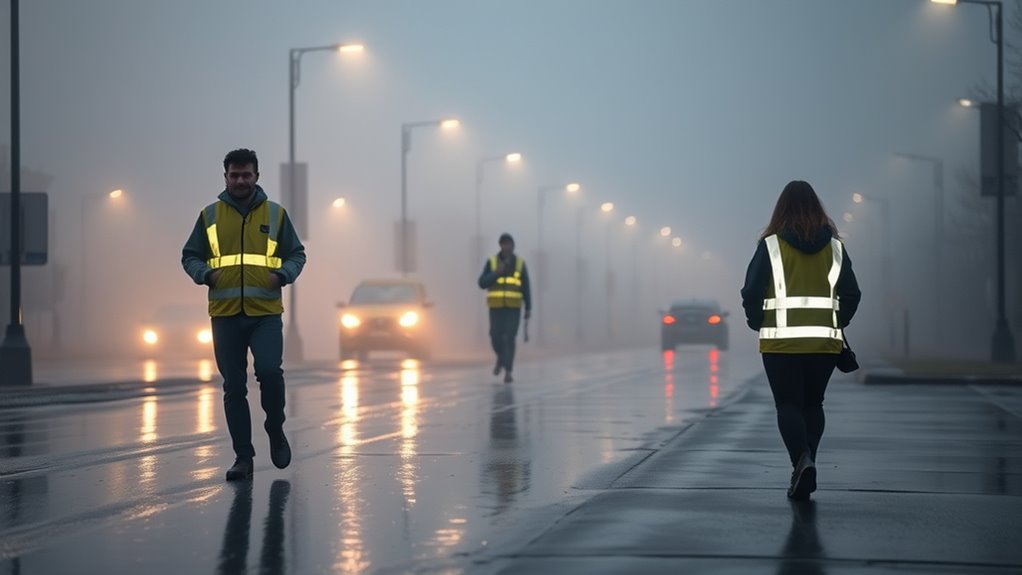
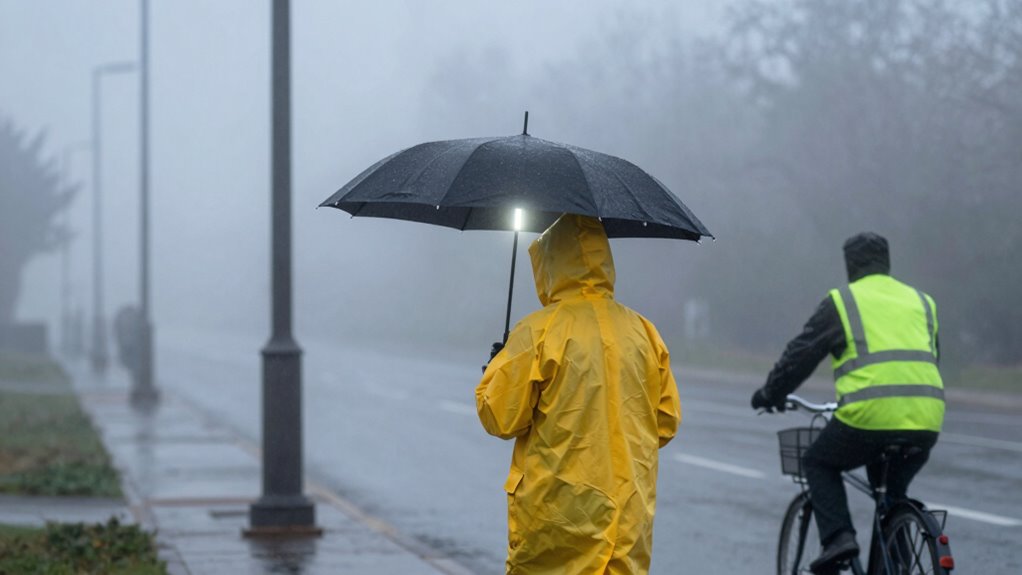
To further improve your visibility in rain and fog, consider using additional safety measures such as activating your vehicle’s fog lights and daytime running lights. Wearing reflective clothing boosts your presence on the road, making you more noticeable to other drivers. Pay close attention to road markings, which help guide you even in low visibility conditions. Enhancing your visibility can prevent accidents and improve safety. Incorporating upgrades and modifications like reflective tape or decals on your vehicle can also increase your visibility in poor weather.
Frequently Asked Questions
How Can I Improve My Vehicle’s Visibility in Heavy Rain?
To improve your vehicle’s visibility in heavy rain, guarantee your windshield is crystal clear by using high-quality wipers and defoggers. Turn on your headlights, especially low beams, to enhance your visibility and make your vehicle more noticeable to others. Reduce your speed and maintain a safe distance from vehicles ahead. Avoid using high beams in rainy conditions, as they can reflect off water and impair your vision.
Are LED or Halogen Headlights Better for Foggy Conditions?
In foggy conditions, LED headlights are generally better than halogen because they offer brighter headlight brightness and a clearer, whiter light that cuts through fog more effectively. Some worry about glare, but LED lights can be designed with proper beam patterns to prevent blinding others. You’ll enjoy improved visibility and safety, especially since LED headlights provide more consistent performance, making your drive through fog safer and less stressful.
When Should I Use High Beams Versus Low Beams in Fog?
You should use low beams in fog to avoid glare and improve visibility. High beams reflect off fog, making it harder to see. Follow fog light etiquette by turning on your fog lights if your vehicle has them, which helps you see and be seen. For beam adjustment tips, make sure your headlights are properly aligned and avoid using high beams in foggy conditions to prevent blinding other drivers.
What Are the Legal Requirements for Using Fog Lights?
You must guarantee your fog lights comply with legal requirements and fog light regulations in your area. Generally, fog lights are legal when used in poor visibility conditions like fog, rain, or snow, but they shouldn’t be used in clear weather to avoid blinding other drivers. Always check your local laws to confirm proper usage, and make sure your fog lights are properly installed and functioning.
How Does Weather Affect the Lifespan of Vehicle Lighting?
Weather impact considerably influences your vehicle lighting’s durability. Harsh conditions like rain, snow, and fog accelerate wear and corrosion, shortening bulb lifespan. Moisture can seep into fixtures, causing electrical issues, while temperature fluctuations strain components. To maximize lighting durability, regularly check and replace bulbs as needed, keep lenses clean, and make sure waterproof seals stay intact. Proper maintenance helps your lights perform reliably, even in challenging weather, keeping you safe on the road.
Conclusion
So, next time you’re battling rain or fog, remember that staying visible doesn’t mean blinding everyone around you. Ironically, the best way to stand out is by using your lights wisely and responsibly. After all, you’d hate to turn into that driver everyone’s secretly annoyed by—blinding with your bright beams. Stay safe, stay subtle, and let your headlights do their job without causing more chaos on the road.
Fall Picks
fall essentials
As an affiliate, we earn on qualifying purchases.