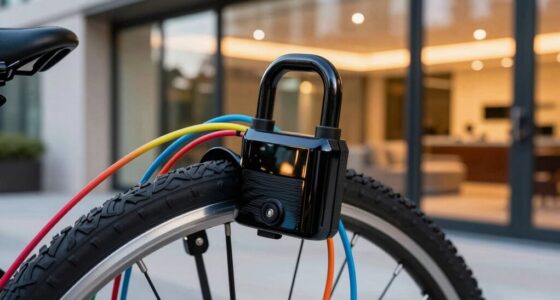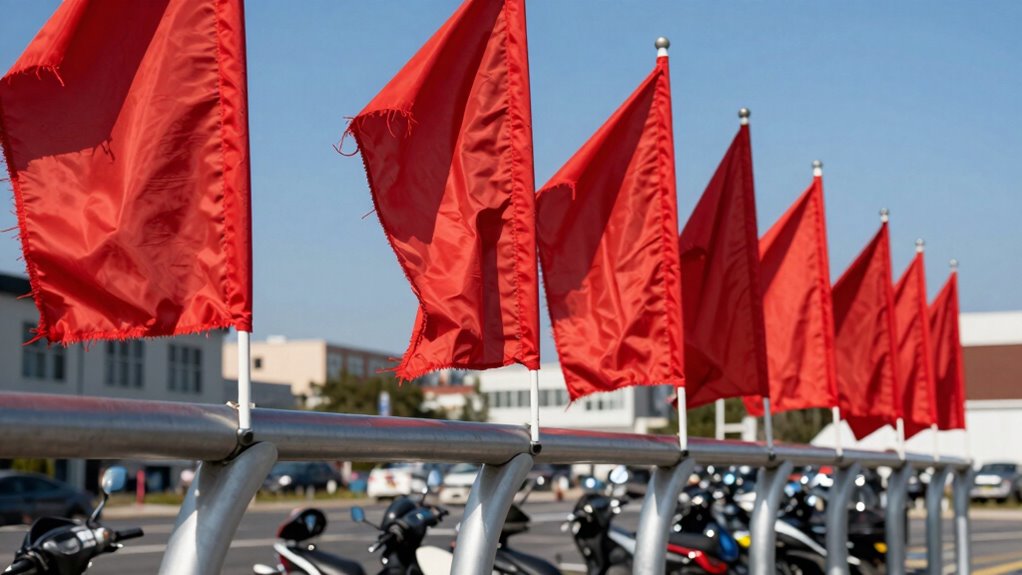

You might overlook signs like wobbling racks, uneven placement, or visible damage, which indicate poor installation or structural weakness. Faulty designs or incompatible slots can cause bikes to fall or get damaged. Signs of vandalism, neglect, or debris suggest a lack of maintenance, risking safety. Wobbly or strained racks also point to long-term issues. If you want to spot these warning signs early and prevent potential accidents, there’s more to uncover below.

Get bike and ride gear delivered free — and shop member deals
- Fast, free delivery on millions of items
- Access to Prime Big Deal Days deals on October 6–7
- Prime Video, Amazon Music and more included
Key Takeaways
- Ignoring unstable or wobbling racks can lead to sudden bike falls and injuries.
- Overlooking design mismatches may cause bike damage or difficulty parking securely.
- Neglecting signs of vandalism or debris indicates poor maintenance, risking structural failure.
- Failing to identify hardware damage or signs of wear weakens rack stability over time.
- Missing routine inspections allows minor issues to escalate into safety hazards.

Another common red flag is improper installation. When a rack isn’t securely anchored to the ground or wall, it becomes unstable and unsafe. You might notice wobbling or uneven placement, which signals that the installation wasn’t done correctly or that the mounting hardware is failing. This is especially critical because a wobbling rack can cause bikes to fall, resulting in damage or injuries. Parking rack safety depends heavily on proper mounting and sturdy construction, so if you see signs of shoddy installation, steer clear and look for a more reliable option. Verifying the installation quality can help ensure the rack’s stability and long-term safety.
Additionally, pay attention to the design and compatibility of the rack. Some racks are made for specific bike sizes or types, and using one that isn’t suitable can be risky. If the design doesn’t support bikes properly—say, the slots are too narrow or the arms aren’t adjustable—you risk bikes falling or getting damaged. Red flag indicators include racks that seem too flimsy or poorly designed for your needs. It’s also wise to observe how other bikes are stored there; if the bikes look unstable or the rack appears strained under normal use, it’s a sign you should reconsider.
Finally, don’t ignore signs of vandalism or neglect. Graffiti, broken components, or accumulated debris can all be red flags that the rack isn’t maintained regularly. Over time, neglect weakens the structure and compromises parking rack safety. Being aware of maintenance issues and other warning signs can help you identify racks that are at risk of failure. A lack of regular upkeep can accelerate deterioration and pose safety hazards. If you notice these issues, it’s best to find a more secure, well-maintained parking solution. Ignoring these red flags can lead to serious consequences, but being vigilant about red flag indicators ensures you pick a safe, reliable parking rack that protects your bike and others. Regular upkeep and preventive maintenance are essential for ensuring every rack remains safe over time.
bicycle parking rack safety inspection
As an affiliate, we earn on qualifying purchases.
As an affiliate, we earn on qualifying purchases.
Frequently Asked Questions
How Do I Distinguish a Genuine Parking Rack From a Fake One?
To distinguish a genuine parking rack from a fake one, look for sturdy construction, clear branding, and proper installation. Check for official signage and make certain it’s securely anchored to the ground. When storing your bike, follow storage tips like locking your bike to the rack and avoiding tight spaces that could cause damage. If anything seems suspicious or poorly maintained, trust your instincts and avoid using it.
Are There Specific Times When Parking Rack Red Flags Are More Common?
You’ll notice parking rack red flags are more common during busy times, like weekends or holidays, when lots are crowded. During these periods, parking lot signage and bike rack design might be overlooked or rushed, increasing risks of false racks or misuse. As a rider, stay vigilant, especially when lots are packed, and always double-check signage and rack design to avoid falling for red flags.
Can Ignoring Parking Rack Red Flags Lead to Legal Penalties?
Ignoring parking rack red flags can definitely lead to legal consequences. If you overlook warning signs or signals, you risk penalty risks like fines or tickets. Authorities may also tow your vehicle, which adds to your costs and inconvenience. It’s crucial to pay attention to these red flags, as they’re there to prevent you from facing legal penalties and ensure you’re parking safely and legally.
What Safety Measures Should I Take When Approaching a Suspicious Parking Rack?
When approaching a suspicious parking rack, prioritize parking lot security by staying alert and observing your surroundings. Keep rider awareness high—look for unusual signs like damaged or unsecured racks, and avoid areas with poor lighting. Trust your instincts; if something feels off, choose another spot. Always lock your bike securely and consider parking near security cameras or busy areas to deter theft. Staying vigilant helps protect your ride and enhances overall safety.
How Do I Report a Parking Rack With Red Flags to Authorities?
You should call the local parking enforcement agency immediately to report a parking rack with red flags. Clearly describe the location, the flags’ visibility, and any suspicious activity. Follow their enforcement procedures, which may include filing an official complaint online or in person. Authorities take these reports seriously because red flags often indicate violations of parking regulations or safety hazards that could cause chaos if ignored.
heavy-duty bike rack with secure mounting
As an affiliate, we earn on qualifying purchases.
As an affiliate, we earn on qualifying purchases.
Conclusion
Ignoring parking rack red flags might seem harmless, but it can lead to costly mistakes or safety issues. Think of it like ignoring warning signs on the road—you’re risking more than you realize. Evidence suggests that paying attention to these red flags isn’t just cautious; it’s smart. By staying alert and trusting your instincts, you prevent problems before they start, ensuring your parking experience stays safe and stress-free. Don’t dismiss those red flags—they’re there for a reason.
adjustable bike rack for different bike sizes
As an affiliate, we earn on qualifying purchases.
As an affiliate, we earn on qualifying purchases.
As an affiliate, we earn on qualifying purchases.
Fall Picks
fall essentials
As an affiliate, we earn on qualifying purchases.