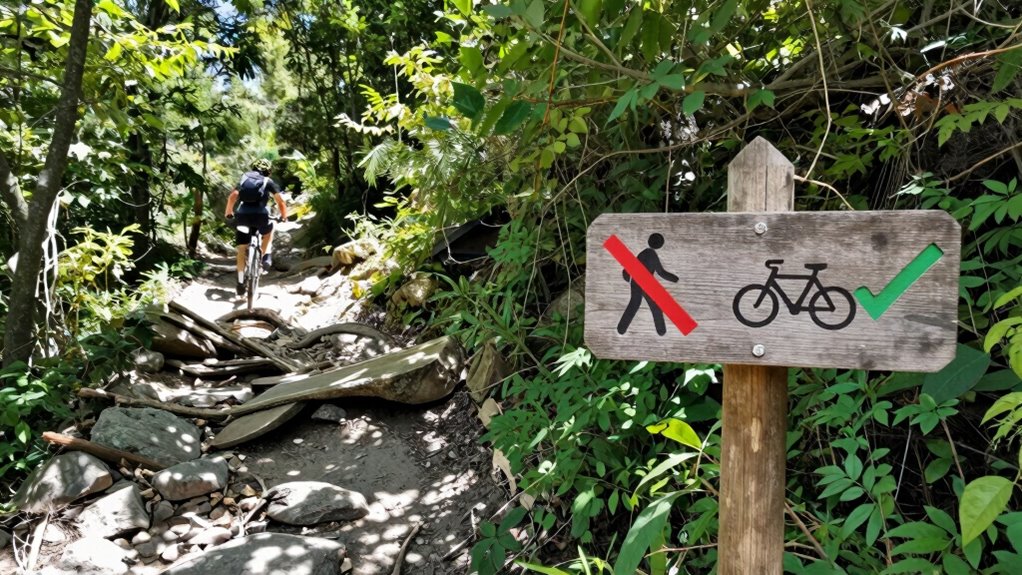

Trail access rules differ from street rules because they focus on protecting the environment and maintaining natural spaces, while street rules prioritize safety and traffic flow. When you’re on a trail, you need to follow guidelines that preserve plants, stop erosion, and avoid disturbing wildlife. Ignoring these rules can harm ecosystems and reduce future access. If you want to understand why these differences matter and how to follow them properly, keep exploring below.

Get bike and ride gear delivered free with Prime
- Fast, free delivery on millions of items
- Prime Video, Amazon Music and more included
- Member-only deals all year
Key Takeaways
- Trail rules focus on conservation and environmental protection, whereas street rules prioritize traffic safety and flow.
- Permits are often required for trail access to monitor usage and fund preservation, unlike most street activities.
- Signage and designated paths are crucial on trails to prevent habitat destruction; streets have fewer environmental considerations.
- Trail regulations aim to minimize ecological impact, while street rules mainly address pedestrian and vehicle safety.
- The cultural and ecological importance of natural spaces necessitates specific rules different from urban street regulations.
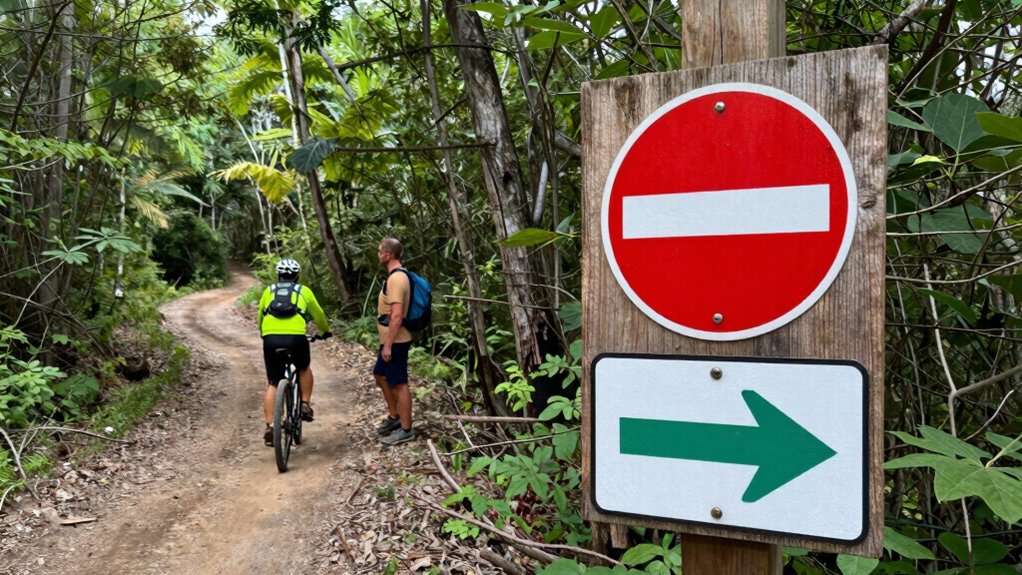
When you’re steering outdoor trails and city streets, it’s essential to understand that the rules often differ considerably, even if they seem similar at first glance. On city roads, traffic laws focus on safety, efficiency, and order, but on trails, the priorities shift toward conservation and respecting the environment. Trail access rules are designed not just to keep you safe but to minimize the environmental impact of human activity. Many trails have specific regulations about staying on designated paths to prevent erosion, protect plant life, and reduce wildlife disturbance. Ignoring these guidelines can lead to habitat destruction, which diminishes the trail’s natural beauty and health.
Trail rules prioritize conservation, urging us to stay on designated paths to protect nature and wildlife.
Another key difference lies in permit requirements. Urban streets rarely require permits for casual biking or walking, but outdoor trail access often involves permits or passes, especially for protected or sensitive areas. These permits help land managers monitor usage and fund conservation efforts. You might need to apply in advance or pay a fee, and there could be restrictions on group size or activities allowed. Failing to secure the proper permits can result in fines or being asked to leave, so it’s crucial to check the rules before heading out. These permits also serve as a tool to control environmental impact, ensuring that the number of visitors remains manageable and that the trail can sustain ongoing use. Additionally, understanding the permitting process can help you plan your trip more effectively and avoid any surprises. Being familiar with regulatory requirements can also prevent unintended violations that harm the environment.
Beyond permits, trail rules often emphasize respecting signage, staying on designated paths, and practicing Leave No Trace principles. These regulations aren’t just about following rules—they’re about protecting the ecosystem and ensuring the trail’s longevity. In contrast, city street rules tend to be more about traffic flow and pedestrian safety, with less direct concern for environmental preservation. As a trail user, you need to be aware of these differences and adapt your behavior accordingly. Recognizing the importance of environmental sustainability helps foster responsible recreation and ensures these natural spaces can be enjoyed by future generations. Being mindful of trail-specific regulations encourages a respectful attitude toward other visitors and the environment.
Understanding that trail access rules are tailored toward conservation and environmental sustainability helps you appreciate their importance. It’s not just about avoiding fines; it’s about actively contributing to the preservation of natural spaces. By adhering to permit requirements and respecting trail-specific regulations, you help ensure these outdoor areas remain accessible and healthy for future visitors. Recognizing the distinction between street rules and trail rules encourages responsible recreation, balancing your enjoyment with the need to protect the environment. Additionally, being aware of environmental impact can help you choose activities and behaviors that support ecological health and sustainability. This awareness fosters a greater appreciation for the natural environment and promotes a culture of stewardship among trail users.
Popular right now

Hisense 85 U7 Mini-LED ULED 4K UHD Smart Google TV (85U7SG, 2026)

Vitamix 5200 Professional-Grade Blender, 64 oz. Container, Black

Shark PowerDetect Corded Stick Vacuum with HEPA Filtration, Purple (HZ4001AMZ)
As an affiliate, we earn on qualifying purchases.
Frequently Asked Questions
Are Trail Access Rules the Same Nationwide?
Trail access rules aren’t the same nationwide. You’ll find different regulations depending on local laws and environmental concerns. You should always check specific trail policies before heading out, as rules often focus on trail maintenance and minimizing environmental impact. Following these rules helps protect the land, prevents erosion, and keeps trails open for everyone. So, always be mindful of local regulations to enjoy your outdoor experience responsibly and sustainably.
Can I Ride Off-Trail if Permitted?
If you’re permitted to ride off-trail, you should still be cautious. Riding off-trail can disturb wildlife and cause environmental impact, so always check local regulations first. Even with authorization, avoid sensitive areas, stay on designated paths when possible, and keep noise levels down. Responsible riding helps protect ecosystems and ensures continued access for everyone. Remember, respecting these rules preserves natural habitats and keeps your outdoor adventures sustainable.
How Do I Find Local Trail Access Regulations?
You can find local trail access regulations by checking with land management agencies like the Forest Service or BLM, or visiting their websites. Follow trail etiquette and respect posted signs to stay within permitted areas. Knowing these rules helps minimize environmental impact and guarantees everyone can enjoy the outdoors. Local clubs and online forums also provide valuable updates and tips, making it easier to ride responsibly and legally.
Are Motorized Vehicles Allowed on All Trails?
Motorized vehicles aren’t allowed on all trails due to motorized restrictions, which vary by location. You should always check trail signage for specific rules, as some paths permit motorized use, while others are designated for non-motorized activities like hiking or biking. Ignoring these distinctions can damage ecosystems or lead to fines. Always respect posted regulations to enjoy your adventure responsibly and preserve trail integrity for everyone.
What Penalties Exist for Violating Trail Access Rules?
If you violate trail access rules, you could face penalties like fines, trail closures, or even legal action. These rules exist to prevent trail access disputes and minimize environmental impact. Ignoring signs or regulations can damage sensitive ecosystems and lead to stricter restrictions for everyone. To avoid penalties, respect trail guidelines, stay on designated paths, and be mindful of the environment and other trail users.
Conclusion
Remember, trail rules tend to twist and turn differently than street standards. Don’t default to street norms—deliberately obey designated trail directives. Respect the rules, refrain from reckless riding, and recognize the unique environment you’re exploring. By following trail-specific guidelines, you not only protect nature but also preserve access for future adventures. So, stay savvy, stay respectful, and stay safe—because understanding and upholding rules keeps trails open and enjoyable for everyone.