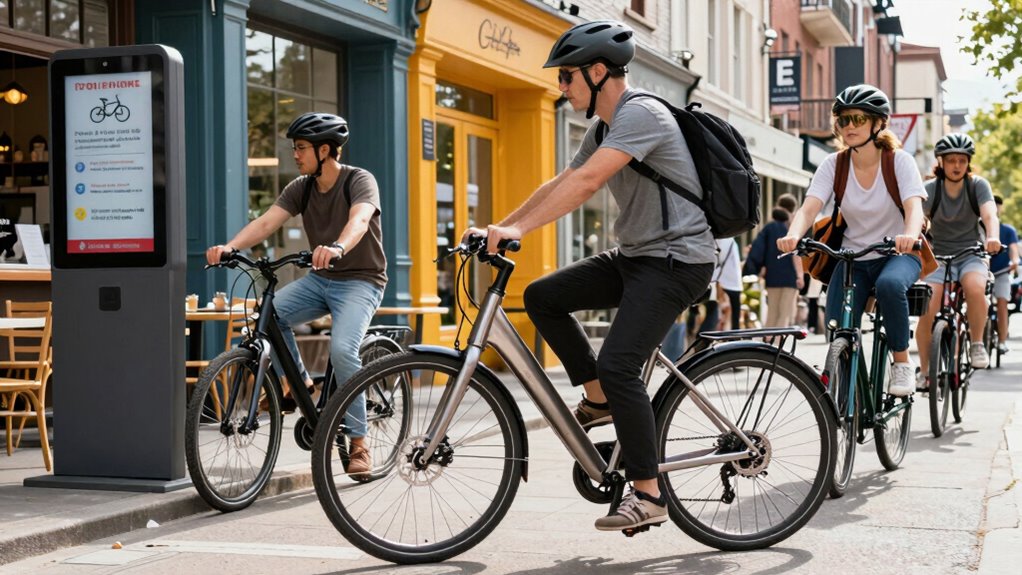

Understanding U.S. e-bike classes helps you pick the right bike for your daily commute and stay within the law. Class 1 bikes assist only when you pedal up to 20 mph, while Class 2 can also use a throttle at the same speed. Class 3 offers faster assistance up to 28 mph and may require extra safety gear. Knowing these differences guarantees you choose a safe, legal, and efficient way to get around—exploring more details can help you make informed decisions.

Get bike and ride gear delivered free with Prime
- Fast, free delivery on millions of items
- Prime Video, Amazon Music and more included
- Member-only deals all year
Key Takeaways
- Class 1 e-bikes assist only while pedaling up to 20 mph, suitable for moderate commuting and bike-friendly areas.
- Class 2 e-bikes offer throttle assistance up to 20 mph, providing quick power boost for short or frequent stops.
- Class 3 e-bikes can reach 28 mph with pedal assist, ideal for faster commutes over longer distances.
- Understanding local laws ensures legal riding on bike paths, streets, and restricted areas based on e-bike class.
- Battery range and speed capabilities directly impact commuting distance, safety, and route choices for daily riders.

With the rise of electric bikes as a convenient and eco-friendly commuting option, understanding the different e-bike classes can help you choose the right one for your daily travels. E-bikes in the U.S. are classified mainly into three categories—Class 1, Class 2, and Class 3—each with distinct features that influence how you ride and what regulations you need to follow. Knowing these classes allows you to select an e-bike that fits your commuting needs, whether it’s speed, safety, or range. One key factor to consider is battery range, which determines how far you can go on a single charge and impacts your planning, especially for longer commutes. Safety regulations also vary between classes, affecting where and how you can ride. Understanding the e-bike classes can also help you navigate local laws and avoid potential legal issues while riding.
Popular right now

Shark HydroVac MessMaster Corded Wet Dry Vacuum and Mop (WD161)

Samsung 75-Inch M80H Series Mini LED 4K Smart TV (2026)

Apple AirPods Pro 3 Wireless Earbuds with Active Noise Cancellation
As an affiliate, we earn on qualifying purchases.
Frequently Asked Questions
Are E-Bike Classes Recognized Nationwide or Only in Specific States?
E-bike classification differences are recognized nationwide, but state-specific regulations can vary. You should verify your state’s rules because some states might have unique requirements or restrictions for different e-bike classes. While federal guidelines provide a general framework, local laws often dictate where and how you can ride, especially on bike paths or roads. Staying informed about your state’s regulations ensures you’re compliant and enjoy your e-bike commute safely.
How Do E-Bike Classes Affect Insurance Requirements for Commuters?
E-bike classes influence your insurance requirements by determining the level of liability coverage you need. Depending on your e-bike’s class, insurance policies might require more complete coverage to protect against accidents or damages. For class 3 e-bikes, expect stricter liability coverage to safeguard you financially, especially if you’re commuting regularly. Always check with your insurer to make certain your policy aligns with your e-bike class and offers adequate protection.
Can I Switch Between E-Bike Classes During My Commute?
Think of your e-bike journey like changing gears on a bike—yes, you can switch between classes during your commute. Class switching offers commuter flexibility, allowing you to adapt to different terrain or speed needs. Just keep in mind local regulations; some areas might restrict class changes mid-ride. So, plan ahead, and enjoy the freedom to navigate your route smoothly, adjusting your e-bike class as needed.
Are There Age Restrictions for Different E-Bike Classes?
Yes, age restrictions vary by e-bike class and location, so you should check local riding regulations for E bike safety. Generally, Class 1 and 2 e-bikes are suitable for riders aged 14 or older, while Class 3 bikes often require riders to be at least 16. Following these rules helps guarantee safe riding, and understanding class distinctions keeps you compliant with local laws, promoting safer and more enjoyable commutes.
Do E-Bike Classes Impact Maintenance or Repair Costs?
E-bike classes can influence maintenance and repair costs because higher-powered bikes often experience more wear on the battery and components. If you ride a Class 3 e-bike frequently, you might see a shorter battery lifespan and increased repair frequency, leading to higher costs over time. Conversely, lower classes typically require less maintenance, helping you save on repair expenses and keep your e-bike running smoothly for longer.
Conclusion
Understanding the different e-bike classes helps you choose the right one for your commute, making your daily travel safer and more efficient. Did you know that e-bike sales in the U.S. increased by over 240% between 2019 and 2021? This surge shows more commuters are embracing eco-friendly, cost-effective transportation. By selecting the appropriate class, you can enjoy a smoother ride while contributing to a greener planet. So, pick wisely and ride confidently into your next journey!