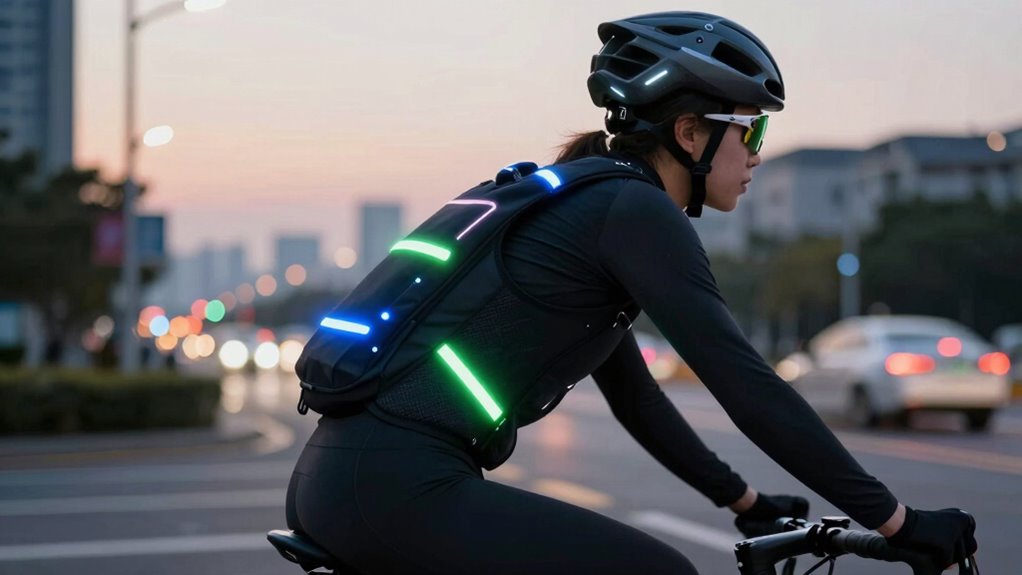

For e-bike commuting, I’d put the Hit-Air ST Airbag Vest with Integrated Harness first for its harness-focused design, while the Hit-Air MLV stands out for automatic CO2 deployment and the Hit-Air VHR Slim for a less bulky profile. The main tradeoffs are how an airbag connects to the rider or detects a fall, how comfortably it fits over daily clothing, and whether its protection and care requirements suit regular city trips. These products are marketed for motorcycle and equestrian use, so buyers should verify fit and compatibility for their own e-bike setup rather than assume every vest is designed for cycling. I compare all eight by their stated features, commuting practicality, and the questions buyers should resolve before riding. Read on for the full breakdown and help choosing the right type for your route.

Get bike and ride gear delivered free with Prime
- Fast, free delivery on millions of items
- Prime Video, Amazon Music and more included
- Member-only deals all year
Key Takeaways
- Harness design separates the Hit-Air options: the ST has an integrated harness, while the VHR Slim pairs a slim profile with a motorcycle and equestrian harness; check how each setup attaches before choosing.
- The MLV is the clearest pick when deployment method is a priority: its listing specifies automatic CO2 deployment, but buyers should confirm the trigger system and replacement cartridge requirements.
- Every option here is presented for motorcycle, equestrian, or both—not specifically for e-bike commuting: confirm cycling compatibility, coverage, and fit with the manufacturer before relying on one for a commute.
- Fit and bulk matter as much as the airbag label: adjustable and unisex designs offer sizing flexibility, while the VHR Slim is the lineup’s profile-focused option; neither description replaces checking measurements over riding layers.
- Visibility and coverage are distinct buying needs: one vest calls out reflective construction, while another specifies neck and tail airbag coverage; neither feature alone answers whether the vest suits a rider’s route or protection priorities.
| Equestrian Airbag Vest Wearable Air Bag, Lightweight, Adjustable, Motorcycle or Horse Riding Jacket |  | Best for Broad Size Coverage | Listed activities: Motorcycle riding and horseback riding | Trigger time: 115.9 milliseconds | Protection areas: Chest, neck, shoulders, back, waist, hip, coccyx | VIEW ON AMAZON | See Our Full Breakdown |
| Hit-Air MLV Motorcycle Airbag Vest, Automatic CO2 Deployment |  | Best for Established Riding-System Features | Brand: Hit-Air | Intended activities: Motorcycle riding and horseback riding | Impact protection certification: CE certified | VIEW ON AMAZON | See Our Full Breakdown |
| Adjustable Equestrian and Motorcycle Airbag Safety Vest |  | Best for Spec Transparency on Inflation | Color: Black | Size range: XXXS–2XL | Inflation time: 115.9 milliseconds | VIEW ON AMAZON | See Our Full Breakdown |
| Hit-Air ST Airbag Vest with Integrated Harness |  | Best for Integrated Harness Convenience | Material: Polyester | Harness: Integrated | Protection areas: Neck, spine, ribs, hips | VIEW ON AMAZON | See Our Full Breakdown |
| Motorcycle Airbag Vest for Men and Women, Reflective Riding Jacket with High-Speed Deployment | 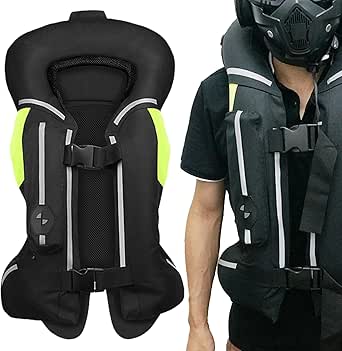 | Best for Reflective Over-Jacket Wear | Intended use: Motorcycle and motocross riding | Material: 600D polyester Oxford and mesh fabric | Deployment speed: 0.18 seconds | VIEW ON AMAZON | See Our Full Breakdown |
| Motorcycle Airbag Vest with Neck and Tail Airbag, Reusable Protective Motorcycle Jacket, Adjustable, X-Large |  | Best for Neck and Tailbone Coverage | Size: X-Large; listed range S–3XL | Weight: 2.65 pounds | Inflation time: 0.3 seconds | VIEW ON AMAZON | See Our Full Breakdown |
| Adjustable Unisex Equestrian and Motorcycle Airbag Vest (Medium) |  | Best for Shared Rider Sizing | Size range: XXXS–2XL; children’s model XXXS–XS | Inflation time: 0.15 seconds | CO₂ cartridge size: 5/8 inch | VIEW ON AMAZON | See Our Full Breakdown |
| Hit-Air VHR Slim Airbag Vest – Motorcycle & Equestrian Harness |  | Best for Low-Profile Coverage | Fabric: Polyester | Airbag coverage: Neck, spine, ribs, and hips | Canister capacity: 50 cc for Small/Medium; 60 cc for Large | VIEW ON AMAZON | See Our Full Breakdown |
| wearable airbag for e bike commuting | Inflation time |
|---|---|
| Equestrian Airbag Vest Wearabl | — |
| Hit-Air MLV Motorcycle Airbag | Milliseconds; exact time not specified |
| Adjustable Equestrian and Moto | 115.9 milliseconds |
| Hit-Air ST Airbag Vest with In | — |
| Motorcycle Airbag Vest for Men | — |
| Motorcycle Airbag Vest with Ne | 0.3 seconds |
| Adjustable Unisex Equestrian a | 0.15 seconds |
| Hit-Air VHR Slim Airbag Vest | — |
More Details on Our Top Picks
Equestrian Airbag Vest Wearable Air Bag, Lightweight, Adjustable, Motorcycle or Horse Riding Jacket
For an e-bike commuter prioritizing coverage across the torso and hips, this adjustable vest lists protection for the chest, neck, shoulders, back, waist, hips, and coccyx. Its stated 115.9-millisecond trigger time is a useful point of comparison with the Hit-Air MLV, whose listing says deployment occurs in milliseconds but gives no exact figure. The size range spans children’s XXXS–S and adults’ S–2XL, offering more explicit sizing breadth than the MLV’s listed Large size.
The tradeoff is that this is described for equestrian and motorcycle use, not specifically cycling, and the listing leaves its fabric unspecified. CO2 cartridges are not included, so buyers must source a compatible 50–60CC cartridge. I would choose it for its stated coverage and sizing range, but not if verified cycling compatibility or detailed material information is a priority.
Pros:- Lists protection for the chest, neck, shoulders, back, waist, hips, and coccyx.
- States a 115.9-millisecond trigger time.
- Size range covers children’s XXXS–S and adults’ S–2XL.
- Reusable design is intended for repeated use.
Cons:- CO2 cartridge is not included.
- Fabric type and breathability details are unspecified.
- Product information describes motorcycle and horse riding rather than e-bike commuting.
Best for: E-bike commuters seeking a wide stated protection area and a vest with size options spanning children through adult 2XL.
Not ideal for: Riders who need documented bicycle-specific compatibility, fabric details, or an included CO2 cartridge.
- Listed activities:Motorcycle riding and horseback riding
- Trigger time:115.9 milliseconds
- Protection areas:Chest, neck, shoulders, back, waist, hip, coccyx
- Inflation duration:About 10 seconds
- Body airbag sizes:XXXS–S for children; S–2XL for adults
- Trigger weight:13 kg for children; 18 kg for adults
- Cartridge capacity:50–60CC
- Cartridge included:No
- Reusable:Yes
Our verdict“Choose this vest if broad stated coverage and an extensive size range matter more than cycling-specific documentation or known fabric details.”
Hit-Air MLV Motorcycle Airbag Vest, Automatic CO2 Deployment
The Hit-Air MLV stands out here for pairing an automatic tether-triggered system with a stated CE certification. It is designed to inflate when the rider separates from the motorcycle, a clear operating method for commuters who want deployment tied to a fall rather than a manual action. Compared with the Equestrian Airbag Vest, the MLV has less detailed listed body-area coverage and a single listed Large size, but its certification and refillable system are specified.
For e-bike use, that motorcycle-focused tether setup deserves careful consideration: riders need to confirm the connection can be fitted and used safely on their own bike. The 60cc cartridge is sold separately, and the listing does not provide an exact inflation time beyond “milliseconds.” I would favor it over the less-documented adjustable models when certification is a deciding factor, but skip it if you want a ready-to-wear cycling product or broad size choices.
Pros:- CE-certified impact protection is specified.
- Automatic deployment is triggered by separation from the bike.
- Refillable system is designed for repeated use.
- Adjustable fit is intended to work over jackets or riding suits.
Cons:- 60cc CO2 cartridge is sold separately.
- Only Large is listed as the size.
- Exact inflation time and e-bike-specific fit guidance are not provided.
Best for: Commuters with motorcycle airbag experience who want a CE-certified, refillable tether-triggered vest and can confirm a suitable bike attachment.
Not ideal for: E-bike riders seeking a cycling-specific vest, multiple listed sizes, or a cartridge supplied with the product.
- Brand:Hit-Air
- Intended activities:Motorcycle riding and horseback riding
- Impact protection certification:CE certified
- Deployment:Automatic upon separation from the bike
- Inflation time:Milliseconds; exact time not specified
- Refillable:Yes
- Listed size:Large
- Cartridge size:60cc, sold separately
Our verdict“Pick the MLV if its CE certification and tether-triggered design suit your setup, but verify e-bike attachment and sizing before buying.”
Adjustable Equestrian and Motorcycle Airbag Safety Vest
This adjustable vest provides more numerical inflation detail than the similarly broad-coverage Equestrian Airbag Vest: it lists 115.9-millisecond inflation, 200 mbar protective pressure, and about 10 seconds of protection before auto-deflating. That information can help buyers compare airbag operation, though it does not establish suitability for e-bike use. Its listed protection covers the neck, back, shoulders, and coccyx, while the first vest explicitly adds chest, waist, and hip areas.
The XXXS–2XL range is useful for households or riders needing a wider fit range, and the design is described as reusable and easy to clean. The drawbacks are familiar: the fabric is unspecified, CO2 cylinders are not included, and manual measurements may vary by 1–2 cm. I’d pick this over the first vest when pressure and deflation details matter, but not when fuller stated coverage is the main priority.
Pros:- Lists inflation time, protective pressure, and protection duration.
- XXXS–2XL size range includes children and adults.
- Reusable design is described as easy to clean.
- Compatible with standard 50–60CC, 5/8-inch-diameter CO2 cylinders.
Cons:- CO2 cylinder is not included.
- Fabric composition is unspecified.
- Manual sizing may vary by 1–2 cm, and cycling suitability is not documented.
Best for: E-bike commuters comparing airbag operating specifications who want a broad size range and listed inflation pressure.
Not ideal for: Riders who require chest, waist, and hip protection to be explicitly listed, or who need a cartridge included.
- Color:Black
- Size range:XXXS–2XL
- Inflation time:115.9 milliseconds
- Protective pressure:200 mbar
- Protection duration:Approximately 10 seconds
- Protection areas:Neck, back, shoulders, coccyx
- CO2 cylinder compatibility:50–60CC, 5/8-inch diameter
- Trigger weight:13 kg for children; 18 kg for adults
- Fabric type:Unspecified
Our verdict“Choose this model if its listed pressure and deflation details help your comparison, while accepting less explicit coverage than the first vest.”
Hit-Air ST Airbag Vest with Integrated Harness
The Hit-Air ST makes a stronger case for a tidy setup than the MLV because its harness is integrated, reducing the need to manage a separate-looking connection arrangement. It also lists CE-certified back armor and reflective strips, useful additions for commuters who ride in mixed traffic or lower light. Its stated protection areas—neck, spine, ribs, and hips—are more explicit than the MLV’s general description of spine, chest, neck, and hips, though neither listing establishes bicycle-specific certification or fit.
The ST’s 50cc or 60cc canister size depends on vest size, so buyers need to match the canister to their selected fit. It is also hand-wash only, which makes routine care less convenient than a simpler garment. Compared with the high-visibility motorcycle vest in this lineup, the ST emphasizes harness integration and certified back armor rather than a stated 0.18-second deployment time. I’d choose it for an integrated riding setup, not for easy laundering.
Pros:- Integrated harness gives the vest a streamlined setup.
- Lists CE-certified back armor.
- Reflective strips support visibility in low-light conditions.
- Protection areas include the neck, spine, ribs, and hips.
Cons:- Hand wash only.
- Canister size must match the selected vest size.
- Product information does not specify an exact inflation time or e-bike certification.
Best for: E-bike commuters who prefer an integrated harness, reflective details, and listed CE-certified back armor in a motorcycle-derived vest.
Not ideal for: Riders who want machine-washable gear, a specified deployment time, or confirmed bicycle-specific compatibility.
- Material:Polyester
- Harness:Integrated
- Protection areas:Neck, spine, ribs, hips
- Certification:CE certified
- Back armor:CE-certified
- Canister size:50cc for size S; 60cc for sizes M/L
- Care instructions:Hand wash only
- Travel compatibility:TSA Ready for checked luggage
Our verdict“Choose the ST if integrated harness design and specified back armor matter more than easy care or a published deployment time.”
Motorcycle Airbag Vest for Men and Women, Reflective Riding Jacket with High-Speed Deployment
This vest is the clearest visibility-focused option in the group: it combines reflective strips with a design intended to go over a jacket. Its listed 0.18-second deployment is more precise than the Hit-Air MLV’s “milliseconds” description, although it is not as fast on paper as the 115.9-millisecond figures given for the two adjustable equestrian models. A CE-certified PE back protector adds specified back protection, while the ST offers CE-certified back armor alongside an integrated harness.
The 600D polyester Oxford and mesh fabric is more clearly described than the unspecified material on those adjustable models, but the listing does not detail airbag coverage beyond the back protector. Its 60CC cartridge is not included, and care is hand wash only. I’d favor it for a commuter who wants reflective over-jacket gear with stated material details; riders seeking detailed coverage or a fully specified airbag system should compare the Hit-Air ST first.
Pros:- Reflective strips add visibility features for low-light riding.
- Designed to be worn over a jacket.
- Lists a 0.18-second deployment time.
- 600D polyester Oxford and mesh fabric are specified.
Cons:- 60CC cartridge is not included.
- Airbag protection areas beyond the CE-certified back protector are not specified.
- Hand-wash-only care may be inconvenient for frequent commuting.
Best for: Commuters who ride over an existing jacket and want reflective visibility details, known fabric construction, and a CE-certified back protector.
Not ideal for: Riders seeking documented neck, rib, or hip airbag coverage, an included cartridge, or machine-washable gear.
- Intended use:Motorcycle and motocross riding
- Material:600D polyester Oxford and mesh fabric
- Deployment speed:0.18 seconds
- Cartridge:60CC, not included
- Back protector:CE-certified PE
- Visibility features:Reflective strips
- Colors:Black, green
- Care instructions:Hand wash only
Our verdict“Pick this vest for reflective over-jacket wear and known fabric details, but compare the ST if you want more explicit airbag coverage.”
Motorcycle Airbag Vest with Neck and Tail Airbag, Reusable Protective Motorcycle Jacket, Adjustable, X-Large
For an e-bike commuter who wants a vest explicitly described as compatible with electric bikes, this model offers a straightforward focus: neck and tailbone protection. Its stated 0.3-second inflation and reusable design suit riders seeking deployable protection without a more elaborate fit system. Compared with the Hit-Air VHR Slim Airbag Vest, which lists coverage for the neck, spine, ribs, and hips, this vest has narrower stated coverage; its advantage is that it names tailbone protection directly. The 2.65-pound weight and X-Large sizing may feel substantial over everyday clothing, and the fit guidance calls for careful measurement. CO₂ cartridges are sold separately, so factor in sourcing compatible replacements before riding. I’d choose it for targeted upper and lower protection, not for broad torso coverage.
Pros:- Lists electric bikes among its compatible riding types
- States neck and tailbone protection
- Reusable design is described as easy to maintain
- Breathable mesh and tear-resistant materials are specified
Cons:- CO₂ cartridges are not included
- At 2.65 pounds, it may feel bulky for frequent stop-and-go commuting
- Listed protection coverage is narrower than the VHR Slim’s stated neck, spine, ribs, and hips coverage
Best for: E-bike commuters who want a reusable vest with explicitly stated neck and tailbone protection and are comfortable checking sizing and sourcing CO₂ cartridges separately
Not ideal for: Riders seeking stated rib and spine coverage, or commuters who want a lighter-feeling layer and an included inflation cartridge
- Size:X-Large; listed range S–3XL
- Weight:2.65 pounds
- Inflation time:0.3 seconds
- Protection duration:Approximately 10 seconds after inflation
- Materials:Thick textured canvas, nylon composite mesh, and 600D nylon Oxford
- Compatibility:Motorcycles, off-road bikes, mountain bikes, bicycles, electric bikes, and snowmobiles
- Reuse and care:Reusable; described as easy to wash and maintain
Our verdict“Choose this vest if neck and tailbone coverage matter more to you than broad torso coverage or a lighter commuting layer.”
Adjustable Unisex Equestrian and Motorcycle Airbag Vest (Medium)
This vest’s standout commuting advantage is its XXXS–2XL adjustable size range, which could suit a household sharing gear across different riders. Its stated 0.15-second inflation is faster than the Motorcycle Airbag Vest with Neck and Tail Airbag’s 0.3-second figure, though speed alone doesn’t establish how well either vest protects in a real crash. The listed uses focus on equestrian and motorcycle riding rather than explicitly naming e-bikes, so I’d verify suitability and fit for bicycle commuting before buying. It can be reused by replacing its CO₂ cartridge, but cartridges are not included, and the vest is wipe-clean only. The child trigger-force specification also merits attention: the stated 13 kg may be challenging for smaller children. This is a sizing-flexibility pick, not the clearest purpose-built e-bike option.
Pros:- Adjustable size range spans XXXS–2XL
- Stated inflation time is 0.15 seconds
- Reusable by replacing the CO₂ cartridge
- Suitable for both equestrian and motorcycle riding
Cons:- CO₂ cartridges are not included
- Wipe-clean only; machine washing and dry cleaning are not allowed
- The stated child trigger force may be difficult for smaller children
Best for: Households sharing protective gear among older children, teens, and adults who want adjustable sizing and can confirm e-bike suitability before purchase
Not ideal for: Solo e-bike commuters who need explicit bicycle compatibility, machine-washable gear, or a vest with stated broad torso coverage
- Size range:XXXS–2XL; children’s model XXXS–XS
- Inflation time:0.15 seconds
- CO₂ cartridge size:5/8 inch
- Cartridge capacity:50–60 cc
- Child trigger force:13 kg
- Adult trigger force:18 kg
- Cleaning:Wipe clean only; not machine washable or dry cleanable
- Reusable:Yes; replace the CO₂ cartridge after deployment
Our verdict“Pick this for adjustable shared sizing and fast stated inflation, but confirm bicycle-use suitability and child fit first.”
Hit-Air VHR Slim Airbag Vest – Motorcycle & Equestrian Harness
The VHR Slim is the strongest fit here for commuters who want a low-profile layer over riding gear without giving up the broadest stated coverage in this batch: neck, spine, ribs, and hips. That makes it a more coverage-focused alternative to the Motorcycle Airbag Vest with Neck and Tail Airbag, which specifies neck and tailbone protection. Its Lumidex and reflex strips also address visibility, a practical benefit for riders sharing roads in dim conditions. The tradeoff is that the supplied details don’t specify inflation time or explicitly list e-bikes among compatible vehicles, so I wouldn’t infer either. It requires a separate 50 cc or 60 cc canister, and hand washing may be inconvenient for daily use. The slim fit is appealing, but canister availability and fit over your usual layers should guide the decision.
Pros:- Slim design is intended to fit over jackets or riding gear
- Stated airbag coverage includes neck, spine, ribs, and hips
- Lumidex and reflex strips add visibility in low light
- Full Velcro closure is described as allowing a quick reset after inflation
Cons:- 50 cc or 60 cc airbag canister is required separately
- Hand wash only
- Product details do not specify inflation time or explicitly list e-bike compatibility
Best for: Commuters who prioritize a slim fit, stated neck-to-hip coverage, and added visibility features over a clearly specified deployment time
Not ideal for: Buyers who need an explicitly stated e-bike compatibility claim, a listed inflation time, or machine-washable gear
- Fabric:Polyester
- Airbag coverage:Neck, spine, ribs, and hips
- Canister capacity:50 cc for Small/Medium; 60 cc for Large
- Visibility features:Lumidex and reflex fabric strips
- Closure:Full Velcro closure
- Care:Hand wash only
- Fit:Slim design with adjustable Velcro waist strap
- Reuse:Reset after inflation using the full Velcro closure
Our verdict“Choose the VHR Slim if low-profile wear, reflective details, and broad stated coverage outweigh the need for explicit e-bike compatibility and deployment figures.”

How We Picked
I ranked these eight products around the needs of someone considering a wearable airbag for routine e-bike trips: clear deployment information, practical attachment, adjustability, profile over everyday clothing, and useful details about coverage and visibility. Because the supplied product descriptions do not establish cycling-specific certification or performance, I did not treat motorcycle or equestrian marketing as proof of e-bike suitability. I gave more weight to listings that state a concrete differentiator—such as automatic CO2 deployment, an integrated harness, or named coverage—than to broad safety claims.
The order reflects how much decision-useful information each listing provides for a commuter, not a claim that one product has been independently tested or proven safer. The Hit-Air ST leads for its integrated harness, with the MLV close behind for its stated automatic deployment; the VHR Slim follows for riders who value a lower-profile harness option. The remaining products offer narrower clues, such as reflective material or neck-and-tail coverage, but their descriptions leave more questions about deployment, attachment, or cycling fit. I treat those unanswered questions as genuine tradeoffs and recommend confirming them directly with the seller or manufacturer.
Factors to Consider When Choosing Wearable Airbag For E Bike Commuting
A vest that works for a motorcyclist or rider on horseback may not automatically work well on an e-bike commute. I’d compare the attachment system, fit over your regular layers, and the process required to keep the airbag ready—not just the product name or broad safety language.
Confirm the trigger and attachment method
Start by finding out exactly what causes the airbag to deploy: a tether, an electronic sensor, or another mechanism. If it uses a tether, ask how it attaches to the bike and what the rider must do when dismounting; a forgotten connection can affect everyday usability. If it uses electronic detection, check how it is powered, switched on, and maintained. Do not assume the word “automatic” explains every part of the deployment system. A clear explanation of connection, activation, and reset matters more on a stop-and-go commute than a feature label alone.
Check fit while seated on your e-bike
Use the maker’s size chart and measure over the jacket or layers you expect to wear, rather than choosing by your usual clothing size. Then check whether the vest stays in place with your arms forward and your torso inclined over the handlebars. A fit that feels comfortable standing still can bunch near the waist or restrict movement in a riding position. Avoid sizing up simply to create room unless the manufacturer says that approach is suitable, since excess movement can interfere with coverage or attachment. If you cannot confirm the fit over your typical commuting layers, ask about exchange terms before buying.
Match coverage to your priorities
Airbag coverage varies, and terms such as “neck,” “tail,” or “vest” do not tell the whole story. Ask which body areas the inflated system is designed to cover and whether the maker provides a diagram or instructions showing its deployed shape. Think about your riding posture and the clothing you wear beneath it, but do not treat any coverage description as a guarantee against injury. A feature aimed at the neck and tail may appeal to someone seeking named coverage, while another rider may care more about a simpler fit or attachment system. Compare written coverage details rather than relying on a product title.
Plan for cartridges, resets, and upkeep
Before committing, learn what happens after deployment and how the system returns to service. Ask whether the CO2 cartridge is replaceable, which cartridge type is required, and whether the vest can be reset at home or needs manufacturer service. Check storage, inspection, and cleaning instructions too, since regular commuting exposes gear to weather, sweat, and repeated packing. A vest that is straightforward to wear but difficult to maintain may be a poor fit for daily use. Ongoing service requirements belong in the decision alongside purchase cost, even though the listings here do not provide enough detail to compare them.
Treat visibility as a separate safety feature
Reflective material can help a rider stand out when headlights catch it, but it is not a substitute for lights or other visibility measures. Check where reflective panels sit and whether they remain visible under a rain shell, backpack, or high-visibility layer. Also ask whether the vest’s color and shape are easy for drivers to notice in daylight. A reflective product listing offers a useful clue, but it does not say how much reflective area is present or how it performs in use. Choose visibility features based on your route and conditions, and assess them separately from airbag coverage.
Verify e-bike suitability rather than inferring it
These listings chiefly describe motorcycle or equestrian use, so ask the manufacturer whether the vest is suitable for the riding position and attachment arrangement of your e-bike. Check any stated speed, compatibility, or operating limits against the way you actually ride. Do not infer certification, crash performance, or legal status from a product name or from automatic deployment language. If the listing does not answer those questions, seek written guidance before treating the vest as protective equipment for commuting. That extra check can matter more than choosing between two similar-looking models.
Frequently Asked Questions
Can I use a motorcycle airbag vest on an e-bike?
Possibly, but the product descriptions alone do not confirm e-bike suitability for these models. Ask the manufacturer whether the vest works with your riding posture, bike setup, and typical speed, and whether its deployment system has any relevant limits. If it uses a tether, confirm how it attaches safely to your specific bike and how to disconnect when stopping. Also check what body areas it covers and what maintenance it needs. If the maker cannot give a clear answer, do not treat motorcycle labeling as confirmation that it is appropriate for your commute.
Should I choose a tethered vest or an electronically triggered one?
Choose based on the operating routine you can follow reliably, not on the trigger label alone. With a tether system, you need a suitable attachment point and a consistent habit of connecting and disconnecting; ask how the maker describes normal use and deployment. With electronic activation, find out how the system detects a crash, how it is powered, and what checks are required before a ride. The listings do not give enough detail to compare all eight trigger systems, so request the manual or exact mechanism before deciding. Ease of use on short trips and frequent stops should be part of your choice.
How should I choose the right size if I commute in different seasons?
Measure over the bulkiest layers you expect to wear and compare those measurements with the manufacturer’s chart. Check that the vest remains secure and does not restrict your arms or torso when you lean forward on the bike. Ask whether the design can be adjusted enough for lighter summer clothing without becoming loose. Do not assume a broadly adjustable or unisex label means every body shape will fit correctly. If you ride in a backpack or shell, test how those items sit with the vest before relying on the setup for daily use.
What should I check about the CO2 cartridge before buying?
Ask which cartridge the vest takes, whether a replacement is readily available, and whether installation after deployment is intended to be user-serviceable. Confirm what inspection or replacement schedule the manufacturer recommends and whether the airbag can be reused after it inflates. These details affect how quickly you can return the vest to service after an incident. A listing that mentions CO2 deployment does not answer those maintenance questions by itself. Get the instructions for the exact model rather than assuming cartridges are interchangeable.
Is a reflective vest with less stated coverage preferable to one with a neck and tail airbag?
Those features address different priorities, so neither description alone makes one vest the better choice for every commuter. Reflective material may support visibility when illuminated, while named neck and tail coverage points to particular areas the maker says the airbag addresses. Check how much reflective material is present and which areas the inflated system covers before comparing them. Also weigh fit, attachment, deployment details, and cycling suitability; a feature can be less useful if the vest is uncomfortable or incompatible with your setup. If visibility is a concern, you may need lights or additional reflective gear regardless of the vest you choose.
Conclusion
For the broadest match to a commuter comparing attachment and everyday wear, I’d start with the Hit-Air ST Airbag Vest with Integrated Harness as my best overall pick, while confirming e-bike suitability with the manufacturer. The Hit-Air MLV is the better fit for someone who puts stated automatic CO2 deployment first, and the Hit-Air VHR Slim suits riders seeking a slimmer harness-style option. I can’t name a verified best value or best premium choice from these listings because they do not provide enough comparable information about service, materials, or included components; the adjustable equestrian and motorcycle models may interest budget-conscious or fit-focused buyers, but confirm their deployment and support details. For beginners, I’d favor whichever seller supplies the clearest instructions on fit, attachment, activation, and resetting—not simply the simplest product title. Riders who prioritize visibility should investigate the reflective vest, while those focused on named neck and tail coverage can compare the X-Large model’s coverage details against their fit needs. Whichever type you choose, verify cycling compatibility before making it part of your commuting safety setup.
Halloween Picks
halloween
As an affiliate, we earn on qualifying purchases.