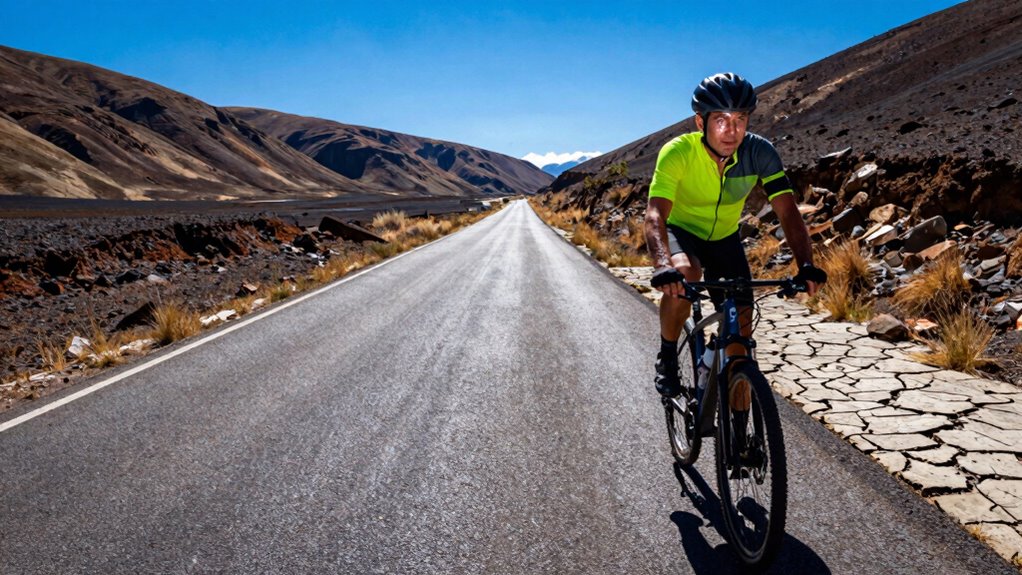

Heat drains your energy faster than expected, making you feel sluggish and reducing stamina. It also hampers your focus, increasing the risk of mistakes or accidents. To stay safe, you’ll likely need to modify your ride—shortening routes, adjusting pace, or riding during cooler times. Proper hydration with electrolytes and suitable clothing help, but staying aware of how heat affects you is key. Keep going to discover more tips on managing heat and riding safely.
Key Takeaways
- Heat accelerates dehydration, leading to fatigue, reduced stamina, and impaired physical performance.
- Elevated temperatures can diminish concentration and decision-making ability during rides.
- Riders may instinctively shorten rides or choose less challenging routes to avoid heat-related risks.
- Proper hydration with electrolytes and cooling strategies help maintain focus and endurance.
- Planning rides during cooler times and selecting shaded routes help preserve energy and safety.
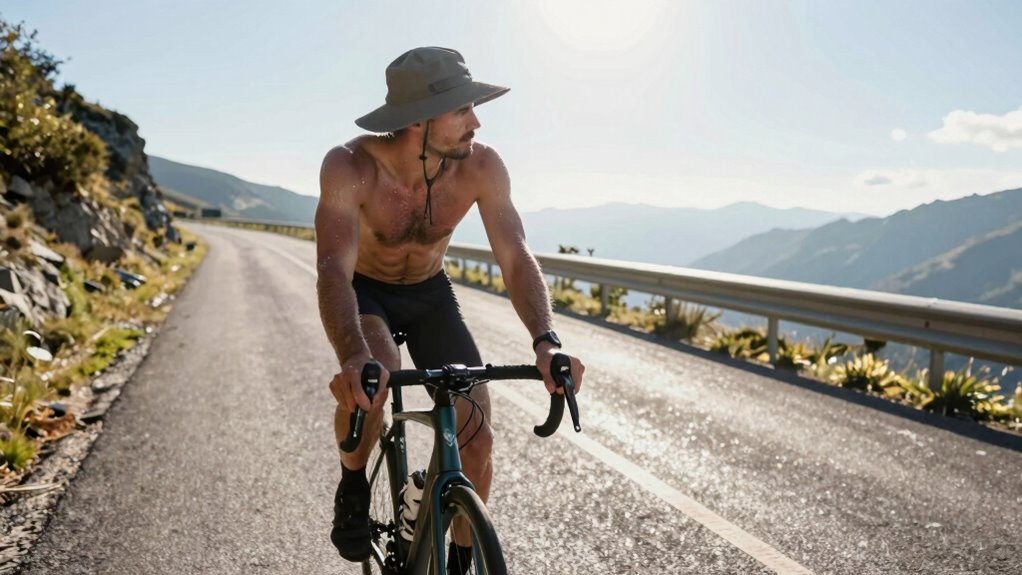
When the temperature rises, it’s not just your sweat that’s affected—your energy levels, focus, and even your choice of ride can change considerably. Heat can drain your stamina faster than you expect, so adapting your hydration strategies becomes essential. Drinking water regularly isn’t enough; you need to prioritize electrolytes to replace lost salts and minerals, especially during long or intense rides. Carry a sports drink or electrolyte tablets, and sip consistently rather than waiting until you feel thirsty. Proper hydration helps maintain your endurance and prevents dehydration, which can cause fatigue, dizziness, or worse.
Prioritize electrolytes and sip consistently to stay hydrated and maintain energy during hot rides.
Your clothing selection plays a crucial role in how you handle the heat. Lightweight, moisture-wicking fabrics are your best bet—they draw sweat away from your skin, keeping you cooler and more comfortable. Avoid heavy or cotton clothing that traps heat and moisture, making you feel sluggish and uncomfortable. Reflective gear or light-colored clothes can also help deflect sunlight, reducing heat absorption. Don’t forget a breathable hat or a cap with a wide brim to shield your face and neck from direct sunlight. Sunglasses with UV protection are vital for protecting your eyes and reducing glare, which can impair your focus on the road or trail. Recognizing the importance of proper clothing can significantly improve your comfort and safety in hot conditions. Additionally, understanding heat management techniques can help you stay cooler and more alert during rides. Incorporating climate awareness into your planning ensures you’re better prepared for varying conditions and can adapt your ride plans accordingly. Staying informed about weather patterns can further enhance your ability to choose optimal riding times. Being mindful of body temperature regulation also plays a key role in maintaining your overall comfort and safety.
As the heat intensifies, your focus can waver, and your decision-making might become less sharp. You may find yourself tempted to cut rides short or avoid challenging routes altogether. But instead of giving in to the heat, adjust your riding schedule—early mornings or late evenings are cooler options. Pace yourself more conservatively, knowing that heat saps your energy faster. Listen to your body; if you start feeling overly exhausted, dizzy, or nauseous, it’s time to stop and cool down. Resting in shaded areas and applying cold packs or misting yourself with water can help bring your core temperature down and sharpen your focus.
Heat doesn’t just affect your body—it influences your mental state and ride choices. You might pick a different route, one with more shade or less traffic, to avoid unnecessary stress. It’s about smart planning and preparation—understanding that heat impacts your hydration, clothing, and overall approach to cycling. When you’re equipped with the right strategies, you’ll stay more alert, perform better, and enjoy your ride despite the soaring temperatures.
electrolyte tablets for hydration
As an affiliate, we earn on qualifying purchases.
As an affiliate, we earn on qualifying purchases.
Frequently Asked Questions
How Does Heat Impact Hydration Levels During Rides?
Heat increases your sweat rate, which leads to faster fluid loss and impacts your hydration levels during rides. As you sweat more, you lose electrolytes, disturbing your electrolyte balance. To stay properly hydrated, you need to replace fluids and electrolytes regularly. Ignoring this can cause dehydration, fatigue, and decreased performance. So, during hot rides, drinking electrolyte-rich fluids helps maintain your hydration and keeps your energy and focus sharp.
Can Heat Cause Long-Term Physical Effects on Cyclists?
Heat can cause long-term physical effects on cyclists, especially if you experience heat-induced fatigue regularly. Over time, repeated dehydration and overheating may lead to chronic dehydration effects, affecting your kidney function and overall health. You might also notice decreased stamina and increased vulnerability to heat-related illnesses. To avoid these issues, stay properly hydrated, wear appropriate gear, and listen to your body’s signals during hot rides.
What Clothing Best Manages Heat While Riding?
Choosing clothing that keeps you cool is vital. You want moisture-wicking fabrics that draw sweat away, keeping you dry and comfortable. Breathable helmets are essential for proper airflow, preventing overheating. Lightweight, loose-fitting shirts and shorts enhance ventilation, helping you stay focused and fresh. By combining moisture-wicking gear with breathable helmets, you maximize comfort, control heat, and boost your confidence for every ride.
How Does Heat Influence Cycling Performance Timing?
Heat influences your cycling performance timing by prompting your body to adapt through heat adaptation, which enhances your metabolic efficiency. As temperatures rise, you may notice your pace slowing initially, but with proper heat adaptation, your body becomes better at managing heat stress, allowing you to maintain consistent performance longer. This improved metabolic efficiency helps you ride more effectively during hot conditions, optimizing your overall timing and endurance on the bike.
Are There Specific Signs of Heat Exhaustion to Watch For?
Signs to watch for include heavy sweating, weakness, dizziness, and nausea, which are early warning signs of heat exhaustion. You might also notice clammy skin, rapid heartbeat, or muscle cramps. If you experience these symptoms, it’s essential to stop riding, hydrate, and rest in a cool place. Ignoring early signs can lead to more serious heat-related illnesses, so stay attentive and take action promptly.
moisture-wicking athletic shirts
As an affiliate, we earn on qualifying purchases.
As an affiliate, we earn on qualifying purchases.
Conclusion
So, next time the sun’s blazing, remember how heat can drain your energy, fog your focus, and influence your ride choices—just like how a knight might have battled the scorching sun on a medieval quest. Stay cool, hydrate well, and listen to your body’s signals. Whether you’re pedaling through a heatwave or riding in cooler weather, understanding these effects helps you stay in control and enjoy your adventure, no matter the temperature.
UV protection sunglasses for runners
As an affiliate, we earn on qualifying purchases.
As an affiliate, we earn on qualifying purchases.
As an affiliate, we earn on qualifying purchases.