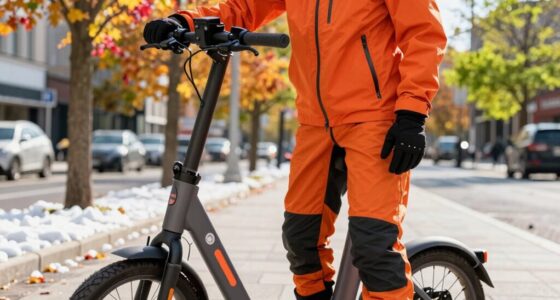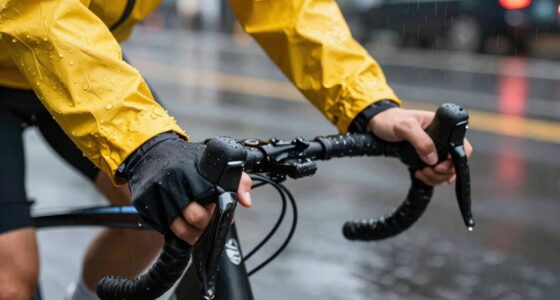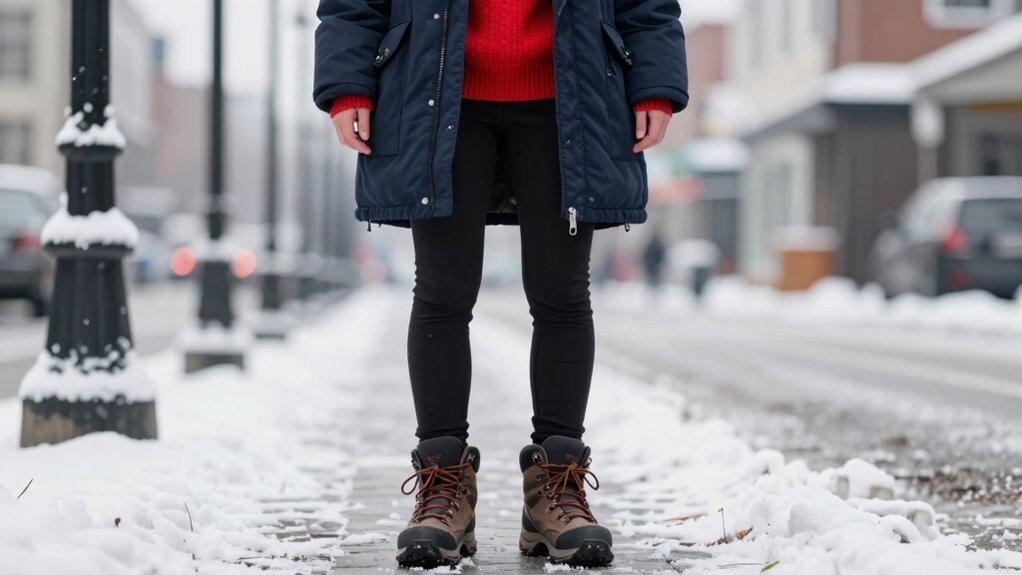

To stay warm and functional during cold commutes, layer wisely by starting with moisture-wicking base layers to stay dry and prevent chill. Add an insulating mid-layer like fleece or down to trap heat, and top with a waterproof, windproof outer shell to block elements. Use accessories like hats, gloves, and neck gaiters to retain heat, and adjust layers as needed to avoid overheating. For more tips on mastering this balance, keep exploring effective layering strategies.

Get bike and ride gear delivered free — and shop member deals
- Fast, free delivery on millions of items
- Access to Prime Big Deal Days deals on October 6–7
- Prime Video, Amazon Music and more included
Key Takeaways
- Start with moisture-wicking base layers to keep sweat away from your skin and stay dry.
- Add a mid-layer like fleece or insulated jacket for warmth, adjusting based on activity level.
- Use a waterproof, breathable outer shell to shield against wind, rain, or snow.
- Incorporate accessories such as hats, gloves, and neck gaiters to prevent heat loss through extremities.
- Ensure each layer is easy to adjust or remove to prevent overheating and maintain comfort during your commute.

When braving cold commutes, layering properly is essential to stay warm and comfortable without overheating. The key is to build a system that balances thermal insulation and moisture control, so you stay dry and cozy no matter how low the temperature drops. Start with a moisture-wicking base layer, which pulls sweat away from your skin and prevents dampness that can make you feel colder. Avoid cotton, as it traps moisture, and opt for synthetic or merino wool fabrics that dry quickly and maintain insulation even when damp. This layer is your first defense against the chill and indispensable for moisture control. Choosing the right fabric materials is crucial for effective moisture management and warmth retention.
Next, add an insulating mid-layer to trap body heat. Fleece, down, or synthetic insulated jackets work well here, providing thermal insulation that keeps your core warm. When choosing your mid-layer, consider the activity level—if you’re moving a lot, go for a lighter option that prevents overheating; if you’ll be stationary or exposed to wind, opt for a thicker, more insulated piece. This layer should be easy to adjust or remove if you start to feel too warm. Remember, a well-insulated mid-layer works in tandem with your base layer to maintain consistent warmth, especially in windy or damp conditions. Incorporating layering techniques can enhance your ability to adapt to changing weather conditions throughout your commute. Paying attention to moisture management in each layer helps prevent sweat from compromising your warmth and comfort. Additionally, selecting layers with breathable fabrics can significantly improve overall comfort during your commute. Using technical fabrics in your outer layer can further improve moisture control and durability against harsh weather.
The outer layer is your shield against the elements. A waterproof, windproof shell is crucial to protect you from rain, snow, and gusts that can sap your warmth and cause discomfort. An outer layer with good breathability allows moisture from sweat to escape while blocking external moisture, helping you stay dry inside and out. This is where thermal insulation and moisture control intersect; your outer shell should prevent external moisture from penetrating but still allow internal moisture from your body to escape.
Finally, pay attention to accessories like hats, gloves, and neck gaiters. These small but essential pieces help retain heat and prevent heat loss through your head, hands, and neck. Choose moisture-wicking materials for these accessories, especially if you’ll be active, to prevent moisture buildup and keep you comfortable. Proper layering, with an emphasis on moisture control and thermal insulation at every stage, ensures you arrive at your destination functional, dry, and warm. That way, you can focus on your commute rather than battling the cold or feeling soaked and uncomfortable.
moisture-wicking base layer shirt
As an affiliate, we earn on qualifying purchases.
As an affiliate, we earn on qualifying purchases.
Frequently Asked Questions
What Fabrics Are Best for Moisture-Wicking During Cold Weather?
For moisture-wicking during cold weather, choose fabrics with breathable fibers like merino wool or synthetic blends designed for thermal compression. These materials draw sweat away from your skin, keeping you dry and warm. Look for technical fabrics labeled as moisture-wicking, as they enhance breathability and thermal regulation. By selecting the right breathable fibers, you guarantee comfort and dryness during chilly commutes, preventing you from feeling damp or chilled.
How Do I Prevent My Layers From Restricting Movement?
Did you know that constrictive clothing can reduce your movement by up to 30%? To prevent your layers from restricting movement, avoid layering myths like tight-fitting clothes. Instead, choose clothing with excellent flexibility and stretch, ensuring each layer moves with you. Opt for fabrics designed for clothing flexibility, and always try on your layers before heading out to confirm they allow full range of motion, keeping you comfortable and agile.
What Are the Best Accessories to Stay Warm Without Bulk?
You can stay warm without bulk by choosing slim, thermal gloves that insulate without restricting your grip or movement. Pair them with an insulated scarf to keep your neck and face protected without adding weight or volume. Look for accessories made from lightweight, high-performance materials designed for warmth and flexibility. These essentials keep you cozy during cold commutes while maintaining your mobility and comfort.
How Can I Layer Effectively for Unpredictable Weather Changes?
Think of layering like building a sturdy fortress against unpredictable weather. To do this, you’ll want to debunk layering myths and make seasonal adjustments easily. Start with a moisture-wicking base layer, add an insulating middle layer, and top with a waterproof shell. Adjust your layers as the weather shifts—remove or add pieces—so you stay comfortable without overdoing it. Flexibility is your best armor against sudden weather changes.
What Are Some Quick-Drying Options for Emergency Layers?
For quick-drying emergency layers, you want options that dry fast and keep you warm. Consider packing fleece gloves—they’re lightweight and dry quickly, offering instant warmth. Additionally, instant heat packs are super handy; you just activate them when needed, providing immediate warmth without waiting. Both options are compact, reliable, and perfect for unexpected cold snaps during your commute, ensuring you stay warm and comfortable even if conditions change suddenly.
As an affiliate, we earn on qualifying purchases.
Conclusion
So, next time you brave the cold with layers, remember: it’s not just about staying warm—it’s about embracing the irony of feeling cozy while risking the fashion police’s judgment. After all, you’ll look like a marshmallow, but you’ll arrive functional, ready to conquer your day. Who knew the secret to staying upright and stylish in winter’s chaos was simply a carefully crafted wardrobe? Layer up and enjoy the paradox—warmth never looked so cool.
As an affiliate, we earn on qualifying purchases.
As an affiliate, we earn on qualifying purchases.
Fall Picks
fall essentials
As an affiliate, we earn on qualifying purchases.