Rain feels so different on an e-bike because your bike has electrical components and a battery that are vulnerable to water, making you more cautious. You’ll notice that wet conditions can reduce motor assist or cause it to shut off temporarily, and you may worry about water seeping into sensitive parts. This makes your ride feel more delicate and demanding careful handling. If you want to know how these factors impact your riding experience, keep exploring.
Key Takeaways
- E-bikes’ electrical components are more vulnerable to water damage, making rain feel riskier and more unpredictable.
- Reduced motor assist in wet conditions causes a less smooth ride, altering the usual cycling experience.
- Concerns about water ingress lead riders to ride more cautiously, affecting comfort and confidence.
- Waterproofing standards vary, so some e-bikes feel more fragile and sensitive in rain than traditional bikes.
- Safety features may activate during heavy rain, causing sudden power loss and making riding feel more delicate.
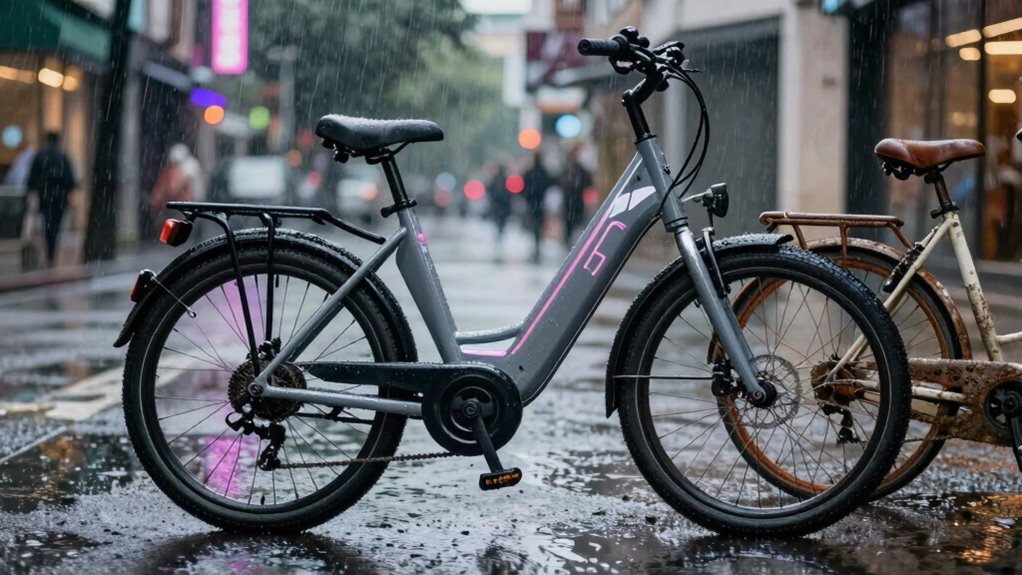
Have you ever wondered how riding in the rain affects an e-bike compared to a regular bike? When the skies open up, the experience feels noticeably different, especially because of the way an e-bike’s motor assist and battery protection come into play. On a regular bike, rain simply makes the ride wetter and sometimes more slippery, but you don’t have to worry much about electrical components. With an e-bike, however, the moisture introduces extra concerns that can influence how safe and comfortable your ride feels.
Your motor assist system is a key factor here. It relies on electrical components that can be vulnerable to rain and puddles. While most e-bikes are built with waterproofing standards, heavy or prolonged rain can still cause issues if water seeps into sensitive parts. When you ride through wet conditions, the motor assist might temporarily reduce its power or shut off altogether to prevent damage. This makes your ride feel different—less smooth, with less immediate help from the motor—compared to a regular bike, where you’re solely relying on your physical effort.
Rain can cause e-bike motor assist to reduce power or shut off, making rides feel less smooth and more cautious.
Battery protection is another critical concern. E-bikes pack a powerful battery that’s essential for providing that motor assist. Manufacturers typically design these batteries with waterproof casings and seals, but no system is entirely foolproof. In heavy rain, water can find its way into the battery compartment if the seals aren’t perfect or if you ride through deep puddles. When that happens, the battery’s safety features may activate, shutting the system down to prevent short circuits or damage. This can cause your e-bike to suddenly lose power, leaving you stranded or forcing you to pedal manually, which can be exhausting and frustrating.
Because of these potential vulnerabilities, you might find yourself being more cautious during rainy rides. You’ll likely avoid deep puddles and may even adjust your riding style to minimize exposure to water. Some riders invest in additional protective gear or covers for their batteries, but even then, the risk remains. As a result, the ride on an e-bike in rain can feel less predictable and more delicate compared to a regular bike, which simply requires you to keep your balance and pedal harder. Additionally, waterproofing standards vary across models, which can influence how well your e-bike handles wet conditions. Being aware of your bike’s specific electrical component design can help you better understand its limitations in wet weather. Proper maintenance practices are also essential to ensure your e-bike remains reliable in the rain and to extend its lifespan.
Furthermore, understanding how electrical systems are protected and maintained can help you extend the lifespan of your e-bike while riding in adverse conditions. In the end, riding in the rain on an e-bike isn’t just about dealing with slippery surfaces; it’s also about managing the electrical components that make your e-bike so convenient. The motor assist and battery protection systems are designed to handle wet conditions to a degree, but they introduce an extra layer of caution. That’s why, in rainy weather, your e-bike experience feels different—more fragile and more dependent on careful riding than a simple, traditional bike that doesn’t rely on electronics.
As an affiliate, we earn on qualifying purchases.
Frequently Asked Questions
How Does E-Bike Weight Affect Riding in Rain?
Your e-bike’s weight impacts riding in rain by influencing tire traction and rider stability. A heavier bike presses more firmly against wet surfaces, often improving grip and reducing slipping. However, it can also make balancing trickier, especially in slippery conditions. You’ll notice more stability when braking or cornering, but you must stay alert to sudden changes. Overall, the extra weight can be both a benefit and a challenge during rainy rides.
Do E-Bikes Have Better Waterproofing Than Regular Bikes?
E-bikes typically have better waterproofing than regular bikes, thanks to advanced rain gear and sealed components that protect the motor and battery. This means you stay drier and safer in wet conditions. However, you should still check tire traction and wear proper rain gear, like waterproof jackets and gloves, to stay comfortable and maintain control. Good waterproofing enhances your ride, but proper gear and tires keep you secure.
Can Rain Damage the Electric Components of an E-Bike?
Rain can sneak into your e-bike’s delicate heart, risking rain-induced corrosion and electrical insulation concerns. While many e-bikes have waterproof seals, persistent or heavy rain might still threaten the electric components if seals fail or gaps form. Think of your e-bike’s electronics as a treasure chest—keep it sealed tight, dry, and protected to prevent water from turning your ride into a risky, soggy adventure.
Does Rain Impact E-Bike Battery Performance Differently?
Rain can impact your e-bike battery performance by affecting its cooling and moisture resistance. When it rains, the moisture might slightly reduce battery efficiency, but most e-bikes are designed with sealed batteries that protect against moisture. Properly maintained, your e-bike’s battery remains safe and functional. Keep an eye on cooling and moisture resistance features, and avoid prolonged exposure to heavy rain to guarantee peak battery performance and longevity.
Are E-Bike Brakes More Effective in Wet Conditions?
In wet conditions, your e-bike’s hydraulic disc brakes cut through rain like a hot knife through butter. They’re more effective than traditional rim brakes because they grip better and resist water’s slippery touch. Disc brakes, especially hydraulic ones, respond swiftly and reliably, giving you confident stops even in downpours. So, yes, your e-bike’s hydraulic disc brakes perform better in rain, keeping you safer and in control when the weather turns nasty.
e-bike waterproof electrical connector
As an affiliate, we earn on qualifying purchases.
As an affiliate, we earn on qualifying purchases.
Conclusion
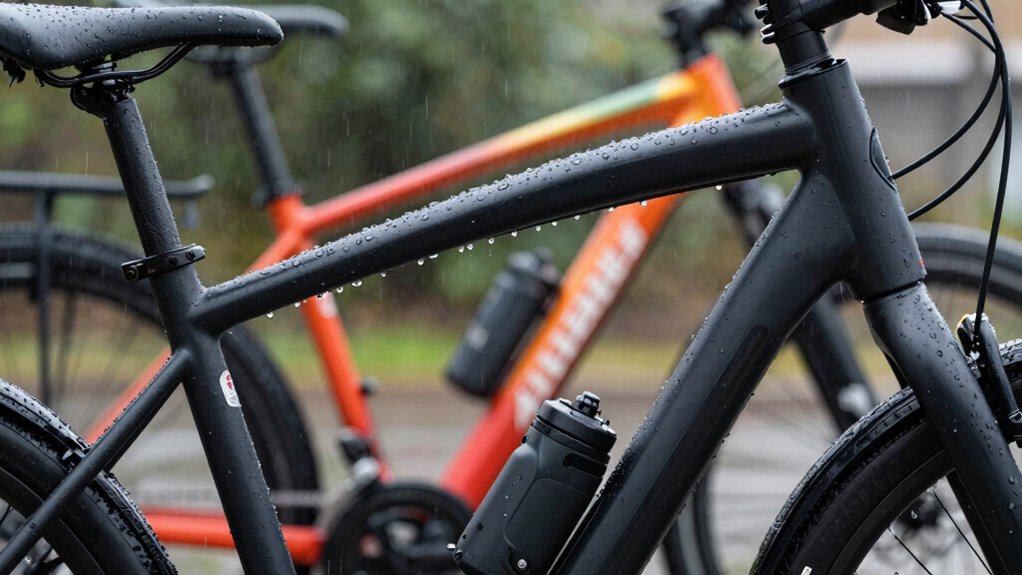
So, the next time rain drips off your e-bike’s sleek frame, remember it’s not just water—it’s a cool caress that feels different than on a regular bike. Your e-bike’s smooth surfaces and electric hum create a unique sensory dance, turning a simple shower into an immersive experience. Even in the storm’s embrace, you ride with a sense of adventure, feeling the rain’s whisper against your skin, transforming an ordinary ride into an extraordinary journey through the rain’s gentle touch.
As an affiliate, we earn on qualifying purchases.
As an affiliate, we earn on qualifying purchases.