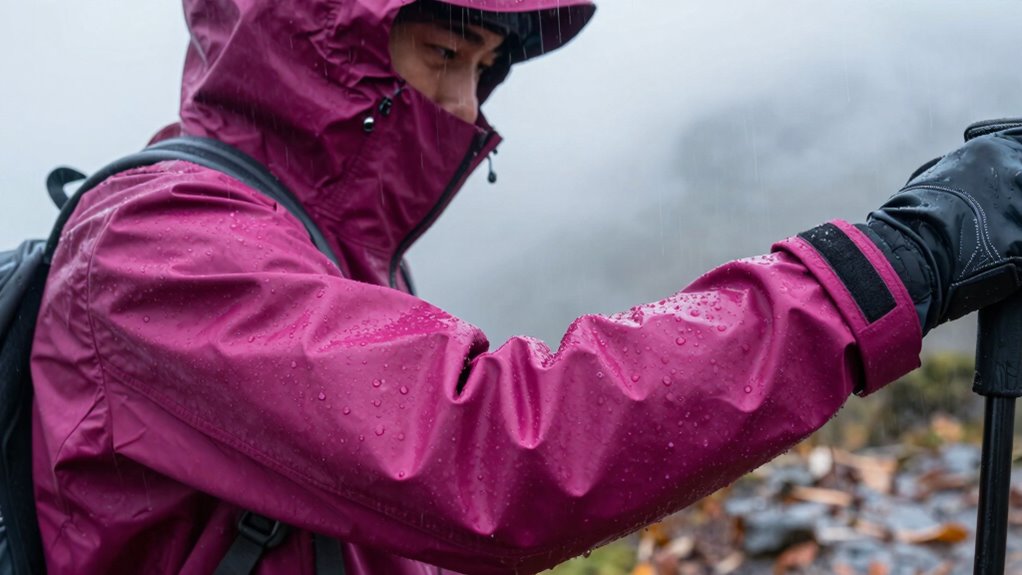

Even if your jacket is labeled waterproof, you can still end up wet inside if it lacks breathability or if you don’t layer properly. Poor breathability traps moisture from your body, causing condensation and dampness. Wearing heavy cotton underneath will also trap sweat, making you feel wetter. To stay dry and comfortable, it’s essential to choose gear with good ventilation and use moisture-wicking layers. Keep going to discover how to get it right every time.
Key Takeaways
- Waterproof jackets can still trap moisture from sweat if they lack breathability, causing internal dampness.
- Inadequate layering underneath can lead to sweat buildup, making you feel wet even if the outer layer is waterproof.
- Heavy or non-breathable materials, like cotton, trap moisture and reduce airflow, increasing internal dampness.
- Over-layering or poor fit restricts air circulation, preventing moisture from escaping and causing internal wetness.
- Choosing gear with high breathability and proper layering is essential to stay dry from both rain and perspiration.

Have you ever made the mistake of choosing the wrong rain gear and ended up wet and uncomfortable? It’s a common mistake, and it often comes down to two main issues: breathability problems and improper layering. Even if your jacket claims to be waterproof, you can still find yourself soaked through if you don’t understand how to wear it properly or if the gear itself isn’t designed for the conditions. The key is knowing that waterproof doesn’t always mean waterproof in every sense—especially when breathability issues come into play.
Even waterproof gear can fail if breathability and layering are ignored.
When your rain gear isn’t breathable enough, sweat and moisture from your body can get trapped inside. This buildup can make you feel damp and clammy, even if the outside remains dry. You might think that a waterproof jacket will keep you completely dry, but if it doesn’t allow moisture to escape, you’ll end up with condensation inside. This is why choosing gear with good breathability is *essential*. Look for materials that wick moisture away from your skin and allow air to circulate. Otherwise, you’ll just be replacing one problem with another, ending up wet from the inside out.
Improper layering is another common mistake that leads to feeling wet and uncomfortable. Many people underestimate the importance of dressing in layers, assuming that a single waterproof shell will do the trick. But if you wear a heavy cotton shirt underneath, sweat will accumulate and get trapped, making you cold and damp. The right approach involves a moisture-wicking base layer that pulls sweat away from your skin, a lightweight insulating layer if needed, and then your waterproof shell on top. This layered system helps regulate your body temperature, prevents sweat buildup, and allows your rain gear to function as intended.
It’s also essential to pay attention to how you put your layers together. Too many bulky layers can restrict movement and trap heat, while too few can leave you exposed. Proper layering creates a balance, allowing moisture to escape and keeping you dry from both rain and sweat. Additionally, understanding the role of breathable fabrics in your rain gear can significantly improve your comfort and dryness. Remember, the goal isn’t just to stay dry from the rain but also to stay comfortable and dry from your own perspiration.
Frequently Asked Questions
How Often Should I Reproof My Waterproof Jacket?
You should reproof your waterproof jacket every 20 to 30 washes or when you notice water no longer beads on the surface. Regular fabric treatment helps maintain the jacket’s waterproof lifespan, ensuring it stays effective. Keep an eye on performance, and don’t wait too long; reproofing restores waterproofing, preventing you from getting wet and extending the life of your gear.
Can Washing My Rain Gear Reduce Its Waterproofing?
Think of your rain gear’s fabric care like maintaining a car’s paint; regular washing can strip away the protective coatings, reducing waterproof integrity. Washing your gear too often or with harsh detergents can break down the waterproof barrier, making it less effective. To preserve its waterproofing, always follow care instructions, use appropriate cleaners, and reproof when necessary. Proper maintenance guarantees your jacket keeps you dry, rain or shine.
What’s the Best Way to Dry Waterproof Clothing?
To dry waterproof clothing properly, avoid high heat to prevent material deterioration and breathability issues. Instead, hang it in a well-ventilated area away from direct sunlight. Using a low-temperature tumble dryer can help, but only if the manufacturer approves. This gentle approach preserves the fabric’s waterproof and breathable qualities, ensuring your gear stays effective and lasts longer. Always check care labels for specific drying instructions.
Are There Specific Brands Known for Better Waterproof Jackets?
Some brands stand out for their better waterproof jackets thanks to brand reputation and advanced material technology. Look for companies like Arc’teryx, Patagonia, and The North Face, which use innovative fabrics like Gore-Tex or DryVent. These brands are known for durability, breathability, and reliable waterproofing. By choosing jackets from these trusted brands, you guarantee better protection against rain and stay dry, even in tough weather conditions.
How Do I Know if My Rain Gear Is Truly Waterproof?
Imagine standing in a downpour, feeling your jacket’s water resistance falter. To know if your rain gear is truly waterproof, check the labels for waterproof ratings like Gore-Tex or eVent. Test for breathability issues by noticing if sweat builds up inside. Also, consider material durability—quality waterproof jackets resist tears and wear. If you stay dry and comfortable, your gear’s waterproof; if not, it might need an upgrade.
Conclusion
So, next time you get soaked despite your “waterproof” jacket, remember: it’s not the jacket’s fault—it’s your genius choice of rain gear. Maybe skip the fancy label and invest in actual waterproof gear, or just accept that you’re destined to look like a drenched rat. After all, who needs dry clothes when you can have a good laugh at your waterproofing genius? Stay soggy, my friend—style and dryness are overrated anyway.