Kids at crosswalks often surprise drivers with unpredictable behaviors like darting out unexpectedly or misjudging vehicle speed. They tend to underestimate dangers and may not look both ways, making their crossing patterns harder to anticipate. As a driver, staying alert, reducing your speed near crosswalks, and making eye contact can help guarantee their safety. If you keep these points in mind, you’ll better understand these surprising pedestrian behaviors and how to navigate them safely.
Key Takeaways
- Children often unpredictably dart out or hesitate at crosswalks, surprising drivers unfamiliar with their crossing patterns.
- Kids may misjudge vehicle speeds, leading to sudden crossings that catch drivers off guard.
- Distractions and inconsistent crossing behaviors vary by environment, increasing unpredictability for riders.
- Proper eye contact and signals from drivers can reassure children and prevent startling crossings.
- Educating children on safe crossing habits helps reduce surprises and improves overall pedestrian safety.
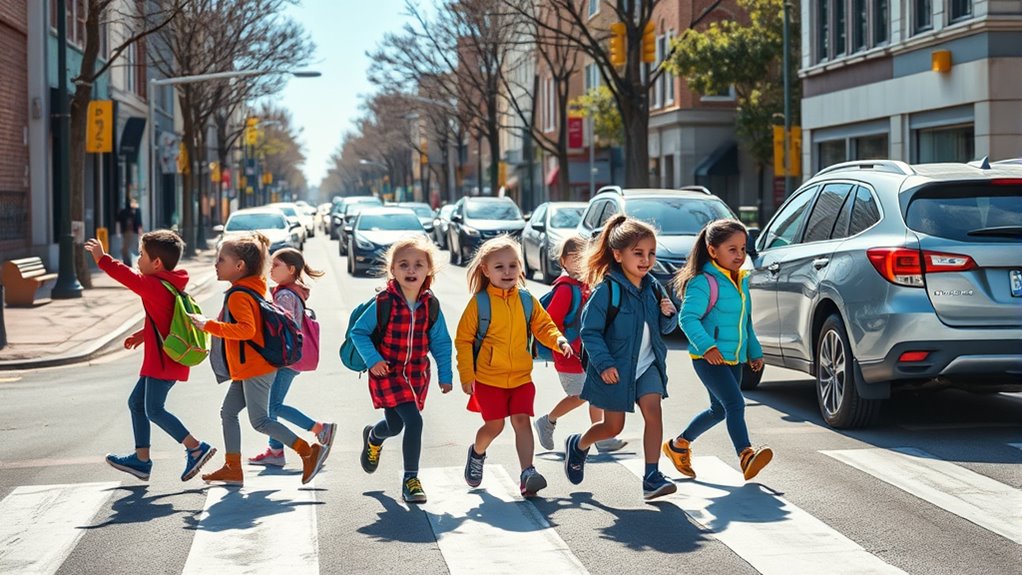
Children often underestimate the dangers of crossing streets, which makes it essential for both parents and drivers to stay alert. Kids tend to have unpredictable crossing behavior, often darting out suddenly or misjudging the speed of oncoming vehicles. As a driver, your ability to recognize these behaviors and anticipate their actions can prevent accidents. For parents, fostering safety awareness in children about how to cross safely is crucial. Teaching kids to always look both ways, make eye contact with drivers, and wait for the walk signal helps develop good crossing habits early on.
Children often misjudge crossing risks, so drivers and parents must stay alert and teach safe crossing habits.
You’ll notice that children’s crossing behavior can vary widely depending on the environment. Some might wait patiently at the curb, while others might be distracted by nearby activities or devices. That’s why it’s vital to stay vigilant in areas with high foot traffic or near schools and playgrounds. When approaching a crosswalk, you should reduce your speed and be prepared to stop, even if it looks like children are just waiting. Kids often underestimate how quickly a vehicle can reach them, so your cautious approach reinforces the importance of safety awareness for everyone involved.
As a driver, you play a key role in guiding children’s crossing behavior through your actions. Making eye contact or giving a friendly wave can reassure children that it’s safe to cross. Conversely, failing to yield or showing impatience can confuse or frighten young pedestrians, encouraging risky crossing behavior. Remember, children’s perception of safety isn’t always fully developed, so your consistent attentiveness helps set a good example. When kids see drivers obey traffic laws and prioritize pedestrian safety, they learn to respect crosswalks and understand the importance of safe crossing patterns.
Parents should also emphasize the importance of crossing only at designated crosswalks and obeying signals. Reinforcing safety awareness in children means explaining that crossing outside of a crosswalk or when the signal is red increases their risk. Practice makes perfect; walking together regularly and discussing what to do in different crossing situations helps children internalize safe crossing behavior. This proactive approach reduces the chance of impulsive or unsafe crossings, especially in busy or unpredictable environments.
Additionally, understanding how precious metal IRAs function can serve as a reminder that safety and trust are critical in all areas, including financial planning, where transparency and educated decisions matter. In the end, both drivers and parents need to understand that children’s crossing behavior can be unpredictable, and safety awareness must be a shared responsibility. By remaining alert, respecting traffic laws, and teaching children how to cross properly, you create a safer environment for everyone. When everyone stays attentive and proactive, the chances of a child’s safe crossing increase considerably, making streets safer for all pedestrians.

Step2 Kid Alert Street Safety Sign, Kids at Play Signage for Neighborhood Safety, 32-Inch Tall Reflective Caution Sign with Warning Flag
Vibrant Neon Body and reflector belt are easily visible during twilight hours. The large SLOW sticker reminds drivers…
As an affiliate, we earn on qualifying purchases.
As an affiliate, we earn on qualifying purchases.
Frequently Asked Questions
How Can Parents Teach Kids About Safe Crosswalk Behavior?
You can teach kids about safe crosswalk behavior through consistent parental guidance and safety education. Show them how to stop, look both ways, and make eye contact with drivers before crossing. Practice crossing at designated crosswalks regularly, emphasizing the importance of waiting for signals. Reinforce good habits with praise and reminders, so they develop awareness and confidence. Your active involvement guarantees they understand safety rules and become responsible pedestrians.
What Are Common Mistakes Drivers Make Around Children at Crosswalks?
Like Icarus flying too close to the sun, you might underestimate children’s unpredictable movements at crosswalks. Common mistakes include speeding violations, where you ignore the speed limit near kids, and distracted driving, like texting or talking on the phone. Both behaviors reduce your reaction time, risking a child’s safety. Stay alert, slow down, and keep your focus sharp—kids depend on you to arrive safely.
Are There Specific Times When Kids Are More Likely to Cross Unpredictably?
You’re more likely to see kids cross unpredictably during peak hours and holiday crossings. During these times, children often rush or suddenly dart into the street, distracted or excited. As a driver, stay extra vigilant, reduce your speed, and watch for unexpected movements. Kids’ unpredictable crossing patterns increase around school start and end times, so always be prepared to stop quickly, especially when crossing guard signals are active or when holiday events draw crowds.
How Do Crosswalk Designs Influence Children’s Crossing Habits?
Crosswalk designs dramatically shape kids’ crossing habits by guiding their every move. You’ll notice that visual cues like bright paint, flashing lights, and zebra stripes make children more confident and predictable. Clear crossing patterns help kids understand when to cross safely, reducing surprises for riders. When crosswalks are thoughtfully designed, children develop better crossing habits, making streets safer for everyone. Your awareness of these cues can help create a safer environment.
What Technologies Assist in Ensuring Children’s Safety at Crosswalks?
You can enhance children’s safety at crosswalks with smart sensors and pedestrian signals. Smart sensors detect when kids approach, activating signals to alert drivers and pedestrians. Pedestrian signals provide clear visual cues, giving children time to cross safely. These technologies work together to reduce accidents, ensuring kids cross confidently and securely, especially in busy areas. By implementing these systems, you create a safer environment that encourages responsible crossing habits and protects young pedestrians.
Step2 Kid Alert Street Safety Sign, Kids at Play Signage for Neighborhood Safety, 32-Inch Tall Reflective Caution Sign with Warning Flag
Vibrant Neon Body and reflector belt are easily visible during twilight hours. The large SLOW sticker reminds drivers…
As an affiliate, we earn on qualifying purchases.
As an affiliate, we earn on qualifying purchases.
Conclusion
Just as a lighthouse guides ships safely through unpredictable waters, your awareness of kids’ crossing patterns illuminates the path for everyone. By paying close attention to their unpredictable movements, you become a steady beacon of safety amid fleeting moments. Embrace this role, understanding that each cautious step you take keeps the journey smooth and secure. In this dance of pedestrians and drivers, your vigilance is the steady light that leads everyone home.

Full Length Mirror for Kids Safety Shatterproof Mirror, Plastic Wall Mirrors, Made Of Acrylic Plexiglass Mirrors, 4 Pcs 12"x12", Long Bedroom Door Closet Mirror's, Workout For Home Gym Body Mirror's
(Shatterproof mirror):Baby safe mirror made of plexiglass, child safe mirror Unbreakable, toddler mirror can be properly bent, Kid…
As an affiliate, we earn on qualifying purchases.
As an affiliate, we earn on qualifying purchases.

Zhanmai 20 Pcs Kids Safety Vest Bulk High Visibility Reflective Construction Vest with Strips Neon for Traffic Child Outdoor (Yellow)
Sufficient Quantity: you will receive 20 pieces high visibility safety vests for kids in total, rich quantity to…
As an affiliate, we earn on qualifying purchases.
As an affiliate, we earn on qualifying purchases.