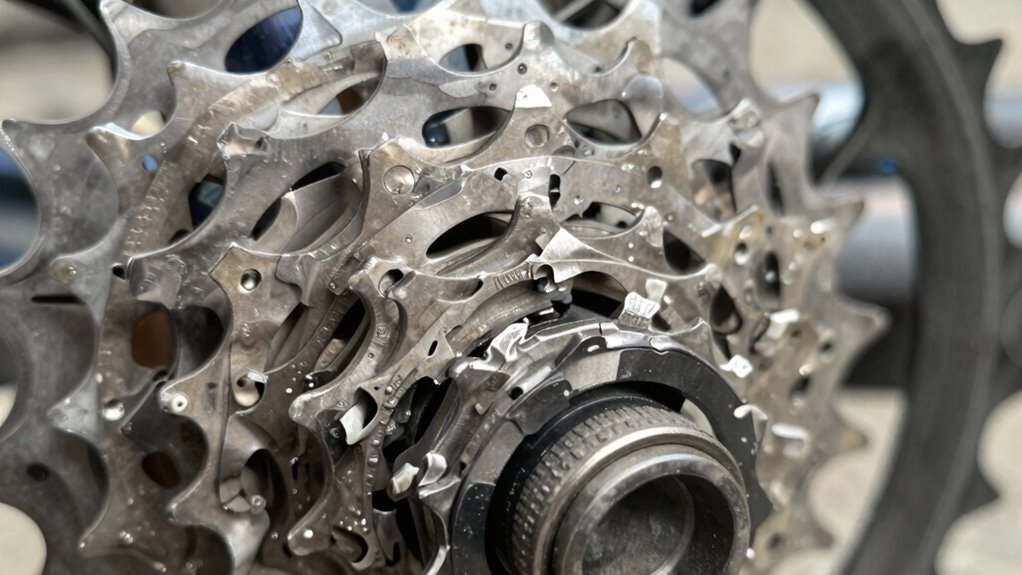

When your chainring and cassette teeth become sharp, hooked, or develop a shark-fin shape, it’s a clear sign you need to replace them. Teeth that look chipped, worn down, or uneven can cause slips, poor shifting, and chain drops. If you notice teeth that no longer have their original shape or feel rough, your drivetrain’s efficiency is compromised. Continuing with worn components will only lead to more damage—you’ll uncover more details if you keep exploring.
Key Takeaways
- Sharp, hooked, or shark-fin-shaped teeth indicate significant wear requiring replacement.
- Chipped or chipped edges on gear teeth signal that the component is worn out.
- Teeth that appear uneven, chipped, or have a hooked profile suggest it’s time for replacement.
- Worn teeth may look normal but show subtle signs like thinning or curvature upon close inspection.
- Loss of original tooth shape reduces gear engagement, indicating the need to replace the worn components.

Over time, chainring and cassette wear can considerably affect your bike’s shifting performance and efficiency. When these components wear out, they cause misalignment and slipping, making it harder to maintain smooth gear changes. Recognizing the signs of wear is essential to maintaining ideal gear compatibility and ensuring your drivetrain operates efficiently. If your shifting feels sluggish or if you notice the chain skipping under load, it’s a good indication that your chainring or cassette might need attention. Worn teeth aren’t just a minor inconvenience—they directly impact how power transfers from your pedals to the rear wheel. As teeth wear down, the engagement between the chain and the gears becomes less reliable, which can lead to chain drops or poor shifting response.
The shape of the teeth plays a significant role in drivetrain efficiency. When gear teeth become sharp, hooked, or develop a shark-fin profile, they no longer mesh properly with the chain. This improper engagement reduces gear compatibility, causing the chain to slip or skip during climbs or sprints. The teeth may look normal at first glance, but a closer inspection often reveals these subtle changes that signal the need for replacement. The better the gear teeth maintain their original shape, the more smoothly your drivetrain will run. Worn teeth can also increase friction, leading to unnecessary wear on other components like the chain and derailleur. This cascade effect further diminishes drivetrain efficiency, ultimately costing you more in repairs and replacements. Additionally, worn teeth can accelerate the overall wear of your drivetrain components, compounding the problem over time.
To keep your bike shifting crisply and maintaining ideal gear compatibility, it’s essential to regularly inspect your chainring and cassette. If you notice teeth that are visibly worn, chipped, or have a hooked appearance, it’s time to replace them. Don’t wait until shifting becomes unbearable—early replacement preserves drivetrain efficiency and prevents damage to other parts. When replacing these components, matching the new gear shapes to your chain and ensuring they’re compatible with each other will improve overall performance. Proper maintenance, including cleaning and lubricating your drivetrain, also helps extend the lifespan of your chainring and cassette, but eventually, wear is inevitable. Recognizing the signs of worn teeth and understanding their impact on gear compatibility and drivetrain efficiency will keep your rides smooth, responsive, and enjoyable.
Top picks for "chainr cassette wear"
As an affiliate, we earn on qualifying purchases.
Frequently Asked Questions
How Often Should I Inspect My Chainring and Cassette for Wear?
You should inspect your chainring and cassette during your regular maintenance schedule, ideally every 500 to 1,000 miles or monthly if you ride frequently. Use a visual inspection to check for worn or damaged teeth, especially those that look sharp, hooked, or have excessive play. Catching wear early helps prevent drivetrain issues, so make it a habit to examine these components regularly to keep your bike running smoothly.
Can I Mix Different Brands of Chainrings and Cassettes?
You can mix different brands of chainrings and cassettes, but it’s like combining mismatched puzzle pieces—you might get smooth riding, or you might face awkward shifts. Brand compatibility isn’t guaranteed, so follow maintenance tips like checking for proper fit and wear regularly. Stick to reputable brands or those known to work well together to make certain your drivetrain runs seamlessly, avoiding premature wear and costly repairs.
What Tools Are Best for Measuring Chainring and Cassette Wear?
You should use digital measurement tools, like a chain wear indicator or calipers, to accurately assess chainring and cassette wear. Calibration techniques are essential to guarantee precision—regularly check your tools against a known standard. Digital tools provide precise readings, making it easier to spot worn teeth. By measuring regularly, you catch wear early, avoiding damage and maintaining ideal shifting performance, saving you money and riding smoothly.
Does Riding Style Affect How Quickly These Parts Wear Out?
Riding style definitely influences how quickly your chainring and cassette wear out. For example, if you frequently ride hilly terrain and often shift gears under load, your parts experience more stress, accelerating wear. Like a hammer repeatedly striking the same nail, constant gear shifting under heavy pedaling wears the teeth faster. So, aggressive riding and frequent gear changes speed up the need for replacements, making maintenance essential for smooth performance.
Are There Specific Signs of Wear That Indicate Immediate Replacement?
You’ll notice visual wear patterns like shark fin or bent teeth, and if your gears slip during pedaling, it’s a clear sign you need to replace your chainring or cassette immediately. These symptoms show that the teeth have worn down enough to lose proper engagement, risking damage or poor shifting. Don’t ignore these signs; replacing worn parts promptly keeps your bike running smoothly and prevents costly repairs later.
Conclusion
When those worn teeth start to look ragged or shark fin-shaped, it’s like your bike’s telling you it’s time for a change. Imagine your chain slipping, skipping over battered teeth as if they’re holding a grudge. Replacing your chainring and cassette restores that smooth, snapping rhythm, like a well-oiled engine purring back to life. Don’t let worn teeth turn your ride into a clunky, hesitant journey—heed the signs and keep your bike running like new.