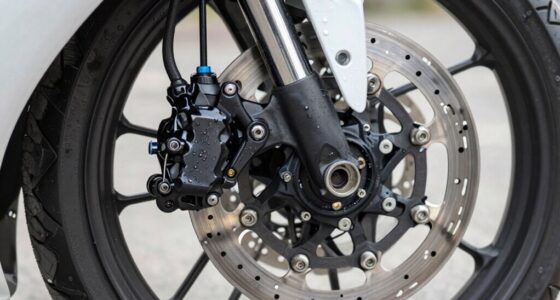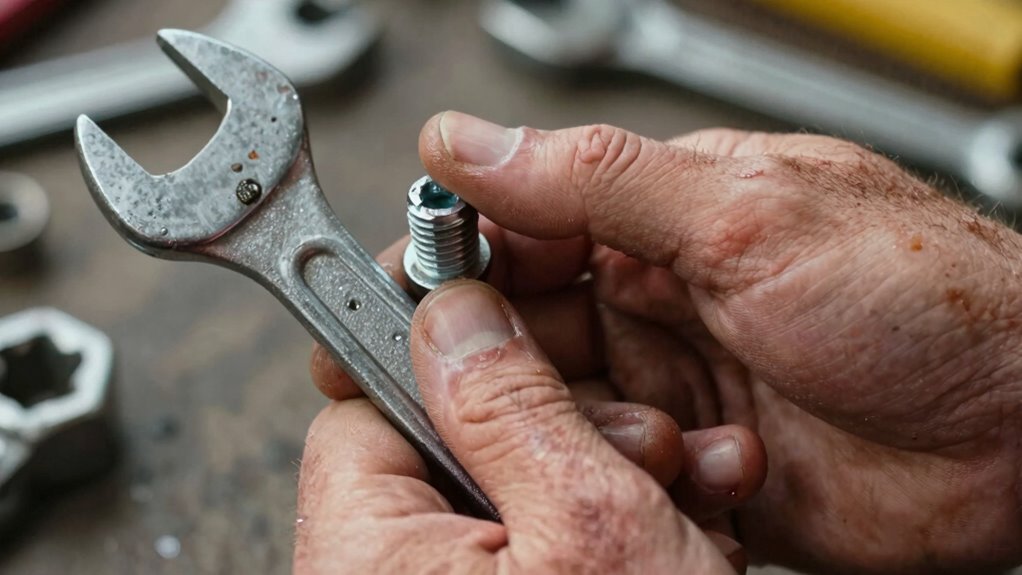

To tighten without stripping, focus on developing your sense of feel by applying gradual pressure and listening for resistance. Stop if you notice excessive tightness or binding, then back off slightly before tightening again with smaller turns. Use subtle cues from resistance to judge when you’ve reached the right tightness. Practicing patience and sensitivity helps prevent over-tightening and damage. Stay attentive, and you’ll find that mastering this skill can make securing fixtures safe and effective—more tips await if you keep exploring.
Open a free Amazon Business account
Business pricing, bulk buying and tax-exempt orders.
As an affiliate, we earn on qualifying purchases.
Key Takeaways
- Apply gradual pressure and turn slowly, paying close attention to resistance changes to gauge proper tightness.
- Stop tightening if you feel excessive resistance or binding, then back off slightly before re-tightening with lighter turns.
- Develop tactile sensitivity through practice to recognize subtle resistance cues indicating optimal torque.
- Consider material properties; softer materials require gentler tightening, while harder materials still need cautious force based on feel.
- Use your sense of touch to prevent over-tightening, ensuring secure fixtures without damaging threads or components.
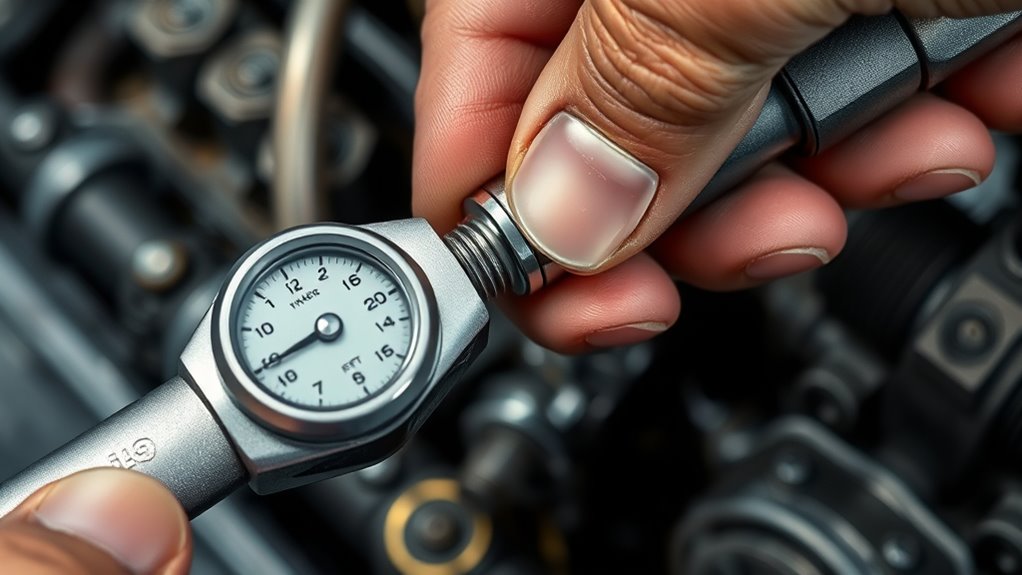
If your fixtures or furniture have become loose over time, you don’t always need to strip everything down and start from scratch. Often, a simple tightening can restore stability, but without proper torque specs, it’s easy to over-tighten and cause damage. Instead, focus on developing your sense of “feel”—a skill that lets you tighten effectively without stripping the threads or over-stressing the materials. When you rely on feel, you’re guided by tactile feedback rather than a set number, which is especially helpful in situations where torque specs aren’t available or aren’t precise enough.
Start by understanding thread repair basics. If you notice stripped or damaged threads, don’t just crank the fastener tighter; instead, consider rethreading or installing a repair insert. Proper thread repair ensures that you regain strength and prevent further stripping. Once the threads are repaired, you can proceed with tightening using torque techniques that emphasize sensitivity. Apply gradual pressure, turning the fastener slowly and stopping if you feel resistance that’s too much or if the fastener begins to bind. This approach helps you avoid overtightening, which can strip the threads again or crack the material.
Your sense of feel comes from paying close attention to resistance and how the fastener responds. As you tighten, you’ll notice a change in the amount of force needed. When you hit the proper tightness—enough to secure the fixture without forcing it—you’ll feel a subtle shift in resistance. This is your cue that you’ve reached a safe torque level. If you’re unsure, back off slightly and then tighten again with smaller turns, monitoring the resistance each time. Over time, this practice builds your instinct for what “just right” feels like, making your tightening more precise and less risky.
Mastering torque techniques with feel also involves understanding the materials you’re working with. Metal fasteners on wood, plastic, or softer metals all require different sensitivities. For softer materials, use gentler pressure; for harder materials, you can increase your torque slightly but still rely on your tactile feedback. Remember, the goal isn’t to crush or deform the threads but to create enough friction to hold everything securely. If you encounter resistance that feels abnormal—like it’s suddenly too tight or too loose—stop immediately. Over-tightening can lead to stripped threads, broken fasteners, or damaged fixtures.
In essence, developing your feel takes patience and practice, but it’s well worth it. It allows you to tighten fixtures confidently without risking damage or stripping threads. Combine this intuitive approach with proper thread repair techniques, and you’ll be able to restore stability efficiently, saving time and materials while maintaining the integrity of your fixtures. Additionally, understanding the different materials involved helps you tailor your tightening approach appropriately.

LEXIVON Bike Torque Wrench 1/4-Inch Dr. 15-Piece Kit | 72-Tooth Gear, Dual-Direction Click Type 2~26 Nm / 17.7~230.1 in-lb (LX-191)
- Complete Bike Torque Wrench Kit: 15-piece set with various bits and extension
- Precise Torque Measurement: 2~26 Nm with micro-adjustments to 0.2 Nm
- High-Quality Gear Mechanism: 72-tooth, heat-treated chrome-molybdenum ratchet
As an affiliate, we earn on qualifying purchases.
As an affiliate, we earn on qualifying purchases.
Frequently Asked Questions
Can I Use a Regular Wrench Instead of a Torque Wrench?
You can use a regular wrench instead of a torque wrench, but keep in mind it affects calibration accuracy and tool compatibility. A wrench relies on your feel, which isn’t as precise, risking over-tightening or under-tightening. If you’re experienced, it might work, but for critical jobs, a torque wrench guarantees the right tension. Always consider the tool’s calibration and compatibility with the fastener to avoid damage or safety issues.
How Do I Develop a Proper “Feel” for Tightening?
Think of developing a proper “feel” like learning to ride a bike; it takes practice. Start by using techniques like fingertip tightness and gradually increasing pressure as you gain confidence. Pay attention to resistance and stop when it feels snug, not forced. Practice on different bolts to build sensitivity, and over time, your hand will instinctively know when you’ve tightened enough without stripping.
Are There Risks in Relying Solely on “Feel” for Tightening?
Yes, relying solely on “feel” can be risky if you don’t do manual calibration and sensory training regularly. Without proper calibration, your perception might be off, leading to over-tightening or under-tightening. Sensory training helps you develop consistent tactile feedback. To avoid damage, combine “feel” with periodic calibration and practice, ensuring you tighten bolts properly without risking stripping or failure.
What Tools Can Help Improve My “Feel” During Tightening?
You can improve your “feel” during tightening with calibrated tools like torque wrenches that provide tactile feedback, helping you sense when to stop. Using calibration techniques guarantees your tools stay accurate, enhancing your control. Additionally, consider grip gauges or stretch measures, which give you a more consistent tactile response. These tools and methods help you develop better tactile feedback, making your tightening more precise without relying solely on feel.
How Do Temperature Changes Affect Tightening Without Torque Specs?
Temperature changes affect tightening because materials expand with heat and contract when cooled. If you don’t account for thermal expansion or contraction, fasteners may become too loose or too tight. When working in varying temperatures, consider how material properties shift, and adjust your feel accordingly. This way, you maintain proper tension without relying solely on torque specs, ensuring a secure, safe connection despite temperature fluctuations.

Zeluga 16-139 Tie Tensioning Tool with Manual Cut Off and Grip
- Efficient Tie Tensioning: Tightens nylon ties quickly and securely
- Easy-to-Use Cutting Mechanism: Manual cut-off with simple pull
- Comfortable Grips: Gray vinyl cushioned handles for comfort
As an affiliate, we earn on qualifying purchases.
As an affiliate, we earn on qualifying purchases.
Conclusion
Now that you know how to use your feel instead of torque specs, you can confidently tighten bolts without risking damage. With practice, you’ll develop a steady hand and a keen sense of touch that keeps your work safe and effective. Isn’t it satisfying to trust your instincts and get the job done right? Remember, sometimes feeling is more powerful than measuring—so trust yourself and tighten with confidence!

OMT Thread Repair Kit, 172pc Metric Thread Restorer Kit
- Complete Repair Kit: 172-piece metric thread repair set
- Includes Drill Bits & Taps: 5 drill bits, 5 screw taps
- Wire Thread Inserts: 150 inserts for various sizes
As an affiliate, we earn on qualifying purchases.
As an affiliate, we earn on qualifying purchases.

GIYOMI 20mm No Sewing Jeans Buttons Replacement Kit, 12 Sets, 0.79 inch
- Material: High-quality brass, durable and corrosion-resistant
- Installation: No sewing or hammer needed, easy screwdriver installation
- Design: Smooth finish with no protrusions for comfort
As an affiliate, we earn on qualifying purchases.
As an affiliate, we earn on qualifying purchases.
Pool season Picks
robotic pool cleaners
As an affiliate, we earn on qualifying purchases.