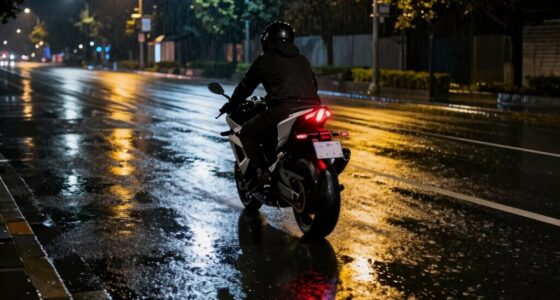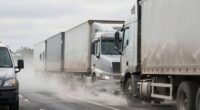
When fog and darkness severely limit your visibility, you must immediately slow down and proceed with caution. Reduce your speed gradually, avoiding sudden braking or acceleration that could cause loss of control. Keep your headlights on low beams or fog lights to improve visibility and make your vehicle more visible to others. Maintain a safe following distance of at least four seconds, and stay alert to road conditions. Continuing to adapt your driving techniques will help you stay safe in such challenging conditions.
Key Takeaways
- Gradually reduce your speed as visibility decreases to give yourself more reaction time.
- Maintain a safe following distance of at least four seconds to prevent collisions.
- Use low beam headlights and fog lights to improve visibility without causing glare.
- Avoid sudden acceleration or braking to keep vehicle control in low visibility conditions.
- Stay alert, avoid over-reliance on mirrors, and proceed cautiously until visibility improves.
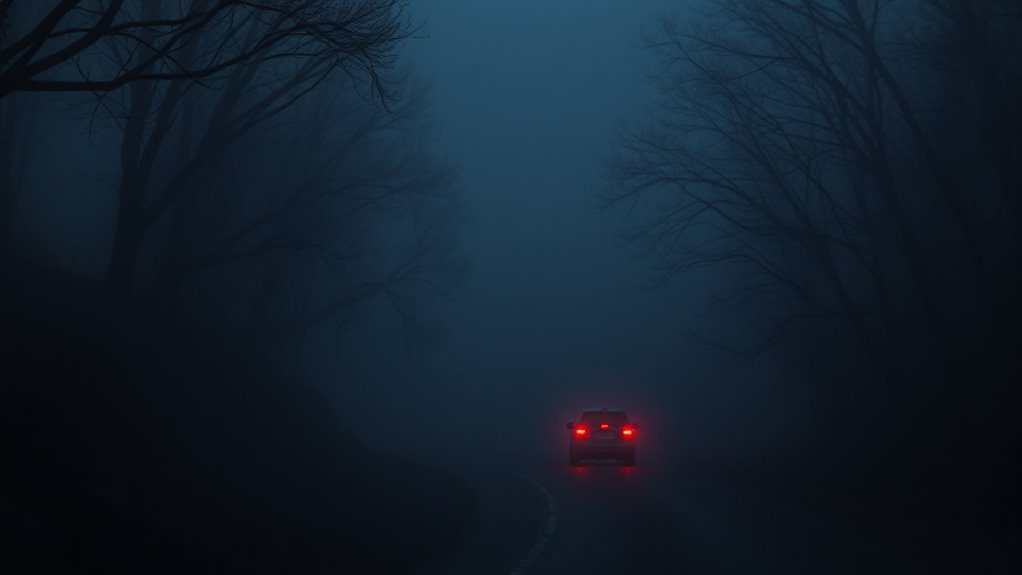
Driving in fog and darkness can be dangerous, so adjusting your speed is essential for safety. When visibility drops, your vehicle equipment becomes one of your most important tools. Make sure your headlights are functioning properly, with low beams activated to minimize glare and improve your distance perception. Use fog lights if your vehicle has them—they’re designed to cut through thick fog and help you see the road more clearly. Additionally, check that your windshield wipers are in good condition, and keep your windows clean to prevent streaks that can further reduce visibility. Good vehicle equipment isn’t just about the lights; consider installing reflective markers or tape on your vehicle to make it more visible to others, especially if you’re driving in poorly lit areas. Regularly inspecting your vehicle’s lighting and visibility aids ensures they function correctly in low visibility conditions.
Beyond vehicle readiness, driver training plays a vital role in oriented low-visibility conditions safely. If you haven’t had recent training on driving in fog and darkness, it’s worth reviewing essential techniques. For example, reduce your speed well below the posted limit to give yourself more reaction time, since your ability to judge distances and speeds is compromised. Keep a safe following distance—at least four seconds behind the vehicle ahead—so you don’t get caught off guard if they suddenly brake or stop. Use your mirrors frequently to stay aware of your surroundings, but avoid over-reliance on them, as fog can distort your peripheral vision. Developing defensive driving skills is crucial for navigating these hazardous conditions effectively.
Your focus should be on proactive driving. Adjust your speed gradually rather than suddenly slamming on the brakes or accelerating. If you’re unsure about the road ahead, slow down even more. Recognize that in such conditions, your normal driving skills need to be supplemented with heightened caution and patience. Remember, many accidents happen because drivers don’t sufficiently adapt to these challenging conditions.
Top picks for "darknes adjust visibility"
Open Amazon search results for this keyword.
As an affiliate, we earn on qualifying purchases.
Frequently Asked Questions
How Can I Tell if My Vehicle’s Headlights Are Effective in Fog?
You can tell if your headlights are effective in fog by checking their headlight alignment and fog light effectiveness. If your headlights illuminate the road clearly without causing glare or reflection, they’re working well. Fog lights should cut through fog without scattering light, so test them in a safe area. Properly aligned headlights and effective fog lights improve visibility, helping you drive safely in low-visibility conditions.
Are There Specific Driving Techniques Recommended in Dense Darkness?
In dense darkness, you should reduce your speed and use your fog lights to improve visibility. Make sure your headlights are properly adjusted, so they illuminate the road effectively without blinding other drivers. Use fog lights in low visibility conditions, and avoid using high beams, which can reflect off fog and worsen visibility. Stay alert, keep a safe following distance, and drive cautiously to navigate safely through limited visibility.
What Are the Legal Speed Limits During Foggy or Dark Conditions?
In foggy conditions or darkness, your safety depends on knowing the legal speed limits, but those limits are just a starting point. When visibility drops, you’ll need to reduce your speed considerably, often well below the posted limits, to stay safe. Always drive cautiously, keeping your headlights on low beam, and be prepared to stop quickly. Remember, safety outweighs speed—trust your judgment and adjust accordingly.
How Does Weather Forecast Influence Driving Speed Adjustments?
Weather forecasts help you plan your drive by providing hazard awareness and predicting conditions like fog or rain. When forecasts indicate poor weather, you should reduce your speed accordingly, allowing more reaction time. Stay alert to changing conditions and adjust your driving to maintain safety. Trust the forecast, stay cautious, and always prioritize visibility and control over speed, especially during adverse weather, to avoid accidents.
What Emergency Measures Should I Take if Visibility Suddenly Worsens?
If visibility suddenly worsens, you should immediately activate your emergency signaling devices, like hazard lights or a warning triangle, to alert other drivers. Safely pull over to the roadside if possible, and stay inside your vehicle for safety. If you need help, call roadside assistance for professional support. Keep calm, avoid abrupt movements, and wait until visibility improves before resuming your drive.
Conclusion
When visibility drops, always slow down to stay safe. For example, imagine you’re driving through thick fog on a rural road; reducing your speed allows more reaction time if an obstacle suddenly appears. Remember, your safety depends on adjusting your speed to match conditions. Don’t push ahead at normal speeds—embrace caution, stay alert, and arrive safely. Adjusting your speed isn’t just smart; it’s essential when fog and darkness threaten your visibility.