When charging at public outlets, be considerate by unplugging your device once it’s charged enough to free the socket for others. Always inspect outlets for damage and avoid forcing cords into tight spots. Use trusted cables and avoid sharing personal data through unfamiliar charger ports. Keep an eye on your device and secure it to prevent theft or damage. Want to guarantee safe and respectful charging? Keep going to learn essential tips and best practices.

Get bike and ride gear delivered free — and shop member deals
- Fast, free delivery on millions of items
- Access to Prime Big Deal Days deals on October 6–7
- Prime Video, Amazon Music and more included
Key Takeaways
- Unplug devices promptly once charged to ensure fair access and prevent overcharging or battery damage.
- Inspect outlets for damage or suspicion before use; avoid forcing cords into tight spaces or damaged sockets.
- Respect shared charging stations by not monopolizing outlets and allowing others to charge their devices.
- Use portable chargers with safety features to reduce dependence on public outlets and enhance device security.
- Keep devices secure and avoid unattended charging for long periods to prevent theft and ensure safety.
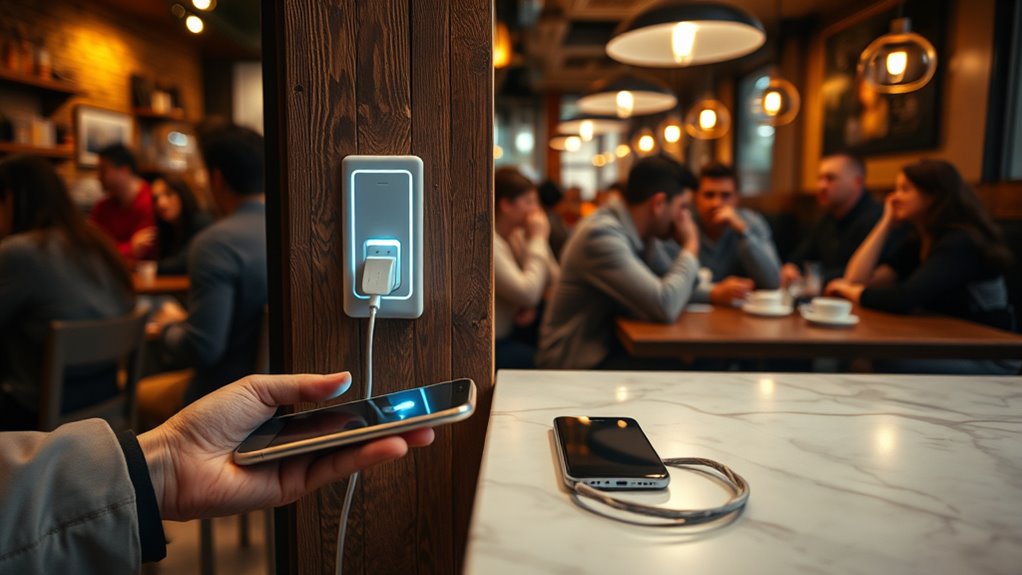
With smartphones and other devices becoming essential parts of daily life, charging at public outlets has become a common necessity. Whether you’re at a coffee shop, airport, or library, plugging in your device helps keep you connected and productive. But as convenient as public charging stations are, they come with important etiquette and safety considerations. To protect your device’s battery health, you should avoid overcharging it once it reaches 100%. Maintaining good battery health isn’t just about avoiding sudden shutdowns; it also prolongs your device’s lifespan. Keep an eye on your charging sessions, unplug when fully charged, and try not to leave your device plugged in for hours after it reaches 100%. This practice helps prevent battery degradation caused by overcharging. If you’re a frequent traveler or rely heavily on your devices, investing in portable chargers can be a game-changer. Portable chargers not only give you control over your charging schedule but also reduce the need to use public outlets, which may not always be secure or reliable. Proper battery maintenance is essential for extending your device’s longevity and ensuring optimal performance over time. Using public outlets responsibly means respecting others’ access. Don’t monopolize a charging station, especially in busy places like airports or cafes. If you see someone waiting, consider unplugging your device once it’s sufficiently charged, so others can also benefit. When plugging into shared outlets, avoid forcing cords into tight spaces or damaging the socket, as this can cause electrical hazards. Always inspect the outlet before use; if it looks damaged or suspicious, find an alternative, such as a power bank or a different station. In some venues, charging stations are shared, so be mindful of your surroundings and avoid leaving your device unattended for long periods, especially in public areas where theft is a risk. Securing your device with a cable lock or keeping it close to you can prevent theft or accidental drops. Charging safely isn’t just about personal device care—it’s also about protecting your data and privacy. Avoid plugging into untrusted outlets or using unknown charging cables. Malicious hardware can compromise your device’s security. Using a portable charger with built-in safety features, like surge protection and overcharge prevention, adds an extra layer of security. These small steps ensure you get the most out of your devices while respecting shared spaces. Ultimately, responsible charging habits, combined with portable chargers and proper battery maintenance, keep your devices functioning well and your data secure. Following these simple rules makes public charging a safe, efficient, and courteous experience for everyone.
portable phone charger with safety features
As an affiliate, we earn on qualifying purchases.
As an affiliate, we earn on qualifying purchases.
Frequently Asked Questions
Can I Charge My Device Without Permission?
You shouldn’t charge your device without permission because it’s considered poor etiquette and can be seen as unauthorized charging. Always ask for permission before using someone’s outlet to show respect and avoid misunderstandings. If no one is around, look for designated charging stations or outlets that are clearly meant for public use. Respecting these rules keeps everyone comfortable and maintains a courteous environment.
Is It Safe to Leave My Device Unattended While Charging?
Leaving your device unattended while charging is like leaving your door wide open—you’re inviting trouble. It’s risky because device theft can turn a quick charge into a costly loss. Plus, charger safety is a concern; faulty chargers or exposed cords can cause accidents. To protect yourself, stay nearby, keep an eye on your device, and never underestimate the importance of vigilance. Your safety and device are worth the extra attention.
Are There Hidden Costs for Using Public Charging Stations?
You might encounter hidden fees or extra charges when using public charging stations, so always check the charging policies beforehand. Some stations may require a fee for usage or have restrictions that could lead to unexpected costs. To avoid surprises, read signage carefully and ask staff if you’re unsure. Being aware of these potential hidden costs helps you stay within your budget and guarantees a smooth charging experience.
How Can I Protect My Device From Power Surges?
Think of your device as a delicate boat steering through choppy waters. To keep it safe, always use surge protection devices when plugging into public outlets. These act like a sturdy shield, preventing power surges from damaging your device. Also, avoid using damaged chargers or outlets. By taking these steps, you guarantee your device’s safety, avoiding unexpected surges that could cause costly repairs or data loss.
What Should I Do if My Device Gets Damaged at a Charging Station?
If your device gets damaged at a charging station, first stop using it immediately to prevent further harm. Document the damage with photos and contact the station’s management if possible. You should then seek device repair services and check if your insurance covers such incidents. Filing an insurance claim may help recover costs, especially if the damage resulted from faulty equipment or negligence.
USB charging station for public places
As an affiliate, we earn on qualifying purchases.
As an affiliate, we earn on qualifying purchases.
Conclusion
Think of public outlets as busy crossroads where everyone’s battery meets. When you charge responsibly, you’re like a courteous traveler, ensuring the flow stays smooth and safe for all. Follow etiquette and safety rules, and you’ll keep the network running seamlessly—like a well-coordinated dance. Respecting others’ space and device needs makes you a trusted part of this shared journey, turning a simple charge into a harmonious act that benefits everyone around you.
As an affiliate, we earn on qualifying purchases.
As an affiliate, we earn on qualifying purchases.
Fall Picks
fall essentials
As an affiliate, we earn on qualifying purchases.