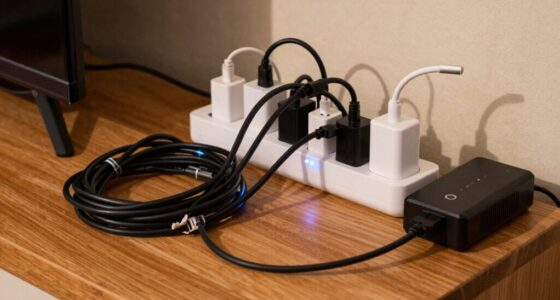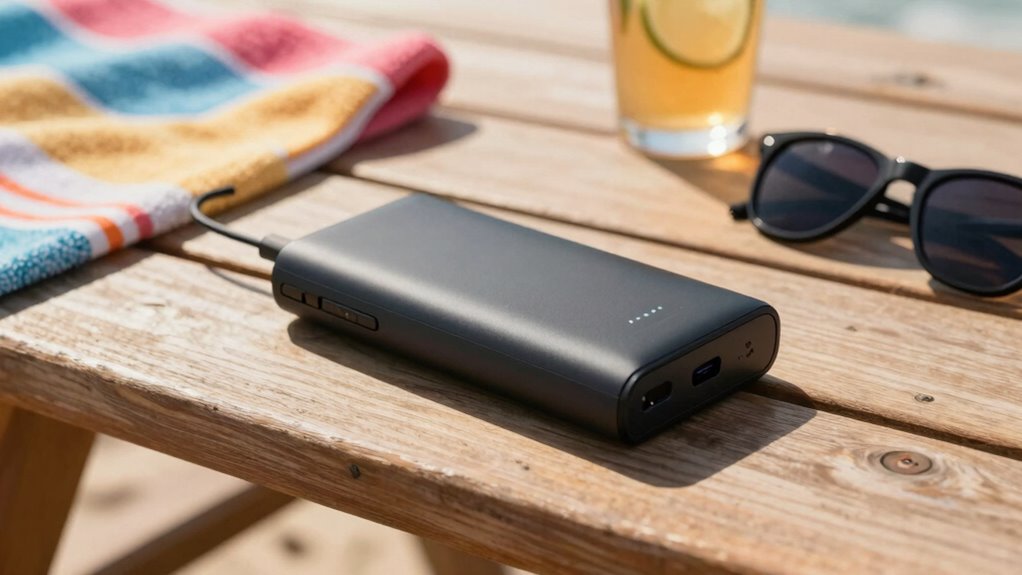

During summer vacations, avoid leaving your device’s battery at a full 100% or completely empty, as both states can speed up capacity loss over time. Keep your battery between 20% and 80% to prolong its lifespan and maintain ideal performance. Managing your charge levels helps ensure your devices stay reliable throughout your trip. For more tips on smart battery care and maximizing power, there’s plenty more to discover.
Key Takeaways
- Keep batteries between 20% and 80% charge to prevent capacity loss during storage in summer.
- Avoid leaving batteries fully charged (100%) or completely drained (0%) for extended periods.
- Store batteries in a cool, dry place to preserve longevity in hot summer conditions.
- Regularly check and recharge batteries within the optimal range before trips.
- Use solar chargers or portable power sources to maintain appropriate charge levels while traveling.

Planning your summer vacation often means packing essentials, but have you considered how battery storage can enhance your trip? Portable power sources are becoming essential for travelers who want to stay connected, entertained, and self-sufficient while exploring new places. Whether you’re camping in the woods or visiting remote beaches, having a reliable battery storage system ensures your devices stay charged without relying solely on outlets or unreliable public charging stations. But to get the most out of your portable power, you need to understand the importance of battery management, especially avoiding leaving your battery fully full or empty.
When it comes to maximizing your battery’s lifespan and performance, it’s imperative not to let it sit at 0% or 100% for extended periods. Charging your battery all the way to full capacity or letting it drain completely can degrade its health over time. Instead, aim to keep it within a moderate range—roughly 20% to 80%. This practice helps maintain its longevity, so you can rely on it throughout your trip. It’s tempting to top off your battery before a long day or let it run dry when you’re rushing to pack up, but doing so regularly can shorten its effective lifespan. By managing your battery’s charge level, you preserve its capacity and ensure it’s ready when you need it most.
Solar efficiency plays a significant role if you’re relying on portable solar chargers to replenish your battery while on the go. These devices convert sunlight into usable energy, making them perfect for outdoor adventures. To optimize solar efficiency, position your panels in direct sunlight, avoid shading, and clean them regularly. Proper placement allows you to harness maximum sunlight, which in turn speeds up recharging and keeps your portable power source ready for use. This is especially important when you’re in remote locations where traditional power sources aren’t available. With increased solar efficiency, you can extend your battery’s life and reduce dependency on grid power, making your trip more sustainable and hassle-free.
Additionally, understanding battery health management can help you make smarter decisions about charging habits, ultimately prolonging your device’s usable lifespan. Having the right portable power setup means you can keep your devices—phones, cameras, GPS units, and even small appliances—operational throughout your vacation. Just remember, controlling your battery’s charge level and maximizing solar efficiency ensures you won’t be caught with a dead device at a critical moment. It’s all about smart management: don’t let your battery sit fully charged or drained, and make the most of sunlight to replenish your power. When you do this, you’re not only protecting your investment but also gaining a reliable energy source that supports your adventures from start to finish.
Frequently Asked Questions
How Often Should I Check My Battery Storage During Summer Trips?
You should check your battery storage at least once every few days during summer trips. Regular battery monitoring helps you catch any issues early and guarantees your storage isn’t overcharged or drained. Maintaining proper storage frequency prevents damage from extreme temperatures or voltage fluctuations. Make it a habit to inspect your batteries regularly, especially if you’re using solar or other renewable sources, so your power remains reliable throughout your trip.
Can Temperature Fluctuations Damage My Stored Battery?
Temperature fluctuations can cause significant damage to your stored battery, as they accelerate battery degradation by up to 30%. When temperatures rise or fall drastically, the internal chemistry of the battery becomes unstable, reducing its lifespan and efficiency. To protect your investment, store your battery in a cool, stable environment, avoiding extreme heat or cold, and check it regularly during your summer trips to prevent long-term damage caused by temperature effects.
What Safety Precautions Are Needed for Battery Storage in Summer?
You should guarantee proper safety precautions for summer battery storage by keeping batteries in a cool, dry place, away from direct sunlight. Check for battery venting, as gases can build up and cause hazards. Always store batteries away from flammable materials, and have fire safety measures like a fire extinguisher nearby. Regularly inspect for damage or leaks, and follow manufacturer guidelines to prevent overheating or potential fire risks during hot weather.
How Long Can I Store a Battery Without Using It?
Think of your battery as a plant needing just the right amount of water. You can store it for several months if you follow proper battery maintenance and storage tips. Keep it in a cool, dry place, and avoid leaving it fully charged or completely drained. Check the voltage periodically, and recharge if needed. This careful approach helps preserve battery health and ensures it’s ready when you need it again.
Are There Specific Batteries Better Suited for Summer Travel?
For summer travel, lithium-ion batteries are your best choice because of their stable chemistry and high energy density. Make certain to store them in a cool, dry environment, away from direct sunlight and extreme temperatures. Avoid leaving batteries fully charged or completely empty, as this can damage their chemistry. By choosing the right battery type and maintaining proper storage conditions, you guarantee reliable performance throughout your trip.
Conclusion
Remember, sometimes it’s best to keep things in moderation. Don’t leave your battery storage fully charged or completely drained before your summer vacation. Instead, aim for a balanced level to protect your equipment and guarantee it’s ready when you need it. As the saying goes, “A little of everything is good,” so find that middle ground. Proper storage helps your gear last longer and keeps your adventures worry-free.