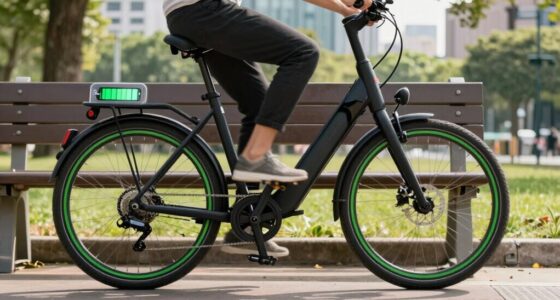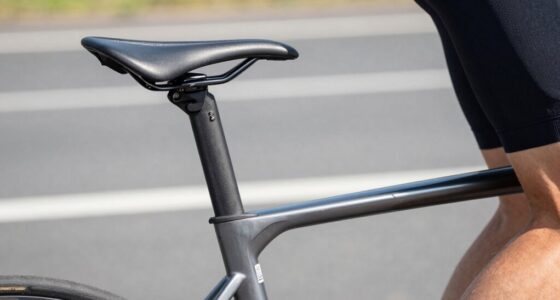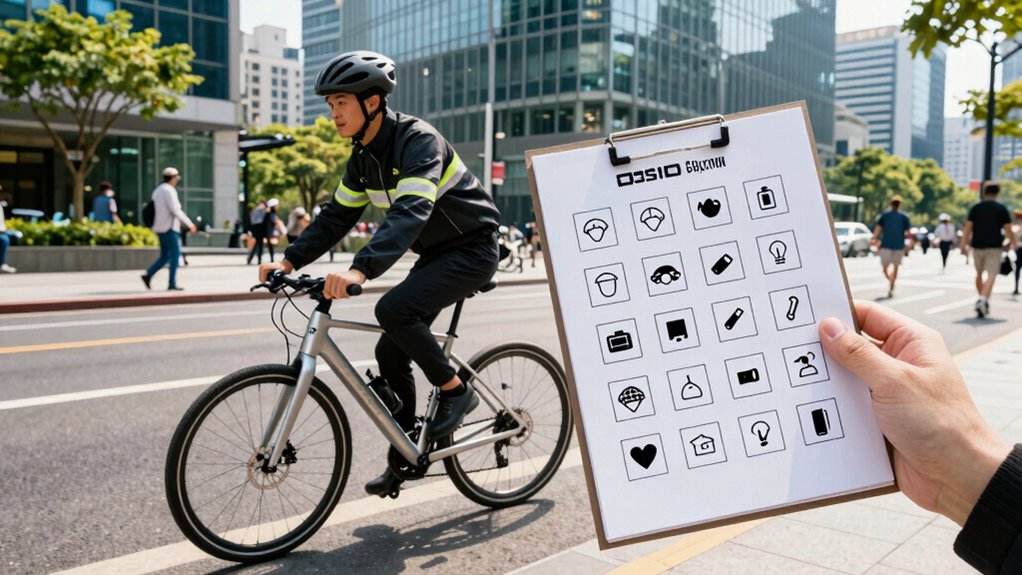
Before your first e-bike commute, check your bike’s overall condition, including tires, brakes, and lights. Fully charge the battery and adjust the seat and handlebars for comfort. Familiarize yourself with controls like assist modes, lights, and horn. Plan a route that avoids heavy traffic and hazards, and always wear safety gear like a helmet and reflective clothing. Finally, do a short test ride to guarantee everything runs smoothly—if you keep going, you’ll learn even more.
Key Takeaways
- Perform a thorough bike inspection, including tire pressure, brakes, and lights, before your first ride.
- Adjust seat and handlebar positions for comfort and control during your commute.
- Familiarize yourself with controls, assist modes, and safety features on your e-bike.
- Plan a safe route that avoids busy intersections and utilizes bike-friendly paths.
- Wear proper safety gear, including a helmet and reflective clothing, and verify all safety equipment is in good condition.
Check Your Bike’s Overall Condition
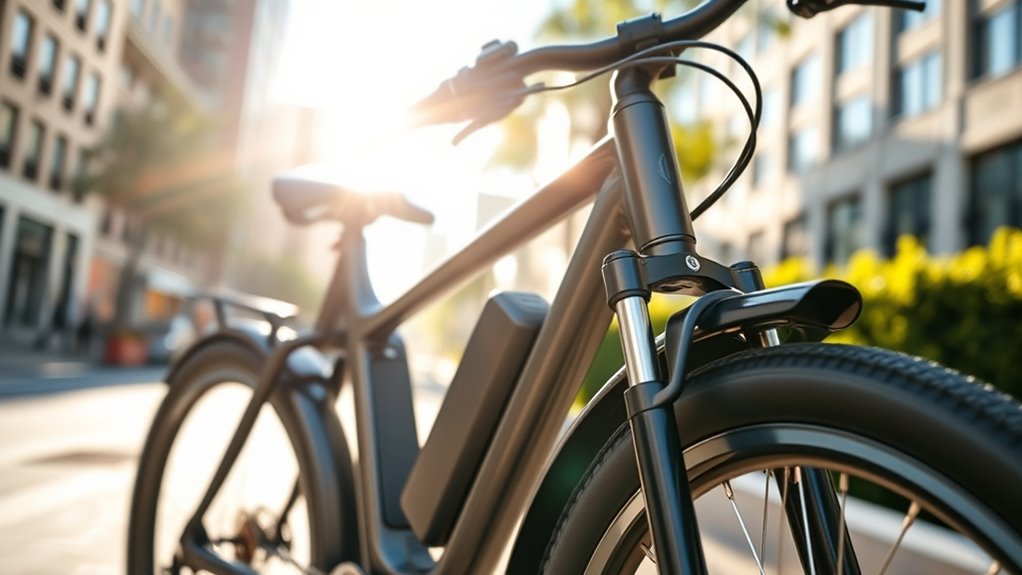
Before you hit the road, it’s essential to assess your e-bike’s overall condition. Proper bike maintenance starts with checking the tires’ pressure—make sure they’re inflated to the recommended PSI. Proper tire pressure improves safety, efficiency, and ride comfort. Next, perform a quick visual inspection of your bike’s frame, brakes, and gears, looking for any damage or wear. Ensure the brake pads aren’t worn down and that the brakes engage properly. Check for loose bolts or parts that might need tightening. Confirm that your lights and reflectors are functioning if you plan to ride in low-light conditions. Additionally, understanding your e-bike’s projector technology helps you better appreciate the features that contribute to a smooth ride. Being familiar with the water resistance features can help you prepare for different weather conditions. Regularly inspecting your bike’s waterproof components can prevent unexpected issues during rides. You can also review your e-bike’s battery management system to ensure optimal performance and longevity. It’s also wise to consult your e-bike’s user manual for specific maintenance guidelines to keep your bike in optimal condition. Taking these simple steps helps prevent breakdowns and keeps your ride smooth, safe, and enjoyable from the very start.
Charge the Battery Fully

Once you’ve checked your bike’s overall condition, it’s time to make certain your e-bike is ready to go with a full battery charge. Proper battery maintenance ensures ideal performance and longevity, so always start with a fully charged battery. Use the correct charger and follow the manufacturer’s instructions to prevent overcharging or overheating, which are key aspects of charging safety. Charging your battery fully before your ride helps maximize range and reduces the risk of unexpected power loss mid-commute. Avoid charging in extreme temperatures or in damp environments to protect the battery’s health. Regularly inspecting and maintaining your battery not only prolongs its lifespan but also guarantees safe, reliable performance every time you hit the road. Battery health is an essential aspect of safe and effective e-bike commuting. Additionally, understanding the battery management system can help you optimize charging cycles and avoid potential issues, contributing to overall battery longevity.
Adjust the Seat and Handlebar Height
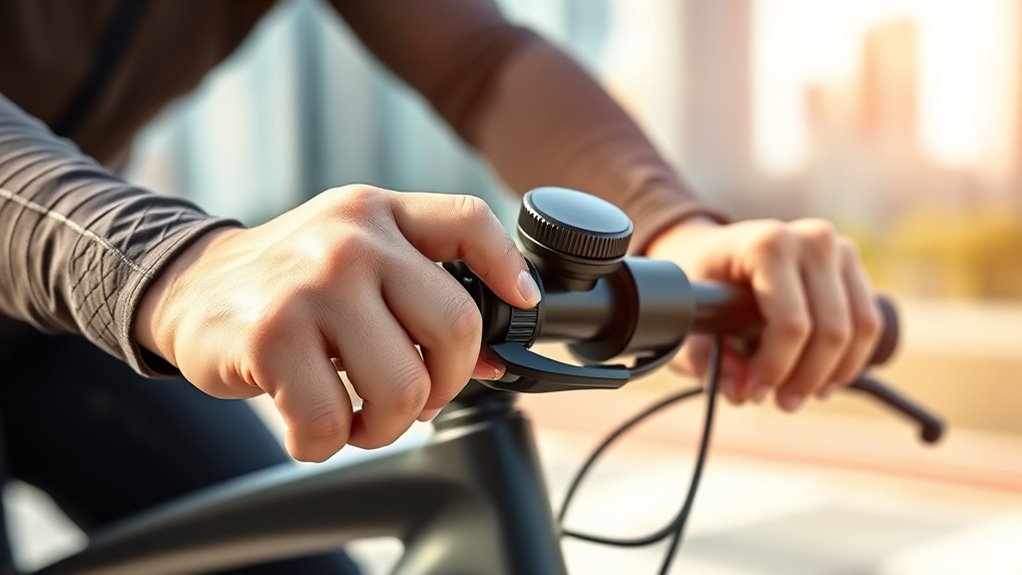
Adjusting your seat and handlebar height guarantees a comfortable ride. Make sure your seat is at the right level so your leg has a slight bend at the knee. Also, set your handlebars to a position that reduces strain on your wrists and shoulders.
Proper Seat Height
To guarantee a comfortable and efficient ride, setting the proper seat height is essential. An ergonomic positioning ensures your knees are slightly bent at the bottom of each pedal stroke, reducing strain and increasing power. Adjust the saddle so that when you sit on it, your leg is almost fully extended but not locked, promoting saddle comfort and reducing fatigue. If your seat is too high, you’ll feel overstretched and unstable; too low, and you’ll struggle with pedaling efficiency. Take the time to fine-tune the height, keeping your hips level and your spine relaxed. Proper saddle height not only improves comfort but also helps prevent injuries and enhances your overall riding experience. Remember, small adjustments can make a big difference. Additionally, ensuring your ceiling fan efficiency is optimized can create a more comfortable environment while you ride.
Handlebar Comfort Level
Ensuring your handlebar height feels comfortable is essential for a smooth riding experience. Proper handlebar ergonomics help reduce fatigue and prevent strain on your wrists, shoulders, and back. If your handlebars are too high or low, you might feel uncomfortable or unstable. Adjust the handlebar height so you’re able to keep your elbows slightly bent and relax your shoulders while riding. Consider your grip preferences—whether you prefer a wider or narrower grip—and find a position that feels natural and secure. Test different heights by riding a short distance, paying attention to how your hands, arms, and back feel. When you find a position that minimizes discomfort and maximizes control, you’ve optimized your handlebar comfort level for longer rides and daily commutes. Incorporating proper ergonomic setup and paying attention to handlebar positioning can further enhance your riding comfort and efficiency.
Familiarize Yourself With the Controls and Features
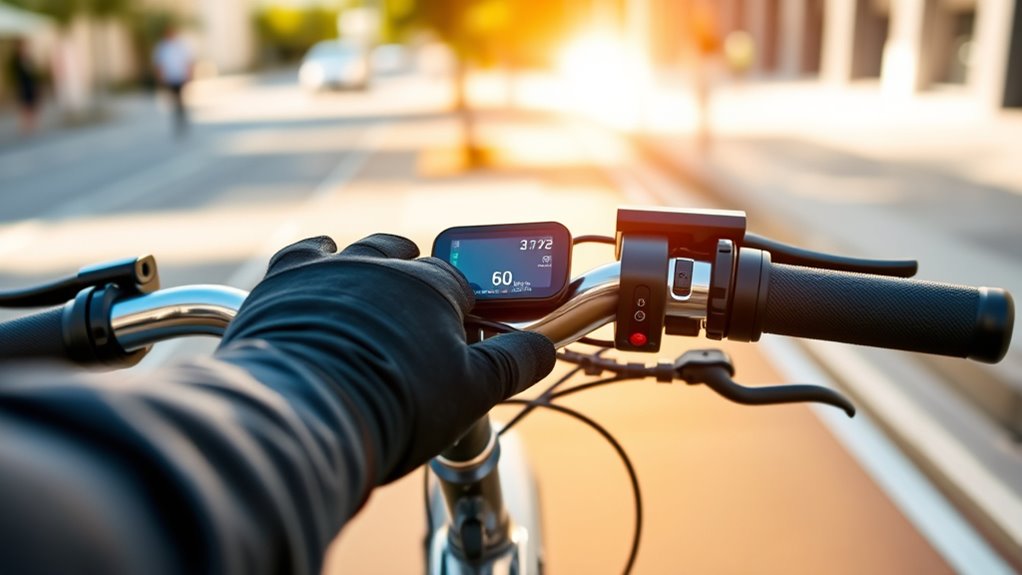
Before hitting the road, take a moment to familiarize yourself with your e-bike’s controls and features. Understanding the control layout helps you operate your bike confidently and safely. Spend time reviewing the feature overview, including the throttle, pedal-assist modes, and brake functions. Check how to turn the bike on and off, adjust assist levels, and access any display or dashboard. Knowing where the lights, horn, and other controls are located ensures you can quickly respond to your environment. Familiarity with these features reduces surprises during your ride and enhances your safety. Take a few minutes to press buttons, toggle switches, and get comfortable with how everything works. This simple step sets a solid foundation for a smooth, enjoyable e-bike commute. Additionally, understanding how your e-bike integrates with smart home technology can improve your riding experience by enabling remote control or maintenance alerts.
Plan a Safe and Suitable Route
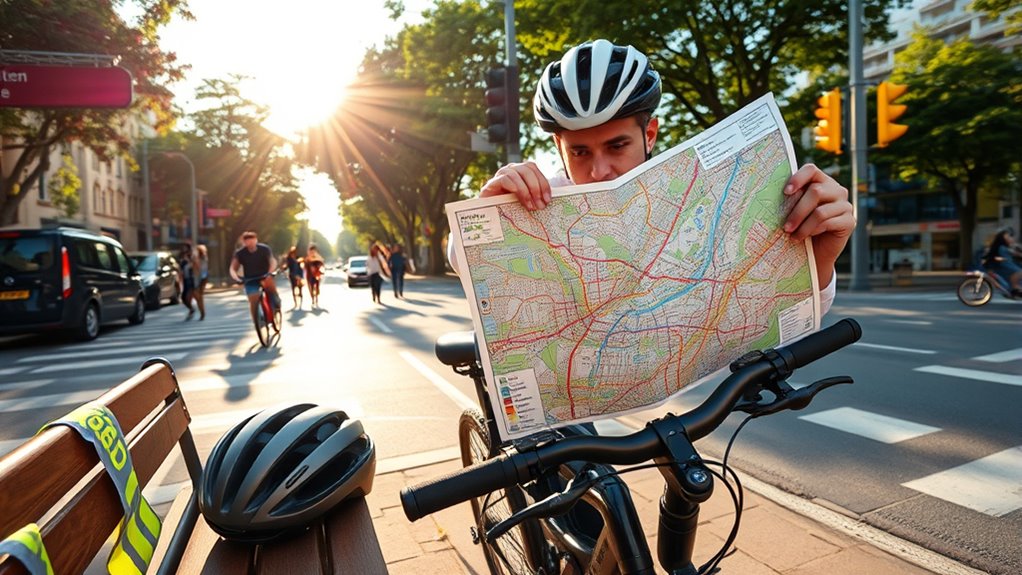
Start by checking traffic patterns to find less congested times and routes. Look for bike-friendly paths that make your ride safer and more comfortable. Avoid busy intersections whenever possible to reduce your risk and make your commute smoother.
Check Traffic Patterns
Checking traffic patterns is essential to choosing a route that keeps you safe and comfortable on your e-bike. Pay attention to traffic flow during different times of the day, especially during peak hours when roads are busiest. During these times, vehicles move slower, and intersections can be more chaotic, increasing your risk of accidents. Observe how cars, buses, and trucks behave on your planned route, noting areas with heavy congestion or frequent stops. Planning your ride outside peak hours can make your commute smoother and safer. Also, identify streets with fewer vehicles and less aggressive driving. By understanding traffic patterns, you can select a route that minimizes exposure to busy roads, helping you ride confidently and avoid unnecessary hazards. Understanding traffic flow can help you choose the safest and most efficient route for your commute. Additionally, researching supportive infrastructure such as bike lanes and bike-friendly crossings can further enhance your safety during your ride. Being aware of traffic regulations in your area can also help you navigate more confidently and avoid violations.
Identify Bike-Friendly Paths
After observing traffic patterns, the next step is to identify bike-friendly paths that offer a safer and more comfortable ride. Look for designated bike trail options and park pathways that prioritize cyclist safety. These routes typically have less vehicle traffic and smooth surfaces, making your commute more enjoyable. Consider using local maps or cycling apps to find the best paths. Here’s a quick overview:
| Path Type | Features | Benefits |
|---|---|---|
| Bike trail options | Dedicated cycling lanes | Safer, less vehicle interaction |
| Park pathways | Scenic, low-traffic routes | Relaxing, family-friendly |
| Sidewalks | Shared pedestrian zones | Easy to access, convenient |
Choosing the right bike-friendly paths helps you avoid hazards and guarantees a more pleasant ride. Understanding cycling infrastructure can further help you select optimal routes.
Avoid Busy Intersections
To guarantee a safe and smooth commute, it’s essential to plan your route carefully to avoid busy intersections. High traffic density increases the risk of accidents and delays, so look for alternative paths that bypass these areas. Pay attention to intersection timing—some intersections have light cycles that can help you cross safely when the traffic is lighter. Use navigation apps or local maps to identify routes with fewer crossings and lower traffic volume. By choosing routes that minimize your exposure to crowded intersections, you’ll reduce stress and improve safety. Planning ahead ensures you stay alert and avoid sudden stops or surprises, making your ride more comfortable and secure. Regularly reassessing your route to account for traffic patterns can help you avoid unexpected congestion and hazards.
Wear Appropriate Safety Gear
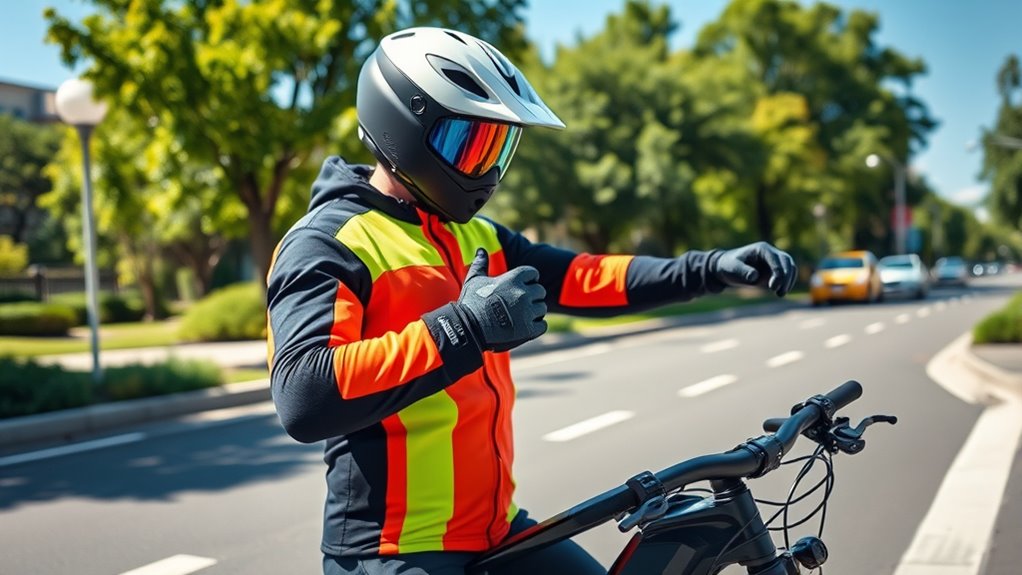
Wearing appropriate safety gear is essential for staying safe while commuting on your e-bike. A protective helmet should always be your first priority to safeguard your head in case of falls or collisions. Make sure it fits snugly and is properly adjusted. Reflective clothing is equally important, especially if you’re riding in low-light conditions or at night. It increases your visibility to other drivers, reducing the risk of accidents. Consider adding reflective strips or accessories to your jacket, backpack, or bike. Always check that your gear is in good condition before each ride. Proper safety gear not only keeps you protected but also boosts your confidence on the road, making your e-bike commute safer and more enjoyable. Proper safety gear also plays a crucial role in preventing common injuries associated with bike riding. Using a well-maintained bike ensures that your entire setup functions properly and reduces unexpected issues, further enhancing your safety. Regularly inspecting your bike and replacing worn components is part of maintaining bike safety. Additionally, ensuring your air quality is good can help you stay alert and comfortable during your ride.
Conduct a Short Test Ride
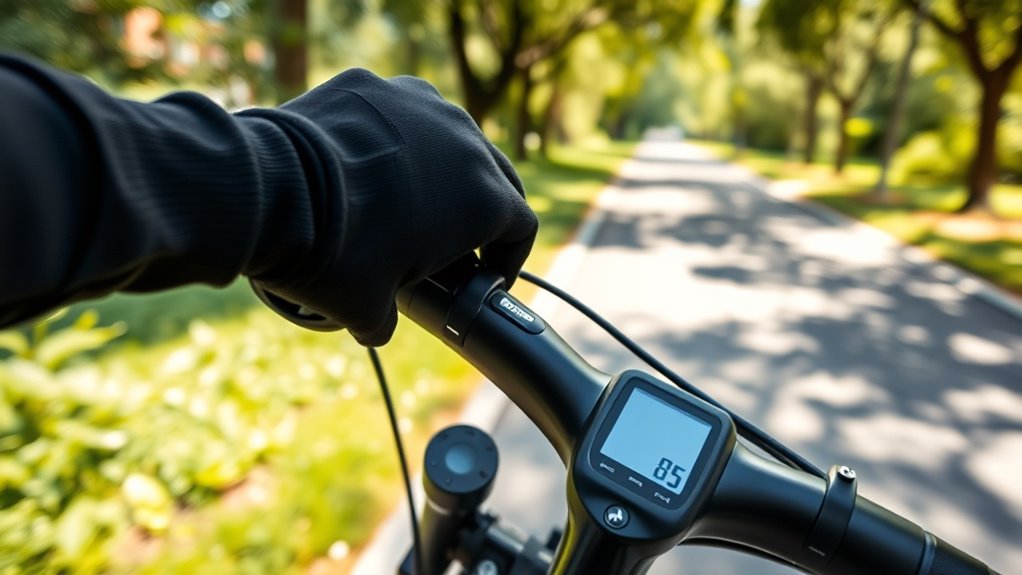
Before heading out on your full commute, it’s important to conduct a short test ride to make certain everything is functioning properly. This quick ride helps you verify your bike maintenance is up to par and that all components work smoothly. Pay attention to your riding techniques, ensuring you’re comfortable with acceleration, braking, and turning. Check that the brakes respond effectively and that the motor assists as expected. Listen for any unusual noises or vibrations that might indicate issues. Test the bike’s responsiveness at different speeds, and make sure the controls are easy to operate. This simple test ride confirms your e-bike is ready, giving you confidence and peace of mind before tackling your actual route. It’s a vital step to guarantee safety and peak performance.
Review Local Traffic Rules and Regulations
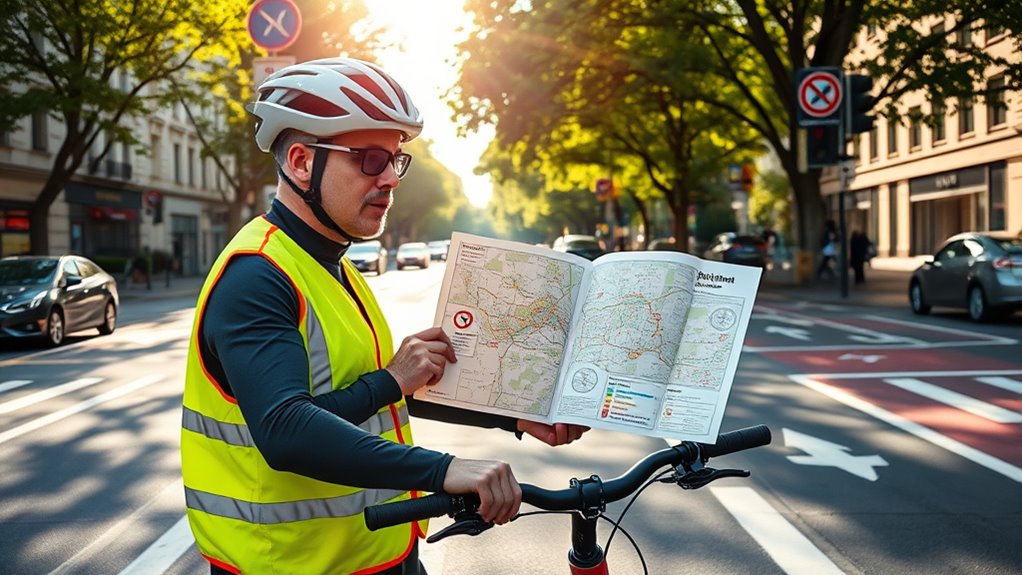
After completing your test ride and confirming your e-bike operates smoothly, it’s time to familiarize yourself with the local traffic rules and regulations. Understanding traffic signage helps you recognize important signals, such as stop signs, yield signs, and bike lane markings. Make sure you know how local laws apply to e-bikes, including any speed limits, helmet requirements, and where you can ride. Some areas have specific rules about riding on sidewalks or using bike lanes, so check those details beforehand. Being aware of these regulations keeps you safe and avoids fines. Take a few minutes to review local laws online or at a nearby transportation office, ensuring you’re prepared for your first official ride on the road.
Frequently Asked Questions
How Often Should I Perform Maintenance on My E-Bike?
You should perform maintenance on your e-bike every 1 to 3 months, depending on use. Regularly check your tire pressure to guarantee safe riding and peak efficiency. Keep an eye on your battery care by charging it properly and avoiding extreme temperatures. Inspect brakes, chain, and tires frequently, and clean your bike to keep everything in good shape. Staying consistent with maintenance helps extend your e-bike’s lifespan and keeps you safe on every ride.
What Should I Do if the Battery Doesn’T Hold a Charge?
When your battery doesn’t hold a charge, don’t panic—try these battery troubleshooting and charging tips first. Make certain it’s fully charged in a clean, dry environment, and check for any loose connections. If it still drains quickly, consider resetting the battery or contacting support. Sometimes, a simple calibration or updating the firmware helps. Regular maintenance can prolong battery life, so make it part of your routine to keep your e-bike performing at its best.
Are There Any Legal Restrictions for E-Bike Use in My Area?
You should check your local regulations and licensing requirements before riding your e-bike. Laws vary widely, so you might need a license, helmet, or restrictions on where you can ride. Research your area’s rules online or contact local authorities to guarantee you’re compliant. Staying informed helps you avoid fines and ensures a safe, legal ride every time. Always prioritize understanding and following your local e-bike regulations.
How Can I Improve My Riding Skills on an E-Bike?
Think of improving your e-bike skills like riding a bike for the first time—practice makes perfect. To boost your riding skills, dedicate time to balance exercises and focus on speed control. For example, start on a quiet street, gradually increasing your speed while maintaining control. Engaging in these exercises helps you develop confidence, enhances your ability to handle different terrains, and guarantees safer, smoother rides.
What Should I Carry With Me During My First Ride?
For your first ride, carry helmet essentials like a well-fitted helmet and gloves for safety and comfort. Bring waterproof gear, such as a rain jacket or poncho, in case the weather turns. Don’t forget a small repair kit, a water bottle, and a phone with emergency contacts. These items keep you safe, prepared, and comfortable, ensuring a smooth and enjoyable ride on your new e-bike.
Conclusion
Now that you’ve completed your first e-bike ride checklist, you’re ready to hit the road with confidence. Remember, riding safely and staying aware of your surroundings is key—like a modern knight, but on two wheels. Keep practicing, stay alert, and enjoy the journey ahead. With these steps, you’ll soon master your e-bike and explore new horizons, all while embracing the thrill of eco-friendly commuting in this brave new world of transportation.