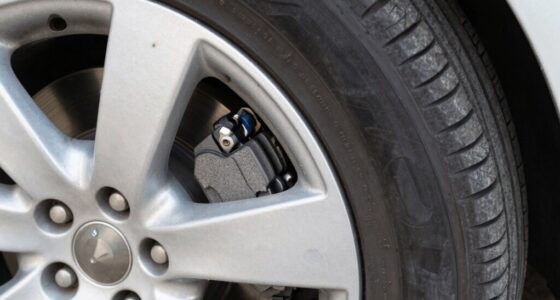
To clean your rotors safely without causing damage, start by elevating your vehicle and removing the wheels. Use an automotive-specific brake cleaner spray and spray generously on the rotor surface, avoiding edges. Gently scrub with a soft brush or cloth to remove debris, then wipe dry. Be careful not to scratch or gouge the surface, and always dry the rotors thoroughly afterward. Continuing will help you understand essential tips to keep your brakes in top condition.
Key Takeaways
- Use automotive-specific brake cleaner spray and avoid harsh chemicals to prevent rotor surface damage.
- Elevate the vehicle safely, remove wheels, and access rotors carefully before cleaning.
- Spray cleaner liberally onto the rotor surface, avoiding edges, then gently scrub with a soft brush or cloth.
- Thoroughly dry the rotors after cleaning to prevent rust and inspect for cracks or warping.
- Ensure wheel alignment and brake pad condition are checked to avoid uneven wear and further rotor issues.
Have you ever wondered why your vehicle’s braking performance declines over time? One common reason is the buildup of dirt, rust, and brake dust on the rotors, which can cause uneven wear and reduce stopping power. To keep your brakes functioning safely, rotor cleaning becomes essential. But it’s vital to approach this task carefully—using methods that won’t compromise your braking system or lead to more expensive repairs down the line.
Before you begin cleaning, start with a thorough brake pad inspection. Worn or damaged brake pads can cause uneven rotor wear and diminish braking effectiveness. If your brake pads are excessively thin or have cracks, replacing them is your first step. Proper brake pad inspection ensures you don’t just clean the rotors, but also address any underlying issues that could worsen if ignored. If your vehicle pulls to one side when braking, it might be time for a wheel alignment as well. Misaligned wheels not only affect handling but also cause uneven rotor wear, making cleaning less effective and potentially damaging the rotors further. Validating your wheels are properly aligned helps distribute braking forces evenly, prolonging the lifespan of your rotors and brake pads.
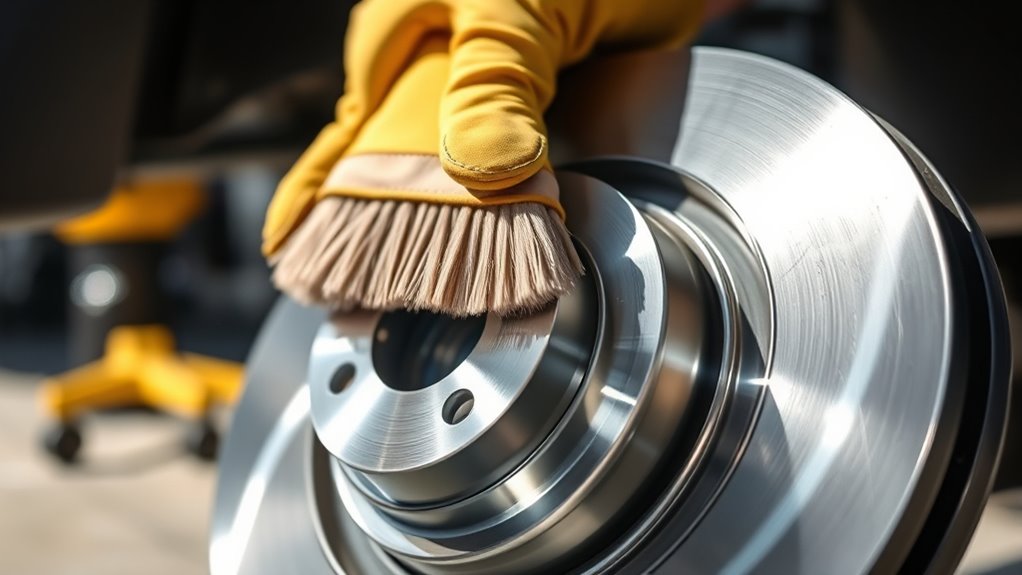
Once you’ve confirmed your brake pads are in good condition and your wheels are aligned, you can proceed to clean the rotors. Start by safely elevating your vehicle and removing the wheels to gain access to the rotors. Use a brake cleaner spray designed for automotive parts—avoid harsh solvents that can damage the rotor surface or leave residues. Spray the cleaner liberally onto the rotor surface, then gently scrub with a soft-bristled brush or a clean cloth. This helps remove dirt, rust, and brake dust without scratching the metal. Be cautious around the edges of the rotor to prevent any accidental damage. Additionally, proper rotor material can influence the cleaning method, so it’s important to know what your rotors are made of to avoid any unintended damage.
It’s important to avoid using abrasive materials or harsh chemicals that could create grooves or micro-scratches, which might lead to uneven braking. After cleaning, wipe the rotors dry with a clean cloth. If your rotors have significant rust or corrosion, consider taking them to a professional for resurfacing or replacement. Proper rotor cleaning not only improves braking performance but also helps you spot any potential issues early—like cracks or warping—that could compromise safety.
Frequently Asked Questions
Can Rotor Cleaning Be Done While the Car Is Still Warm?
You can clean a warm rotor, but it’s safer to wait until it cools down to avoid burns and guarantee cleaning safety. Cleaning a rotor while it’s still warm can cause the cleaning solution to evaporate quickly or even damage the rotor surface. To protect your hands and get the best results, allow the rotor to cool completely before cleaning. This way, you avoid accidents and maintain brake performance.
How Often Should I Clean My Brake Rotors?
You should clean your brake rotors at least every 10,000 to 15,000 miles, or when you notice excessive brake dust, squealing, or rotor surface corrosion. Neglecting rotor maintenance can turn your brakes into a ticking time bomb, reducing stopping power and causing uneven wear. Regular cleaning keeps the rotor surface corrosion at bay, ensuring smooth braking and prolonging the lifespan of your brake pads and rotors. Don’t wait for a brake disaster!
Is It Safe to Use Household Cleaners on Rotors?
Using household cleaners on your rotors isn’t safe because they can contain chemicals that damage rotor safety and brake components. You should avoid harsh chemicals and opt for a brake-specific or mild soap designed for automotive use. This guarantees your rotors stay in good condition and your braking system remains reliable. Always follow manufacturer recommendations and use proper cleaning techniques to keep your brakes safe and effective.
Will Cleaning Rotors Improve Braking Performance Immediately?
Cleaning your rotors can improve braking performance immediately if you use the right method, focusing on brake pad compatibility and rotor surface finish. When you remove dirt and grease, you guarantee better contact between pads and rotors, leading to smoother braking. Just make sure to use appropriate cleaners and avoid damaging the rotor surface finish, so your brakes work efficiently and last longer without causing uneven wear or noise.
Are There Any Signs Indicating My Rotors Need Cleaning Urgently?
You should clean your rotors urgently if you notice brake noise or uneven wear. These signs indicate your rotors might be contaminated with dirt, debris, or brake dust, which can impair braking efficiency and cause further damage. Regular cleaning helps maintain peak performance and prevents costly repairs. Don’t ignore these symptoms—addressing them promptly ensures your brakes work effectively and safely every time you step on the pedal.
Conclusion
By following this safe rotor cleaning method, you’ll protect your brakes and keep your vehicle running like a dream. Skipping proper cleaning can turn your braking system into a ticking time bomb, risking costly repairs and dangerous mishaps. So, don’t let grime and dirt sabotage your safety—trust this proven technique to keep your brakes in top shape. With just a little effort, you’ll guarantee your driving experience stays smooth, safe, and unstoppable!