Pinch flats happen when you ride with too low tire pressure, making your tire too soft to absorb impacts from obstacles like potholes or curbs. When your tire doesn’t have enough pressure, the rim can push into it and pinch the tube, causing flats. Maintaining proper tire pressure prevents this by keeping the tire firm enough to absorb shocks. If you want to avoid these common mistakes and keep your wheels safe, there’s more to learn.
Key Takeaways
- Pinch flats occur when the tire gets compressed between the rim and an obstacle, often due to low tire pressure.
- Insufficient pressure makes the tire too soft to absorb shocks, increasing the risk of rim contact and pinching.
- Maintaining proper tire pressure within recommended ranges prevents the tire from being easily pinched during impacts.
- Overly low pressure allows the rim to push into the tire during bumps, causing flats and potential rim damage.
- Regularly checking and adjusting tire pressure helps avoid the primary mistake that leads to pinch flats.
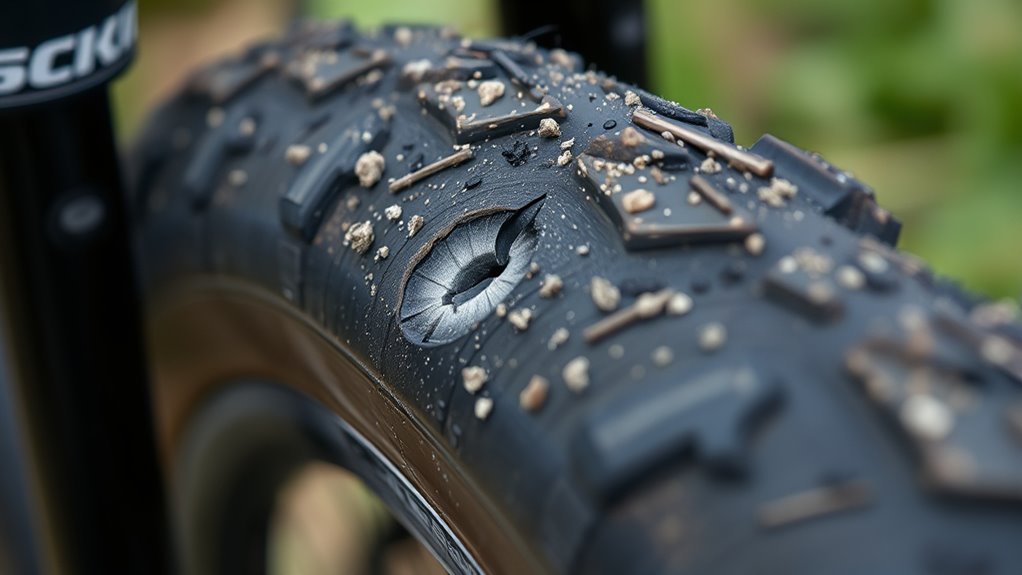
Have you ever experienced a sudden flat tire while riding your bike? It’s frustrating, especially when you’re in the middle of a ride or heading somewhere important. One common cause of flats is pinch flats, also known as snakebites, which happen when the tire gets pinched between the rim and an obstacle. Understanding how tire pressure plays a role is key to avoiding this problem. If your tire pressure is too low, your tire becomes more susceptible to pinching, because the softer rubber and less rigid structure allow the rim to push into the tire when you hit something like a pothole or curb. Conversely, if your tire pressure is too high, you risk a different set of issues, but for pinch flats specifically, low tire pressure is the main culprit.
When your tire pressure drops, the tire becomes less able to absorb shocks, making it easier for the rim to make contact with the ground or an obstacle. This contact is what causes the tire to be pinched between the rim and whatever you hit. Not only does this lead to flats, but it can also cause rim damage over time. Rim damage happens when the rim is repeatedly impacted or bent, which can compromise your wheel’s integrity and lead to more frequent issues down the line. If you notice your rims are bent or have dents, it’s a sign you might be riding with inadequate tire pressure or hitting rough terrain too aggressively.
To prevent pinch flats and rim damage, maintaining the proper tire pressure is essential. Check your tire pressure regularly, especially before long rides or challenging routes. Many tires have a recommended pressure range printed on the sidewall; staying within that range helps keep your tires firm enough to avoid pinching and rim damage, but not so hard that it causes a harsh ride. Use a reliable pump with a pressure gauge to get an accurate reading. Remember, the right tire pressure varies depending on your weight, riding style, and terrain, so adjust accordingly. Additionally, understanding the contrast ratio in your tires can help optimize ride comfort and durability, reducing the risk of flats and rim damage.
In addition to monitoring tire pressure, inspect your rims periodically for any signs of damage or warping. Keeping your rims true and free of dents reduces the risk of pinch flats and prolongs the lifespan of your wheels. When your tires are properly inflated, and your rims are in good shape, you markedly lower the chances of experiencing a pinch flat. This simple maintenance routine can save you from unexpected flats and costly repairs, making every ride safer and more enjoyable.
Frequently Asked Questions
Can Pinch Flats Occur on All Types of Bike Tires?
Pinch flats can occur on all types of bike tires, but they’re more common when your tire isn’t compatible with your rim design or if you don’t maintain proper tire pressure. If your tire isn’t suitable for your rim, it heightens the risk of pinch flats, especially on rough terrain. Always check tire compatibility and verify your tire pressure is correct to prevent these flats from happening.
How Does Riding Style Influence Pinch Flat Risk?
Riding style is the brush that paints your risk of pinch flats. If you’re aggressive, jumping, or maneuvering rough terrain with poor riding posture, you increase the chance of bottoming out your tires. When you hit trail obstacles too hard or land awkwardly, your tires can pinch easily. To avoid this, stay relaxed, maintain proper posture, and adapt your riding to trail conditions, reducing the risk of pinch flats.
Are Certain Tire Brands More Resistant to Pinch Flats?
Some tire brands are more resistant to pinch flats because of their tire construction and brand durability. You’ll find that brands with reinforced sidewalls and thicker rubber typically offer better protection against pinch flats. When choosing tires, look for those known for quality build and durability, as they’re more likely to withstand impacts and reduce the risk of flats. Investing in reliable brands can save you time and money in the long run.
What Are the Best Maintenance Tips to Prevent Pinch Flats?
To prevent pinch flats, regularly check your tire pressure and keep it at the recommended level. Avoid over-inflating or under-inflating your tires, as improper pressure increases the risk. Use rim protection tape to safeguard your wheels from sharp impacts, which can cause flats. Additionally, inspect your tires for cuts or embedded debris, and replace worn tires promptly. Proper maintenance ensures ideal tire pressure and rim protection, reducing pinch flat chances.
How Do Weather Conditions Affect Pinch Flat Likelihood?
Weather conditions profoundly influence your chances of pinch flats. Cold temperatures cause your tire pressure to drop, increasing the risk of underinflation and pinch flats on rough surfaces. Hot weather can lead to overinflation, making tires less flexible and prone to damage. Rain and wet roads reduce traction, making it harder to control your bike and increasing impact on tires. Always check and adjust your tire pressure based on current weather and road surface to stay protected.
Conclusion
Now that you know how pinch flats happen, you can avoid that pesky flat by checking your tire pressure before every ride. Think of it as your trusty steed’s armor—without it, you’re vulnerable. Don’t forget, a quick pump-up can save you from being stranded in the middle of nowhere, like a cowboy lost in the wild west. Keep your tires firm and your ride smooth, and you’ll be cruising like a modern-day knight in shining armor.