Handlebar creaks are usually caused by the stem rather than the frame because the connection points between the stem, handlebar, and steerer tube are more prone to loosening, dirt buildup, and metal-to-metal contact that creates squeaks. Over time, these areas can develop small gaps or corrosion, making noise more likely. Properly tightening bolts and maintaining these contact surfaces often solves the issue, and if you want to know more about fixing your creaks, keep exploring the causes and solutions.
Key Takeaways
- Handlebar creaks often originate from the stem or contact points, not the bike frame itself.
- Loose or improperly torqued stem bolts can cause metal-to-metal contact and squeaking.
- Dirt, moisture, or corrosion at the stem-steerer interface mainly cause creaks, not the frame.
- Worn or damaged stem components are common culprits behind persistent handlebar noises.
- Regular inspection, cleaning, and tightening of the stem usually resolve creaks without frame issues.
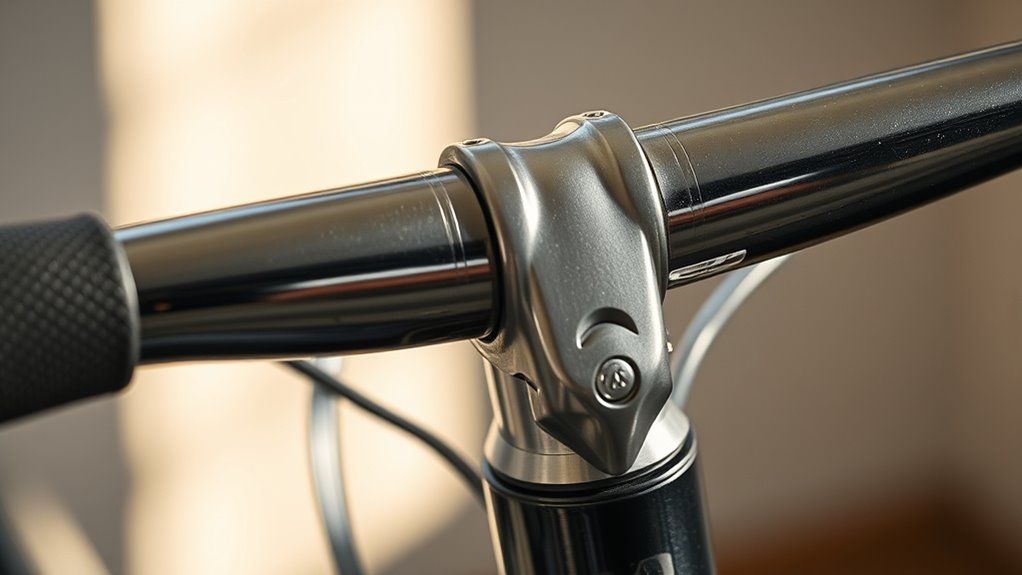
Handlebar Creaks
Have you ever heard that annoying creak every time you turn your handlebar? It’s enough to make any cyclist frustrated, especially when you’re trying to enjoy a smooth ride. More often than not, those handlebar creaks aren’t caused by the frame itself but are usually a sign that your stem needs some attention. Many riders assume the frame is at fault, but in most cases, it’s stem maintenance that’s overdue. Understanding this can save you time and money, plus keep your ride quiet and comfortable.
The first step is recognizing where the creak originates. When you turn your handlebar, the noise typically comes from the connection points—specifically, the stem and the handlebars. These parts are under constant stress and movement, which can cause components to loosen or develop small gaps over time. If you ignore the symptoms, the creaking can worsen, leading to a less secure feeling and potential safety risks. Regularly inspecting and maintaining your stem is essential to prevent these issues from escalating.
Handling stem maintenance isn’t complicated, but it does require some routine checks. Start by checking the bolts that clamp the stem onto the steerer tube and the handlebars. Over time, vibrations from riding can loosen these bolts, creating a gap that causes creaks. Tightening them with a torque wrench to manufacturer specifications usually solves the problem. Be careful not to overtighten, as that can damage components or strip threads. If the creaking persists after tightening, you might need to remove and reapply grease or anti-seize compound to the contact surfaces. This helps eliminate any metal-to-metal contact that could be causing squeaks.
Another common cause of handlebar creaks is a dirty or corroded interface between the stem and the steerer tube. Dirt, moisture, and sweat can cause corrosion or dirt buildup, which can make the connection less smooth. Cleaning these surfaces thoroughly and applying fresh grease can often do the trick. Remember, a well-lubricated contact point reduces friction and noise, ensuring your handlebar turns smoothly and silently. Additionally, using vibration-dampening components or tape can help absorb some noise and reduce creaking over time.
Lastly, don’t forget to check the condition of your stem itself. If it’s cracked or damaged, no amount of tightening or greasing will fix the creak — it’s time for a replacement. Also, inspect the spacers and headset for any unevenness or wear. Regularly performing these simple stem maintenance tasks can greatly reduce handlebar creaks and improve your overall riding experience. In the end, the key is staying proactive about your bike’s upkeep. When you do, you’ll enjoy quieter rides and a more confident, secure connection with your bike.
Top picks for "handlebar creak usually"
Open Amazon search results for this keyword.
As an affiliate, we earn on qualifying purchases.
Frequently Asked Questions
How Can I Prevent Handlebar Creaks During Rides?
To prevent handlebar creaks during rides, you should regularly perform handlebar maintenance by tightening bolts and applying grease to all contact points, especially the stem and handlebar clamp. Also, check your riding technique—avoid excessive force or sudden movements that can loosen components. Keeping everything secure and well-lubricated reduces squeaks, ensuring a smoother ride. Regular checks will help you catch issues early before they turn into persistent creaks.
Are Certain Handlebar Materials More Prone to Creaking?
Certain handlebar materials, like carbon fiber, tend to have a higher creak frequency because they can be more sensitive to moisture and temperature changes. Aluminum and steel handlebars usually creak less, but improper installation or lack of lubrication can still cause noise. To minimize creaks, make sure your handlebar material is compatible with your stem, regularly check for tightness, and use appropriate grease or anti-seize compounds during assembly.
How Often Should I Lubricate the Stem and Handlebar?
Think of your bike’s stem and handlebar like a dance partner—regular maintenance keeps them moving smoothly. You should lubricate the stem and handlebar every few months or whenever you notice creaking sounds. Make sure they’re properly aligned before applying lubricant, as this prevents unnecessary wear. Consistent checks and lubrication will reduce squeaks and ensure a comfortable ride, just like a well-rehearsed dance.
Can Handlebar Creaks Be a Sign of a Safety Issue?
Handlebar creaks can signal safety concerns, especially if they persist or worsen, indicating that something might be loose or worn out. The creak significance lies in its potential to compromise your bike’s stability, so don’t dismiss it. Regularly check your stem and handlebar components, and tighten or replace parts as needed. If creaks continue, consider having a professional inspect your bike to ensure your safety while riding.
What Tools Are Needed to Fix Handlebar Creaks?
To fix handlebar creaks, you’ll need basic tools like Allen wrenches, a grease gun, and possibly a torque wrench. Start with handlebar maintenance by checking and tightening bolts, then apply grease to the stem and handlebar contact points for creak diagnosis. These simple tools help you identify and eliminate the noise, ensuring a smooth, safe ride. Always follow manufacturer torque specs to prevent over-tightening.
Conclusion
So, next time your handlebar whispers secrets during a ride, remember it’s often just a subtle hint from the stem, not the frame. With a quick check and a gentle tighten, you can quiet those little murmurs and enjoy a smoother journey. Sometimes, it’s the smallest adjustments that keep your bike feeling fresh and responsive. Embrace these tiny whispers—they’re just your bike’s way of saying it’s ready for another adventure with you.