If you notice cracks on your tire’s sidewall, it’s important to identify if they’re cosmetic or dangerous. Superficial cracks are shallow and don’t affect tire safety but should still be monitored. Deep cracks, bulges, or cracks that expand indicate internal damage and can lead to blowouts. Always inspect your tires regularly and seek professional advice if you’re unsure — understanding the differences can help you protect your safety and vehicle. Learn more to keep your tires in top shape.
Key Takeaways
- Superficial surface cracks are often cosmetic and do not compromise safety unless they deepen or widen.
- Deep or expanding cracks, especially with bulges or bubbles, indicate internal damage and pose a safety risk.
- Cracks reaching into the sidewall or exposing cords require immediate replacement to prevent blowouts.
- Regular inspections help differentiate between harmless surface cracks and dangerous structural damage.
- Age, environmental exposure, and worsening cracks are key indicators that the damage may be dangerous.
What Causes Cracks on Tire Sidewalls?

Cracks on tire sidewalls often develop due to exposure to harsh environmental conditions and everyday wear. Sometimes, manufacturing defects can cause early cracking, especially if the tire was poorly made or used substandard materials. These defects may lead to uneven wear and weaken the sidewall over time. Additionally, sidewall discoloration, caused by UV exposure or chemicals, can accelerate deterioration, making the rubber more brittle. When the rubber loses its flexibility, cracks become more likely to form. Sun exposure, ozone, and pollutants break down the tire’s surface, contributing to cracks. Even if the tire looks fine initially, these factors weaken its structure, increasing the risk of sidewall cracks that could compromise your safety. Regularly seasonal maintenance and inspections can help identify early signs of deterioration before they become dangerous. Recognizing the signs of deterioration early can prevent potential blowouts or accidents. Understanding how environmental factors influence tire health is crucial for maintaining safety and prolonging tire life. Moreover, proper storage when not in use can also reduce exposure to damaging elements, extending the lifespan of your tires. In addition, being aware of the age of your tires and replacing them when they are too old is essential for overall safety.
Identifying Superficial Surface Cracks
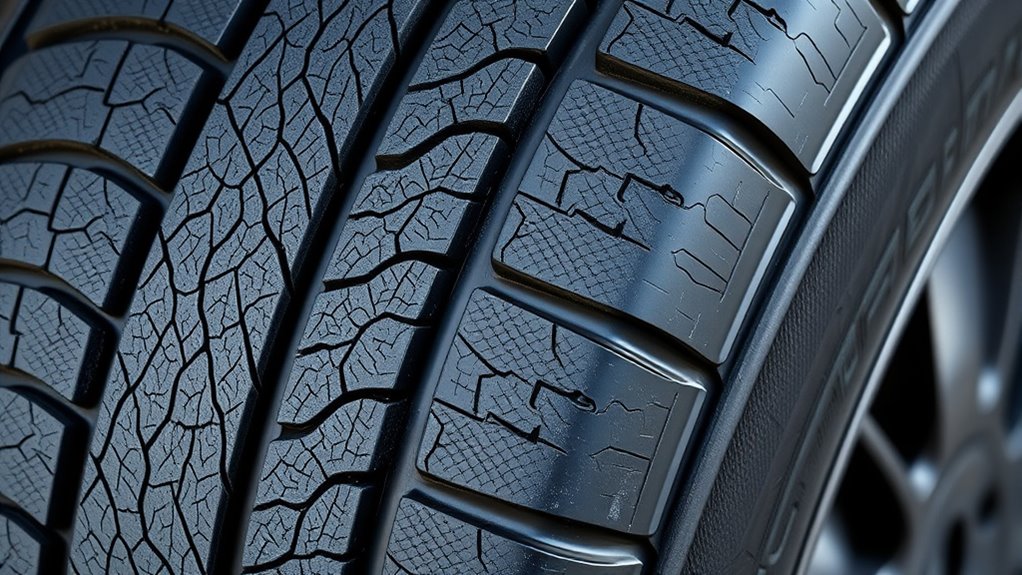
Superficial surface cracks are often the first visible signs of tire aging or minor damage. You’ll notice these on the tire surface as fine, shallow lines that don’t seem to deepen or widen over time. To identify them, look for small cracks that:
- Run along the tire’s outermost layer, mainly on the sidewall
- Are superficial, only affecting the tire surface without penetrating deeper
- Lack any bulging, peeling, or bulging signs, indicating minimal structural concern
- Keep in mind that wear and tear from regular riding can contribute to the appearance of surface cracks, but they may not always compromise safety.
These cosmetic damage signs can appear due to exposure to sunlight, ozone, or regular wear and tear. While they may look alarming, superficial surface cracks often aren’t dangerous but should still be monitored to ensure they don’t worsen.
Recognizing Signs of Deep or Structural Damage

Look for visible cracks, bubbles, or bulges on the sidewall, as these can indicate serious damage. Uneven tire wear or sudden air loss are also warning signs that your tire might be compromised. Don’t ignore these signals—addressing them early can prevent dangerous blowouts or breakdowns. Regular vehicle maintenance and tire inspections are essential for safety and performance. Being aware of tire structural integrity and how different crochet styles for locs can be used to protect and reinforce your tires can help you identify potential issues before they lead to failure. Additionally, understanding environmental considerations like avoiding areas with sharp debris can further reduce the risk of sidewall damage. Incorporating tire monitoring systems can also provide real-time alerts to help maintain optimal safety.
Visible Cracks and Bubbles
When you notice visible cracks or bubbles on your tire’s sidewall, it’s a clear sign that deeper or structural damage might be present. These imperfections often stem from issues during tire manufacturing or changes in rubber composition over time. Look for:
- Fine, hairline cracks resembling spiderwebs that indicate aging or stress.
- Bubbles or blisters that look like small, raised bubbles on the surface, signaling a potential internal failure.
- Large, deep cracks that penetrate the sidewall, risking tire integrity and safety.
- Rubber deterioration caused by environmental factors can further compromise the tire’s structure and safety.
Rubber composition plays a key role; deterioration weakens the tire’s structure, making it susceptible to damage. Recognizing these signs early can prevent dangerous blowouts or accidents. When in doubt, consult a professional.
Bulges or Uneven Wear
Bulges or uneven wear on your tire’s sidewall often indicate underlying structural issues that require immediate attention. These signs go beyond simple tire sidewall aesthetics or cosmetic damage, pointing to possible internal damage. You might notice a bulge, which suggests a weakened or broken cord within the tire, or uneven wear patterns that signal alignment or suspension problems. Recognizing these signs early can prevent tire blowouts or accidents. Here’s a quick visual:
| Bulge or Uneven Wear | Possible Cause |
|---|---|
| Sidewall bulge | Internal tire damage or cord breakdown |
| Uneven tread wear | Misalignment or suspension issue |
| Irregular patterns | Under-inflation or improper rotation |
If you spot these signs, get your tires inspected immediately to avoid risking your safety. Regularly inspecting tire structural integrity helps ensure safe driving conditions and prevents unexpected failures.
Sudden Loss of Air
A sudden loss of air from your tire often signals serious internal or structural damage that requires immediate attention. You might notice it during a tire rotation or wheel balancing, where uneven wear or vibrations suggest deeper issues. Signs include:
- Rapid deflation while driving, indicating a puncture or sidewall crack.
- Sudden vibration or wobbling, hinting at uneven internal damage.
- Persistent slow leaks despite repairs, which could be due to structural weakening.
These clues mean you should stop safely and inspect your tire thoroughly. Don’t ignore subtle signs; structural damage can escalate quickly. If you suspect deep damage, get your tire checked by a professional to prevent dangerous blowouts or further harm to your wheel.
The Impact of Age and Weather Conditions on Sidewall Integrity

As tires age, their sidewalls become more vulnerable to cracking, especially under harsh weather conditions. Over time, tire material degradation weakens the rubber, making it less flexible and more prone to developing cracks. Cold temperatures cause contraction, while heat leads to weather-related expansion, stressing the rubber further. These temperature fluctuations accelerate the deterioration process, increasing the risk of cracks forming on the sidewall surface. Sun exposure and moisture also contribute to the breakdown of the tire’s structure. As the rubber deteriorates, small cracks can develop into larger, more dangerous splits. Recognizing signs of material degradation and understanding how age and weather impact sidewall integrity helps you identify when your tires are at risk of failure, prompting timely inspection and replacement. Additionally, proper maintenance can help slow down the deterioration process and extend the lifespan of your tires. Regular visual inspections are essential for detecting early signs of damage before they become hazardous. Being aware of the effects of refrigerant leaks and other mechanical issues can also prevent unexpected failures and ensure your tires remain in good condition.
How to Inspect Your Tires for Cracks and Damage
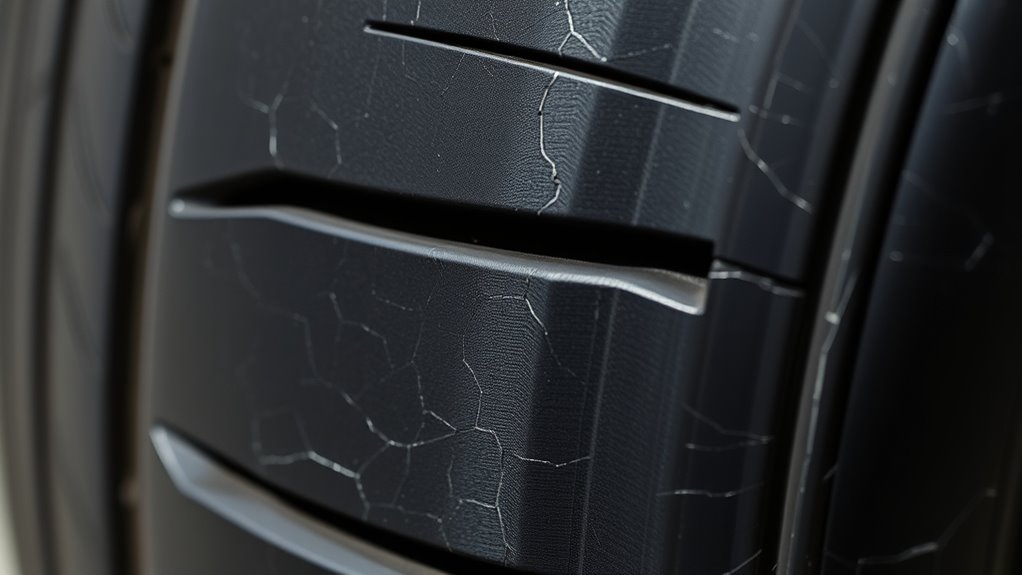
Regularly inspecting your tires for cracks and damage can help catch issues early before they become serious problems. Start by checking the tire pressure to ensure it matches the manufacturer’s recommendation; under- or over-inflation can worsen cracks. Next, examine the sidewalls closely for visible cracks, cuts, or bulges. Use your fingers to feel for any rough or brittle spots that seem unusual. Then, assess the tread depth by inserting a coin or using a tread gauge—adequate tread helps protect against damage. Look for any irregularities, such as:
- Small cracks resembling fine lines or spider webs
- Deep cracks that penetrate the rubber surface
- Uneven wear patterns or bulges indicating potential damage
Consistent inspections keep you aware of your tires’ health and safety. Proper maintenance and timely repairs are essential for safe driving.
When Cracks Indicate a Need for Replacement

If you notice cracks that are deep or your sidewall appears bulged, it’s a clear sign you need to replace your tire. Age and wear also play a role—if your tire is old or shows significant deterioration, don’t wait. Addressing these signs promptly keeps you safe on the road.
Deep Crack Depths
Deep cracks in the tire sidewall that extend deeply into the rubber are clear signs you need to replace the tire immediately. These cracks compromise the tire’s sidewall flexibility, increasing the risk of sudden failure. When cracks reach significant depths, they can lead to dangerous issues such as tread separation. Visualize the damage as:
- A hairline crack evolving into a deep groove, weakening the tire’s structure.
- A crack that exposes the internal cords, reducing flexibility.
- A large fissure that may cause the sidewall to bulge or collapse under pressure.
If you notice cracks with such depth, don’t delay replacing the tire. Deep cracks threaten safety by compromising integrity, making tread separation more likely and risking a blowout. Additionally, understanding the structural integrity of the tire helps you assess when cracks become a critical safety concern. Recognizing material fatigue can also help prevent catastrophic failures before cracks become visible.
Sidewall Bulging Signs
Sidewall bulging is a clear warning sign that your tire needs immediate replacement, especially when cracks are present. Bulging indicates internal damage, which compromises tire integrity and tire sidewall safety. If you notice a swollen or bulging area alongside cracks, don’t delay replacing the tire, as it’s at risk of sudden failure. Cracks often signal weakened sidewall material, making cracks prevention techniques essential in maintaining tire health. Regular inspections help catch early signs of damage before bulging progresses. Keep an eye out for irregularities, and avoid overloading your vehicle, which can increase sidewall stress. Addressing bulges and cracks promptly ensures safer driving and prevents accidents caused by tire failure. Remember, maintaining proper tire pressure also plays a critical role in crack prevention and overall tire longevity. Using the right inspection methods can help detect damage early and prevent dangerous failures.
Age and Wear Indicators
As tires age and endure regular wear, cracks often become more prominent and serve as warning signs that it’s time for replacement. Over time, the rubber from tire manufacturing deteriorates, making cracks more visible on the sidewall. These cracks can indicate that your tire has reached the end of its lifespan or has been compromised by road hazard impacts. Look for:
- Fine, shallow cracks that run parallel or radiate outward.
- Larger, deep cracks that expose the inner layers.
- Cracks that appear alongside uneven tread wear or sidewall bulges.
These signs suggest the tire’s structural integrity is compromised, increasing the risk of failure. Ignoring these indicators can lead to blowouts or accidents, especially if the cracks result from age or impact damage. Regular inspections are essential for safety.
Risks Associated With Ignoring Dangerous Sidewall Cracks

Ignoring dangerous sidewall cracks can substantially increase the risk of tire failure, which may lead to sudden blowouts or loss of control while driving. When cracks are ignored, the structural integrity of the tire weakens, making it more prone to failure under stress. Even if your tread depth appears adequate, sidewall damage compromises safety. Regular tire rotation helps distribute wear evenly, but it doesn’t fix existing cracks. Driving on compromised tires can cause a blowout at high speeds, risking your safety and that of others. Don’t wait until you notice a flat or loss of control—address sidewall cracks promptly. Recognizing the danger early can prevent accidents and costly repairs, ensuring your tires remain safe and reliable.
Maintenance Tips to Prevent Sidewall Cracks
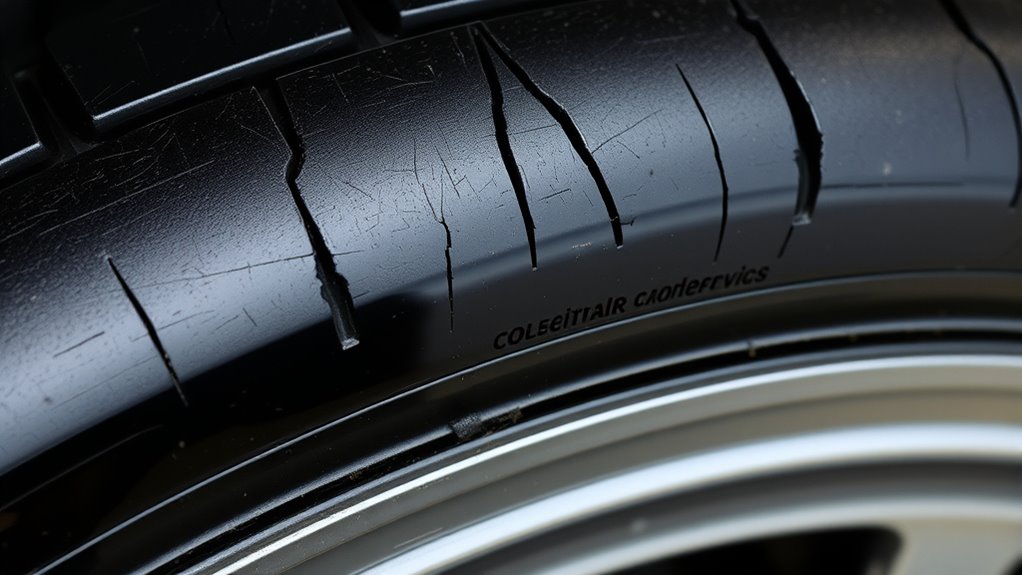
Regularly inspecting your tires and keeping them properly maintained are essential steps in preventing sidewall cracks. To do this effectively, focus on three key areas. First, check your tire tread regularly to ensure even wear; uneven tread can signal alignment issues that stress the sidewalls. Second, maintain proper tire pressure, as underinflation or overinflation weakens the rubber and accelerates cracking. Third, schedule wheel alignment checks to prevent uneven forces on the tires, which can cause cracks to develop along the sidewalls. By staying vigilant with these maintenance routines, you minimize stress on your tires and prolong their lifespan. Proper care not only keeps your tires looking good but also enhances safety and performance on the road.
Professional Assessment: When to Seek Expert Advice
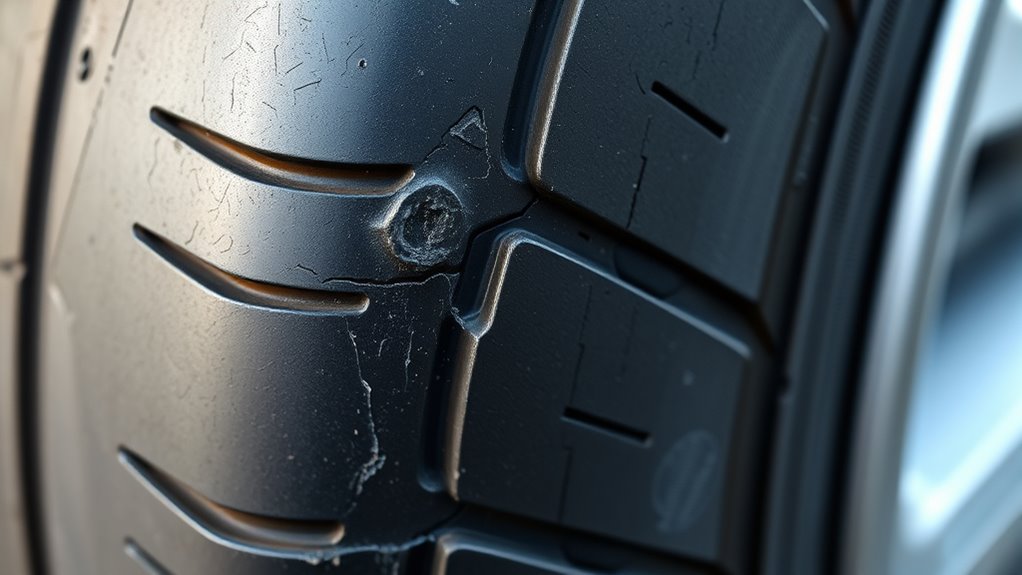
Knowing when to seek expert advice is essential for maintaining tire health and safety. If you notice cracks that seem deep, wide, or worsening, it’s time for professional assessment. An expert consultation can determine whether your tire’s sidewall damage is cosmetic or dangerous. They may perform a tire material analysis to evaluate the integrity of the rubber and internal structure. Use this table to guide your decision:
| Situation | Action Needed |
|---|---|
| Fine surface cracks | Monitor regularly, no immediate action |
| Deep, expanding cracks | Seek expert consultation promptly |
| Cracks near sidewall bead | Get professional advice immediately |
| Cracks with bulges or punctures | Consult an expert without delay |
Always trust professionals for accurate assessment and safe driving.
Frequently Asked Questions
Can Minor Sidewall Cracks Affect Tire Performance?
Minor sidewall cracks can impact your tire’s performance if they indicate advanced crack severity due to tire aging. While small, superficial cracks often aren’t dangerous, they may weaken the sidewall over time, increasing the risk of failure. Keep an eye on crack severity and your tire’s age, and consider replacing the tire if cracks deepen or multiply to ensure safe driving. Regular inspections help prevent potential accidents caused by aging tires.
Are Certain Tire Brands More Prone to Sidewall Cracking?
Some tire brands are more prone to sidewall cracking due to differences in brand reputation and material durability. You might notice that lower-quality brands or those with less durable materials tend to develop cracks faster, especially under harsh conditions. To avoid issues, choose reputable brands known for high-quality materials, which tend to have better durability. Regular inspections and proper maintenance help you catch cracks early, regardless of the brand.
How Often Should I Inspect My Tires for Cracks?
Think of your tires as a trusted map—regular checks keep you on the right path. You should inspect your tires for cracks at least once a month, especially before long trips. During inspections, look for sidewall cracks, uneven tread depth, and signs of aging. Also, rotate your tires every 5,000 to 8,000 miles to promote even wear, helping you spot issues early and keep your journey smooth and safe.
Do Sidewall Cracks Impact Tire Warranty Coverage?
Sidewall cracks can impact your tire warranty coverage, especially if they’re deemed a result of manufacturing defects. However, if cracks are just cosmetic and don’t affect tire longevity or safety, they typically aren’t covered under warranty exclusions. Always inspect your tires regularly, and if cracks appear, check with your manufacturer or retailer to understand warranty specifics. Proper maintenance helps ensure your tires stay safe and covered.
Can Tire Sidewall Cracks Be Repaired Instead of Replaced?
You can’t usually repair tire sidewall cracks, especially if the crack severity is substantial, because tire aging weakens the rubber. Small, shallow cracks might be cosmetic, but any crack that exposes the inner layers or is deep poses a safety risk. For your safety and ideal performance, it’s best to replace the tire rather than attempt repairs, as sidewall damage compromises the tire’s integrity.
Conclusion
Remember, your tires are the silent guardians of your journey—cracks are their whispered warning signs. Ignoring them is like dismissing a crack in a sturdy dam; it might hold temporarily, but disaster lurks beneath. Stay vigilant, trust your instincts, and treat your tires with care. When in doubt, seek expert advice. By doing so, you keep your voyage smooth and safe, ensuring your wheels don’t just roll, but conquer every mile with confidence.