
To troubleshoot creaks, clicks, and rattles on your commuter bike, listen carefully to identify the source—whether it’s the chain, pedals, spokes, or frame. Regular cleaning, lubrication, and tightening loose parts can often fix these issues quickly. Check for damage or misalignments, and tighten or replace components as needed. Staying vigilant with routine maintenance prevents problems from worsening. If you want to learn about specific fixes and tips, keep exploring these essential troubleshooting steps.
Key Takeaways
- Identify noise sources by listening during riding and stopping to pinpoint creaks, clicks, or rattles.
- Regularly clean, lubricate, and tighten components to prevent common noise issues.
- Inspect and tighten loose pedals, spokes, and headset bearings to eliminate rattling and clicking sounds.
- Check for frame cracks or misalignments and lubricate contact points to reduce squeaks.
- Maintain a routine inspection schedule to catch early wear and ensure smooth, quiet rides.
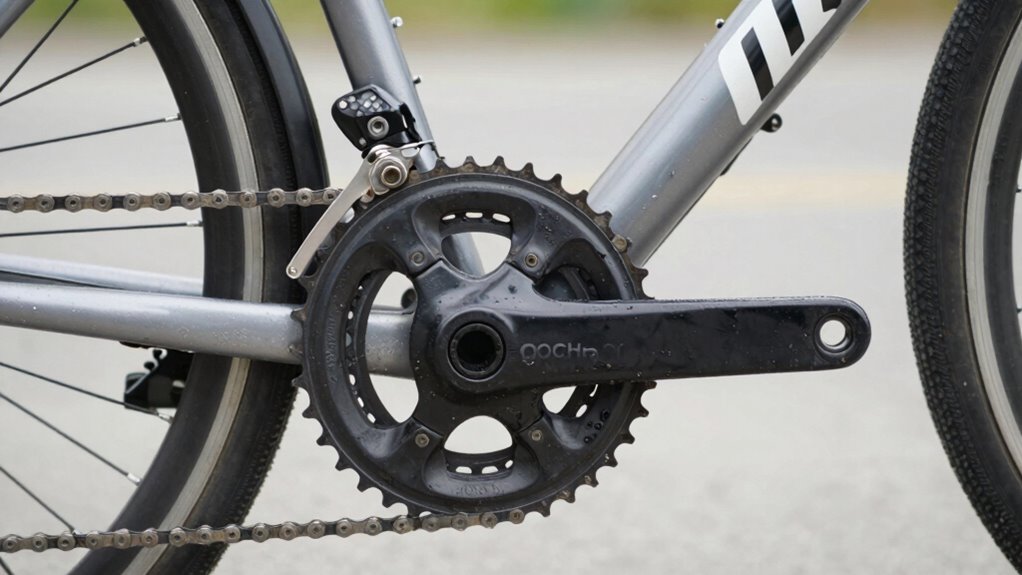
If your bicycle starts creaking or making unusual noises, it can be both annoying and concerning. These sounds often signal something that needs attention, but pinpointing the exact cause can seem tricky at first. The key is to approach it systematically through bike maintenance and noise troubleshooting. First, you’ll want to identify whether the noise is coming from the chain, pedals, wheels, or frame. Listening carefully while riding or stopping and applying pressure can help narrow down the source. For example, if you hear a click when pedaling, it might be a loose pedal or a worn-out bottom bracket. Rattling sounds from the wheels could indicate loose spokes or an improperly seated axle. By being attentive and methodical, you’ll gain better insight into what needs fixing.
Once you’ve located the source, the next step involves simple bike maintenance steps to resolve the issue. If the chain is making noise, it might need cleaning and lubrication. Over time, dirt and grime build up, causing squeaks or creaks, especially when pedaling under load. Regularly cleaning the chain with a degreaser and applying a suitable bike lubricant can significantly reduce noise and improve efficiency. If the pedals are clicking, check if they’re securely tightened; sometimes, pedals loosen over time, and a quick tighten can solve the problem. For wheel-related noises, inspect the spokes for any that are loose or broken. Tightening spokes with a spoke wrench or replacing damaged ones restores wheel stability and quiets rattles. Additionally, regular maintenance plays a crucial role in preventing many common issues and ensuring optimal bike performance. Incorporating bike maintenance routines into your schedule can help you catch and fix problems early, saving time and effort later. Furthermore, paying attention to the lubrication of moving parts can greatly reduce the occurrence of creaks and squeaks.
Regularly clean and lubricate your chain, tighten pedals, and inspect spokes to keep your bike smooth and quiet.
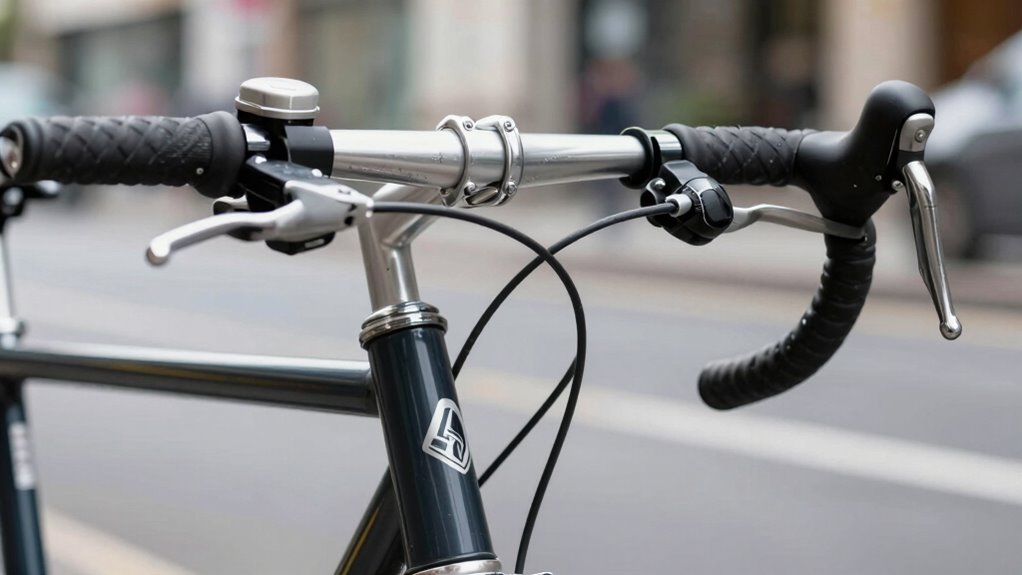
Another common source of creaks and squeaks is the headset or stem. If your handlebars feel loose or you notice creaking when turning, it’s best to perform noise troubleshooting by tightening the headset bearings. Use a torque wrench to ensure proper tightness without over-tightening, which can cause other issues. The frame itself might squeak if parts aren’t properly lubricated or if there are small cracks or misalignments, so examine the frame for damage and apply a light lubricant to moving joints or contact points. Regular inspections are also vital, as they can help you detect early signs of wear or damage before they develop into more serious problems. Additionally, keeping your bike in good condition through regular inspections can help catch potential problems early before they develop into more serious issues. This proactive approach ensures a safer ride and prolongs the lifespan of your bicycle.
Throughout this process, remember that regular bike maintenance is your best defense against unwanted noises. Check your bike periodically—especially after long rides or rough terrain—to catch issues early. Keep components clean, lubricated, and properly tightened. Noise troubleshooting is about being observant and proactive; addressing small problems before they worsen keeps your ride smooth, quiet, and safe. With patience and a little practice, you’ll become skilled at diagnosing and fixing creaks and rattles, ensuring your daily commute remains hassle-free.

WD-40 All Conditions Bike Chain Lube and Chain Cleaner/Degreaser
- Includes: Chain Lube and Chain Cleaner/Degreaser
- Lube Benefits: Prevents Squeaks and Extends Chain Life
- Corrosion Protection: Contains Inhibitors for Long-Term Performance
As an affiliate, we earn on qualifying purchases.
As an affiliate, we earn on qualifying purchases.
Frequently Asked Questions
How Can I Prevent Creaks Before They Start?
To prevent bike frame squeaks and chain tension issues, regularly clean and lubricate your bike, especially the chain and moving parts. Check and tighten bolts and quick releases to avoid loose components. Keep your chain properly tensioned—neither too tight nor too loose—to prevent creaks. Inspect your frame for cracks or dirt buildup. Consistent maintenance and inspections help catch problems early, keeping your ride smooth and quiet.
Are Certain Bike Materials More Prone to Noises?
Yes, certain frame materials are more prone to noise susceptibility. Aluminum frames are lightweight but can creak if not properly maintained or if components loosen. Steel frames tend to be quieter and absorb vibrations better, reducing noise. Carbon fiber frames are usually very quiet but can creak if there’s damage or improper assembly. To minimize noises, regularly check your bike’s components and tighten everything, especially if you ride frequently or on rough terrain.
How Often Should I Lubricate My Bike Components?
You should lubricate your bike components regularly, especially the chain, to prevent squeaks and guarantee smooth rides. Aim for every 100-200 miles or once a month, depending on riding conditions. During chain maintenance, clean and re-lubricate it to avoid squeal sounds. If your brakes squeal, check the pads and apply a light layer of lubricant to the contact points, but avoid getting lubricant on the brake surface.
Do Environmental Conditions Affect Bike Noise Levels?
Yes, environmental conditions affect bike noise levels. Weather impact, like rain or humidity, can cause parts to creak or rattle more, especially if components aren’t well-lubricated. Noise pollution increases when dirt, mud, or moisture gets into bearings or moving parts, making them stick or squeal. You should regularly clean and lubricate your bike to minimize noise caused by environmental factors and keep your ride smooth and quiet.
Can Improper Tire Pressure Cause Creaks or Rattles?
Yes, improper tire pressure can cause creaks, rattles, and tire noise. When your tires are underinflated or overinflated, they don’t roll smoothly, leading to pressure issues that create noise during your ride. You might notice a squeaking or rattling sound, especially on bumpy roads. Regularly check and maintain the correct tire pressure to reduce these noises and guarantee a smoother, quieter ride.

Bike Pedal Wrench, Bicycle Pedal Removal Tool with Extra Long Handle for Efficient Repair of Road and Mountain Bikes
- Versatile 4-in-1 Tool: Includes multiple spanners and sockets
- Durable High-Quality Material: Made from heavy-duty steel with laser cutting
- Extended Handle for Leverage: 320mm ergonomic, non-slip grip for easier use
As an affiliate, we earn on qualifying purchases.
As an affiliate, we earn on qualifying purchases.
Conclusion
Now that you’ve learned to identify those creaks, clicks, and rattles, you’re better equipped to keep your bike running smoothly. Remember, a little regular maintenance can prevent many nuisances—think of it as your trusty steed’s “oil and potion” to stay in top form. So, don’t ignore those sounds; troubleshoot like a modern-day knight. With patience and care, your bike will be ready to roll, whether through city streets or across the open plains of your imagination.

Bicycle Spoke Wrench Tool, 4 Pcs Bike Wheel Truing & Tension Adjustment
- Complete 4-in-1 Tool Set: Includes tire levers, wrench, and tensioner
- Durable Stainless Steel Construction: Rust-resistant, nickel-plated, with rubber handle
- Ergonomic Non-slip Grip: Provides superior control during adjustments
As an affiliate, we earn on qualifying purchases.
As an affiliate, we earn on qualifying purchases.

Pawfly Bicycle Headset Press Tool, Bike Headset Bearing Press-in Tool, Bike Headset Cup and Bottom Bracket Press Install Tool for Most BBS, with 1-1/8 Inch Carbon Fiber Headset Spacers (5 Sizes)
- Durable Aluminum Construction: Made of professional-grade aluminum alloy with anodized finish
- Ergonomic T-Handle Design: CNC-knurled handle for secure grip and control
- Smooth Operation: Internally lubricated bearings ensure easy pressing
As an affiliate, we earn on qualifying purchases.
As an affiliate, we earn on qualifying purchases.