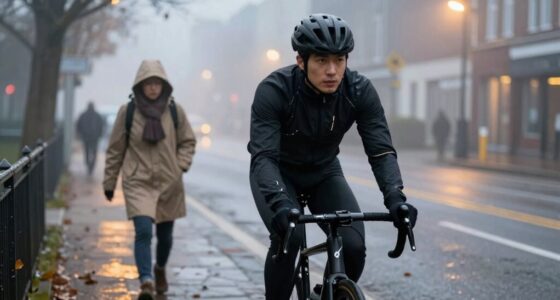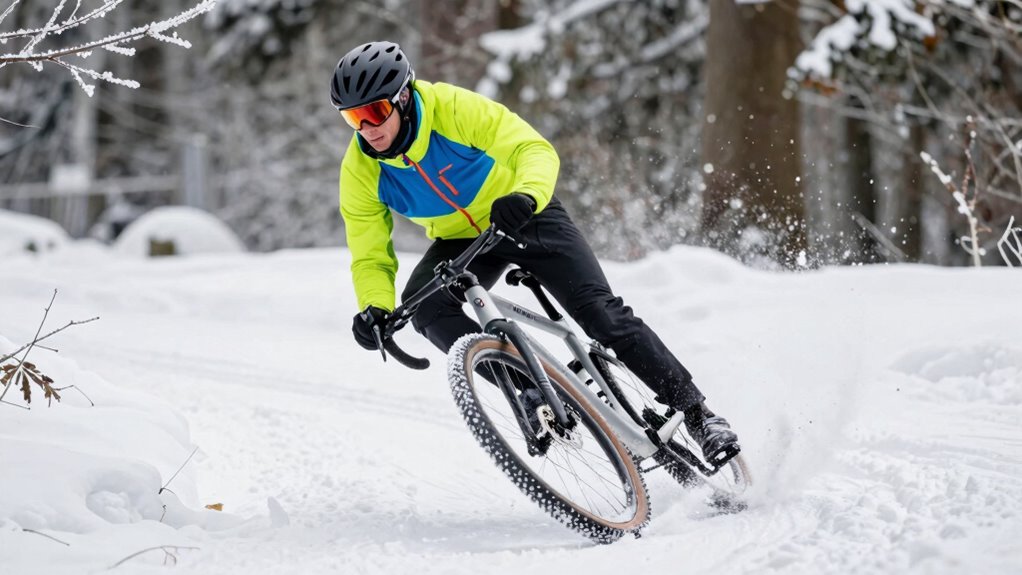

When riding in snow, keep your speed moderate—about half your normal pace—to give yourself time to react. Use gentle, steady pressure when braking to avoid slips and skids, and always allow extra distance for stopping safely. Avoid sudden moves like sharp turns or abrupt accelerations. Adapting your speed and brake smoothly helps you stay upright and in control. If you want to learn more about safe snowy riding techniques, keep going for essential tips.
Key Takeaways
- Maintain moderate speed, about half your usual pace, to allow safe stopping on snow and ice.
- Use gentle, steady pressure when braking to prevent wheel lock-up and skidding.
- Increase braking distance to account for reduced traction and longer stopping times.
- Adjust speed proactively based on snow conditions like packed snow or icy patches.
- Ensure proper tire traction and fit, and always wear a helmet for safety and control.
When riding on snow, understanding the rules for speed and braking is essential for your safety and that of others. Snowy conditions can be unpredictable, and your ability to manage your speed and brake properly can make the difference between a smooth ride and a fall. Before heading out, ensure your helmet safety is prioritized; a helmet is your first line of defense against injury if you lose control. Make sure it fits well and is securely fastened, because in icy conditions, falls can happen unexpectedly.
Tire traction is another critical factor. Snow reduces friction, so your tires need to grip the surface effectively. Use tires designed for winter conditions, with deep treads that can cut through snow and ice, providing better traction. Lowering your tire pressure slightly can increase the contact patch, giving you more grip. Remember, tires with poor traction are a leading cause of slipping and accidents. Always check the condition and tread depth before setting out, especially if you’ve stored your vehicle or bike for the off-season. Proper traction allows you to maintain control and reduces the need for harsh braking, which can cause skidding.
When it comes to speed, keep it moderate. Snow and ice drastically reduce your stopping distance, so rushing can be dangerous. A safe rule of thumb is to drive or ride at about half your usual speed, giving yourself ample time to react to obstacles. Avoid sudden acceleration or deceleration; smooth, gradual changes help maintain tire grip and prevent sliding. Always be mindful of your surroundings—other vehicles, pedestrians, and changing snow conditions like packed snow or ice patches. These can affect your speed and braking ability unexpectedly.
Braking on snow requires special technique. Instead of slamming on the brakes, apply gentle, steady pressure to avoid locking your wheels, which can lead to a loss of control. If your vehicle is equipped with anti-lock brakes, use them as intended—they help prevent wheel lock-up during hard braking. For bikes and smaller vehicles, practice controlled braking in safe areas to get a feel for how much pressure is needed to stop effectively without skidding. Remember, braking distance increases on snow, so always give yourself extra room to slow down safely. Additionally, understanding sound vibrations in sound healing science can help you stay calm and focused during stressful driving conditions, enhancing your overall control.
Ultimately, your safety depends on your ability to adapt your speed and braking techniques to the conditions. Prioritize helmet safety, ensure your tires have good traction, and brake gently. Staying cautious and prepared keeps you upright and in control, turning snowy rides into safe adventures rather than risky excursions.
Frequently Asked Questions
What Safety Gear Is Essential for Snow Riding?
You need essential safety gear like protective clothing to stay warm and guard against falls, and a helmet to guarantee helmet safety. Wear layered, waterproof gear to prevent hypothermia and abrasion-resistant materials for protection. A well-fitted helmet reduces head injury risks and is vital for snow riding. Always double-check your gear before heading out to maximize safety and enjoy your ride confidently, knowing you’re protected.
How Do Weather Conditions Affect Braking Effectiveness?
Weather conditions are like a tricky dance partner, affecting your braking effectiveness. Cold temperatures reduce winter traction, making your tires slip more easily. You should check your tire pressure regularly, as low pressure decreases grip. Wet or icy roads further impair braking, requiring you to slow down and maintain extra distance. Always adapt your riding to these conditions by braking gently and avoiding sudden stops to stay safe.
What Are Common Mistakes Beginners Make While Braking?
You often brake too suddenly, falling into braking overconfidence and risking a skid. Many beginners also neglect to balance their weight evenly, which reduces control and increases chances of falling. Instead, you should brake gradually, maintaining even weight distribution on your bike. This approach helps you stay upright and prevents slipping, especially on snow. Practice smooth, controlled braking, and avoid overestimating your stopping power to stay safe.
How Can I Improve My Snow Riding Skills Quickly?
To improve your snow riding skills quickly, focus on proper rider posture and snow tire selection. Did you know that correct posture reduces the risk of slipping by 50%? Practice maintaining a balanced stance and lean slightly uphill when turning. Choose snow tires with good grip, which markedly enhances control. Consistent practice with these tips will boost your confidence and safety on snowy slopes.
Are There Specific Techniques for Riding on Icy Surfaces?
When riding on icy surfaces, use your icy grip by keeping your tires slightly more pressure to improve traction. Focus on balance techniques like keeping your weight centered and avoiding sudden movements. Slowly accelerate and brake, maintaining a smooth, controlled motion. Look ahead to anticipate changes, and stay relaxed to better adapt to the slippery conditions. Practicing these methods helps you stay safe and confident on icy terrain.
Conclusion
By following these speed and braking tips, you’ll glide through snow like a leaf on a gentle stream, keeping your balance and safety intact. Remember, smooth and cautious movements are your best allies on icy terrain. Think of each ride as a dance with winter’s chill—stay in sync with the conditions, and you’ll stay upright no matter how frosty the journey gets. Stay alert, ride smart, and enjoy the winter wonderland safely!