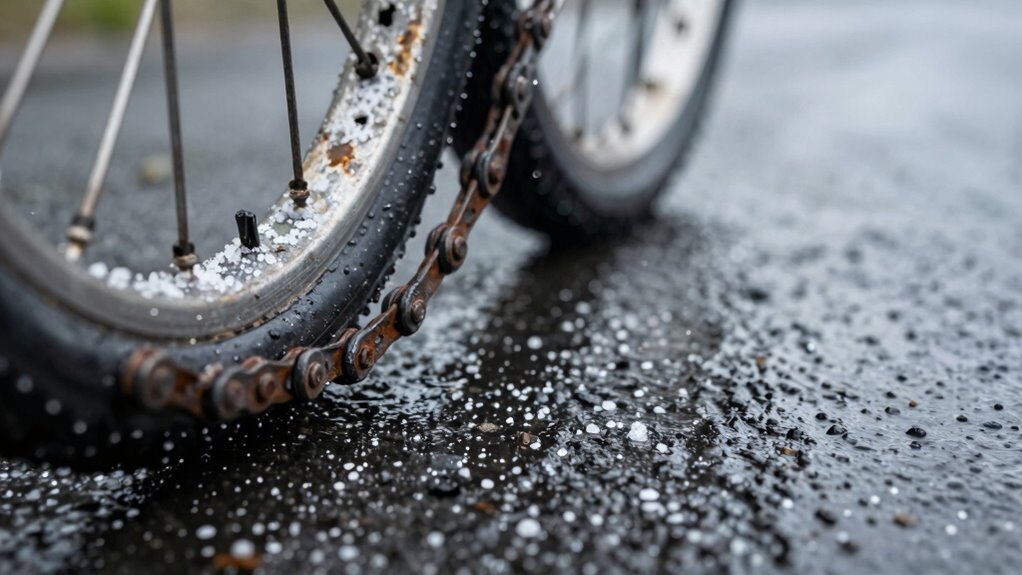

Salt spray from wet roads quickly causes corrosion on your bike’s metal parts, weakening the frame, chain, and bolts over time. When you ride through snowy or rainy conditions, residual salt sticks to your bike and, combined with moisture, accelerates rust development. To minimize damage, regularly rinse your bike with fresh water, clean hidden areas, and apply protective coatings or anti-corrosion sprays. Keep your bike protected and maintained to extend its life—learn how to shield it effectively.

Get bike and ride gear delivered free — and shop member deals
- Fast, free delivery on millions of items
- Access to Prime Big Deal Days deals on October 6–7
- Prime Video, Amazon Music and more included
Key Takeaways
- Salt spray from wet roads accelerates corrosion by leaving salt residues on metal surfaces, weakening bike components.
- Moisture combined with salt promotes ongoing rust, especially on hidden or hard-to-reach areas like bolts and chains.
- Regular rinsing with fresh water and applying protective coatings help remove salt and prevent corrosion.
- Using anti-corrosion sprays and storing bikes in dry, sheltered locations reduce salt-induced damage.
- Promptly inspecting and repairing early rust spots extends bike lifespan and maintains performance.

Have you ever noticed a fine, salty spray on your car after driving on wet roads? That salty residue isn’t just an eyesore; it’s a warning sign of potential damage to your bike’s components. Salt spray from wet roads can accelerate corrosion, especially if you’re not taking steps to protect your ride. Understanding how salt affects your bike and knowing how to prevent corrosion can save you time and money in the long run.
Salt spray from wet roads can quickly cause corrosion on your bike’s vital parts.
When you ride through rainy or snowy conditions, salt from the roads easily sticks to your bike’s frame, chain, and other metal parts. Once the moisture evaporates, a corrosive salt film remains, slowly eating away at the metal. Over time, this corrosion weakens the structural integrity of your bike, leading to costly repairs or replacements. That’s why corrosion prevention should be a priority for any rider who hits the roads regularly during winter or rainy seasons. Regular cleaning is essential—rinsing your bike with fresh water after rides helps wash away the salt before it can do damage. Pay special attention to hidden areas like under the frame, in the chain links, and around bolts, where salt can linger and cause corrosion unnoticed.
Your riding gear also plays a critical role in protecting your bike. Wearing proper gear, such as gloves and protective clothing, can prevent you from transferring salt and moisture onto your bike’s surfaces. Additionally, using protective covers or applying anti-corrosion sprays on vulnerable parts can create a barrier against salt and water. These measures are simple but effective ways to minimize salt spray’s impact on your bike. If you’re serious about maintenance, consider applying a wax or corrosion inhibitor on your frame and metal components. This extra layer helps prevent salt from adhering and reduces the chances of rust forming over time.
Another tip is to inspect your bike regularly, especially after wet rides. Look for signs of corrosion or rust spots and address them immediately. Fixing small issues early prevents them from spreading and causing extensive damage later. Storing your bike in a dry, sheltered place when not in use also helps minimize exposure to moisture and salt, extending its lifespan. Additionally, choosing European-made corrosion-resistant components can significantly enhance your bike’s durability in salty conditions. Remember, the key to combatting salt spray damage is proactive care. By incorporating corrosion prevention techniques and maintaining your riding gear, you can keep your bike in top shape and enjoy riding through all seasons without worry. Protecting your investment isn’t just about aesthetics—it’s about ensuring safety and performance on every ride.
Frequently Asked Questions
Can Salt Spray Cause Invisible Damage to Bike Components?
Yes, salt spray can cause invisible damage to your bike components. While you might not see corrosion risk or surface rust at first, the salt accelerates corrosion beneath paint and protective coatings. Over time, this invisible damage weakens metal parts, leading to potential failures. To minimize this, regularly clean your bike after riding on wet, salty roads, and apply protective lubricants to vulnerable areas.
How Often Should I Clean My Bike After Riding on Salted Roads?
Think of your bike like a delicate plant, needing regular care to thrive. After riding on salted roads, you should clean it within 24 to 48 hours, especially if the roads are still wet. This helps prevent salt corrosion. Stick to a consistent maintenance and cleaning schedule—ideally after every ride in winter—to keep rust and damage at bay. Regular cleaning preserves your bike’s performance and longevity.
Are There Specific Bike Parts More Vulnerable to Salt Spray?
You should watch out for your bike’s frame, as corrosion from salt spray can weaken it over time, leading to costly repairs. Brake degradation is also common, since salt accelerates rust in brake components, reducing effectiveness. To protect these parts, regularly clean your bike thoroughly after riding on salted roads, focusing on the frame and brake areas. Applying protective lubricants can also help minimize salt-related damage.
What Are the Best Storage Tips to Prevent Salt Damage?
To prevent salt damage, store your bike in a well-organized garage with climate control, avoiding damp or humid areas. Keep the bike covered with a breathable cover to shield it from salt spray and moisture when not in use. Regularly clean and dry your bike, especially after rides on salted roads. Proper garage organization and maintaining a controlled environment help minimize corrosion and keep your bike in top condition.
Does Applying Wax or Sealant Protect My Bike From Salt Spray?
Applying wax or sealant does protect your bike from salt spray. Wax protection forms a barrier that repels moisture and salt, reducing corrosion. Sealant benefits include providing a durable shield that keeps salt and grime from contacting your bike’s surface. Regularly applying these coatings enhances your bike’s resistance to salt damage, especially after cleaning, so you can ride confidently even on salted roads without worrying about long-term corrosion.
Conclusion
While salt spray on wet roads can cause serious damage to your bike, don’t let that stop you from enjoying your rides. With regular cleaning and protective measures, you can considerably reduce corrosion and keep your bike in great shape. Sure, it takes a bit of effort, but the joy of riding outweighs the hassle. So go ahead, hit those wet roads—just make sure to give your bike some love afterward!
Fall Picks
fall essentials
As an affiliate, we earn on qualifying purchases.